Here is the question I keep hearing from licensing desks, phrased a dozen slightly different ways: do I wait for a single, agreed AI music labelling standard, or do I build my compliance path on the metadata plumbing that already exists and hope it converges later? It is a fair question, and the honest answer is that nobody negotiating the standards can promise you which one wins. What I can do is lay out what the fork actually looks like, where it forwith real, and where — uncomfortably — the answer is "it depends on details still being argued over."
Start with the shape of the disagreement, because the press statements around AI music labelling are written to sound more aligned than the parties are.
What the proposals are really asking for
When a rightsholder body backs a labelling proposal, read past the language about transparency and look at the verb. They are asking for an obligation — a requirement that a track carry a machine-readable flag when it was generated or substantially assisted by AI, and that the flag be attached at a point they can audit. Their interest is not disclosure for its own sake. It is a metadata field they can enforce against, because enforcement is how a catalogue protects its value.
When an AI platform responds warmly and offers to "partner" on the framework, watch what it declines to accept. The pattern is consistent: yes to voluntary participation, yes to a seat at the table, and a firm push against top-down rules written without them. That is not obstruction, exactly. It is a company that knows a labelling regime designed by rightsholders alone could define "AI-generated" in a way that sweeps in every tool-assisted workflow, and it wants a hand on that definition before it hardens.
When a streaming service says it is ready to participate and already has the pipes, that is the most loaded statement of the three. "We already have the pipes" usually means it has invested in the DDEX-based metadata path — the standards the industry uses to move rights and credits between labels, distributors and platforms — and would rather extend that than adopt a parallel scheme. Readiness is a position. It quietly argues for the incumbent rails.
So the fork you are choosing between is not "regulate or don't." It is: a purpose-built AI-disclosure framework negotiated fresh, or an AI flag bolted onto DDEX and the metadata systems already carrying your catalogue. Both are live. Neither is finished.
Where it genuinely depends
This is the part the announcements skip, and it is where a compliance path lives or dies.
It depends on jurisdiction. An AI music labelling rule enforced by an EU transparency regime, a voluntary code adopted by a platform, and a US-style disclosure norm are not the same instrument, and they will not demand the same field. If your catalogue moves across borders — and it does — you are not picking one standard. You are building a mapping between several, and hoping the crosswalk holds.
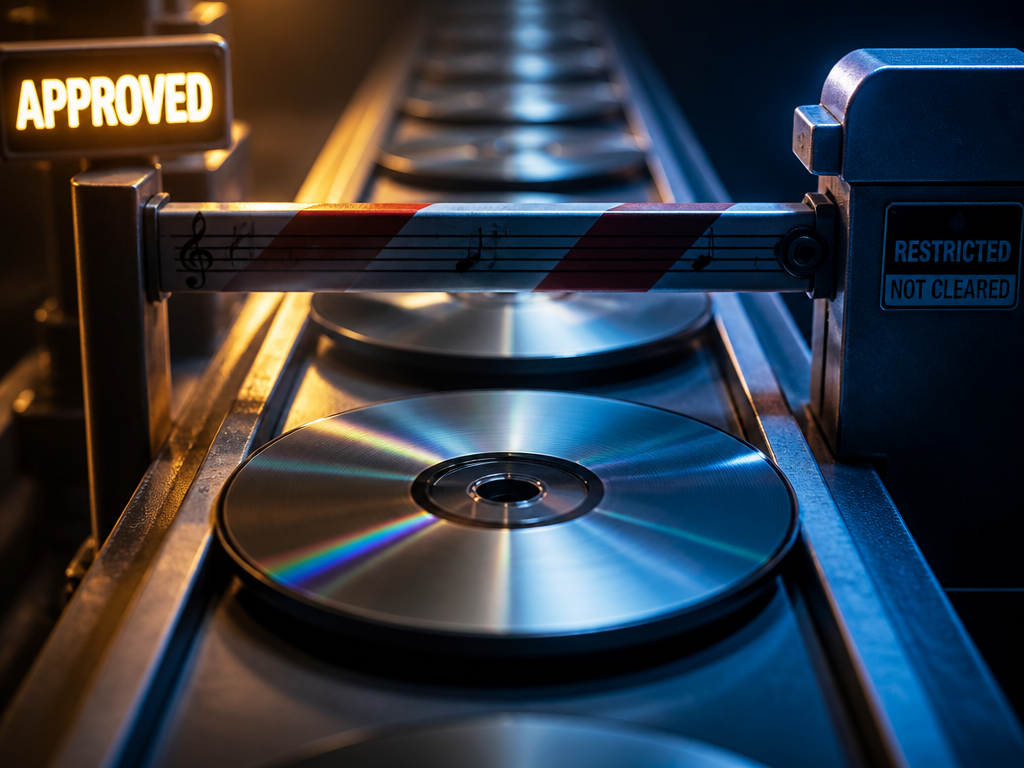
It depends on whether the label survives ingestion. A flag set at upload is only as good as the systems that pass it downstream. Metadata drops. It gets stripped on transcode, lost on re-delivery, overwritten by a distributor's own schema. A watermark embedded in the audio survives some of that, but watermarks are fragile in their own way: re-encoding, pitch-shifting and stem-separation can degrade them, and no watermark scheme in music has yet proven robust across the manipulations a working producer performs by lunchtime. So "is it labelled" is really two questions — is it flagged in metadata, and is it marked in the signal — and the two fail differently.
It depends on what "AI" is supposed to mean in the field. This is the unglamorous fight that decides everything. A track cut entirely by a text-to-music model is easy. But what about a human composition with an AI-generated bassline? Vocals put through an AI de-noiser? A drum loop stretched by a model that hallucinated the transients back in? If the label is binary — AI or not — it will be either uselessly broad or trivially gamed. If it is graded, someone has to define the grades, and that someone is exactly the table the platforms are fighting to sit at.
The distinction that will do the most work
If I had to bet on where the standards land, it is on a split between fully generated and AI-assisted, with disclosure obligations that differ between them. That split is the compromise that lets a rightsholder body get its enforceable flag on the fully-synthetic material it worries about most, while letting a platform argue that a producer using AI as one instrument among many is not the target.
That is a workable line in principle. In practice it moves the entire dispute into the definition of "assisted," and I would not build a rigid pipeline on the assumption that the threshold is settled. It isn't. A licensing executive planning today should treat the assisted/generated boundary as the field most likely to be renegotiated after launch — which means storing enough provenance to re-classify a track later, not just the one-bit answer you filed on delivery.
Reading it for a compliance path
Here is the pragmatic version, without pretending the ground is firmer than it is.
- Capture provenance now, even if you can't label yet. The durable asset is a record of how each track was made — which model, which human steps, what was assisted versus generated. Whatever standard wins, it will demand something you can only reconstruct if you logged it at creation.
- Assume you'll carry two signals, not one. Plan for a metadata flag and an in-audio marker, because they cover each other's failure modes. Treat either alone as partial.
- Build on the DDEX path, but don't marry it. The incumbent rails are the safest short-term bet because your catalogue already rides them. Keep the AI-disclosure data structured so it can be exported into a purpose-built framework if that is where regulation lands.
- Watch the definition, not the announcement. The headline says "agreement." The enforceable meaning is in whether "AI-generated" is binary or graded, and where "assisted" starts. That clause is your actual compliance surface.
None of that resolves the fork. It hedges it, which is the honest posture when the people writing the standard have not agreed either. The platforms have made one thing clear by pushing back: they will not be silent partners while rightsholders draft the rules, and a labelling regime that ignores them will be a regime large catalogues of AI-assisted work quietly route around.
What this looks like lived out
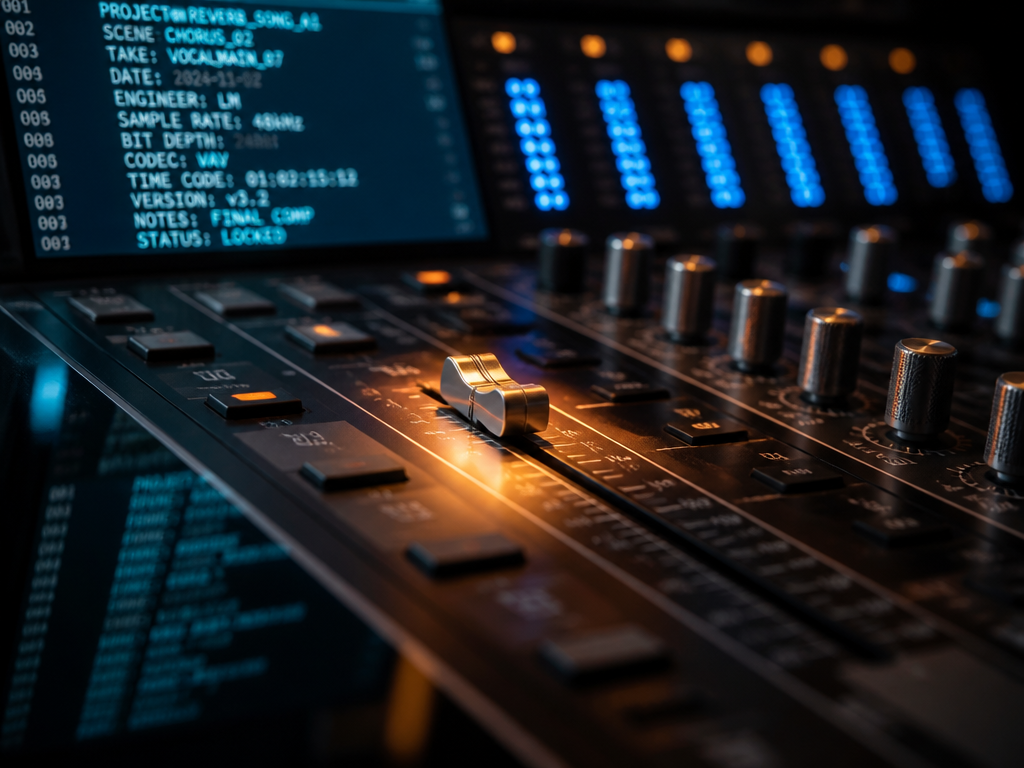
I can tell you what the logic looks like when someone actually applies it, because I apply it to my own work. When I deliver sound design for a game or a short, I ship a 48kHz WAV, stems, and a plain-text provenance note next to them: which cues were composed by hand, which used a model, and for the model cues, whether it generated the bed or only stretched a loop I recorded. Nobody has required that of me yet. No standard asks for that file. I write it because when the labelling rule does arrive — in whichever of these shapes it takes — the client who licensed that music will come back and ask what was AI in it, and I would rather answer from a log I kept than a memory I trust. The standard is unsettled. The habit doesn't have to be.
Not sure which tool to use?
Compare the top AI music and sound tools side by side — honest reviews, real pricing, no sponsorships.