A distributor I know — mid-size, moves K-pop B-sides and a lot of indie electronic into Asian DSPs — sent me a two-line message last month. "If Korea starts screening releases before they go live, does that touch my catalog if I deliver from Singapore? Or is this a domestic problem I can ignore?"
That is the question, isn't it. Not whether a given proposal is good policy, but whether South Korea music regulation aimed at pre-release screening actually reaches the tracks you're responsible for shipping — and if it does, at which point in the chain the friction lands on your desk.
Here's the short answer, and then the long one: it depends on where you sit in the distribution chain, and the parts of these proposals that are still vaguely worded are exactly the parts that create your risk. If you deliver into Korean platforms through a domestic partner, you should be reading the fine print now. If you're a foreign rights holder who licenses catalog and never touches local delivery, your exposure is real but indirect. And if any part of your catalog is AI-generated, you are standing closest to the ambiguity.
What "pre-screening" would actually change
The current model across most Asian markets, Korea included, is reactive. A track goes live, and if someone — a parent, a rights body, a regulator — objects, a complaint gets filed after the fact. Platforms pull or restrict content in response. The burden sits downstream, and it sits after release. You ship, then you deal with problems if they surface.
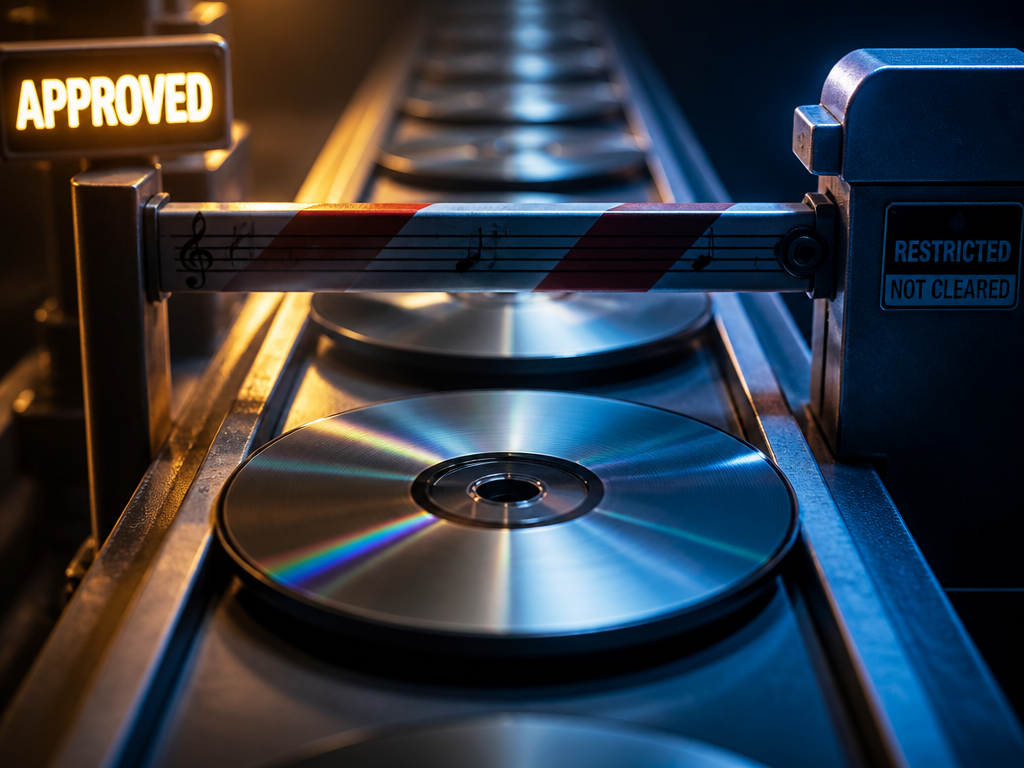
A pre-release screening regime inverts that. Content gets evaluated before it reaches listeners, and someone in the chain has to hold each release until it clears. That someone is usually the distributor or the platform, not the artist. The shift sounds procedural. It is not. It changes who carries liability, when they carry it, and how long a release sits in limbo before it earns a green light.
The friction points are predictable, because we've seen versions of them in film and game ratings:
- Age-gating by content judgment. If a track is flagged as unsuitable for minors, platforms have to build or enforce blocking around it. That's metadata work, catalog re-tagging, and a support burden when a legitimate release gets caught.
- Who defines "harmful." This is the load-bearing ambiguity. A screening rule is only as clean as its definition of what fails screening. When the standard is broad — lyrics deemed damaging to youth, say — the reviewer's discretion becomes the actual policy, and discretion is not something you can plan a release calendar around.
- Notification and appeal loops. Even a well-designed system adds a step: notify the rights holder, allow a response, re-review. Every step is time, and time is a release date you can't confirm to a sync client.
None of that is speculative. It's the structural cost of moving a decision from after release to before it.
The "it depends" you actually care about
Stakeholders keep asking me for a yes-or-no, and I keep refusing to give them one, because the honest answer branches by role. Here's where I land on each.
You run domestic delivery into Korean DSPs. You're the most exposed. In a pre-screening regime, the distributor is the natural chokepoint — the entity with the operational relationship to the platform and the legal presence in the market. If a rule assigns screening responsibility to whoever submits the release, that's you. Budget for a compliance step in your ingestion pipeline and assume your time-to-live gets longer, at least during any rollout.

You're a foreign aggregator or label licensing into Korea through a local partner. Your exposure is one step removed but not zero. The friction shows up as your partner's friction: slower go-lives, requests for cleaner metadata, occasional holds you didn't cause and can't directly resolve. Your contracts probably don't say who eats the cost of a screening delay. They should.
You do sync and catalog licensing, no local delivery. You're the furthest from the gate. A screening regime aimed at consumer streaming releases may not touch a sync placement or a B2B license at all — but "may not" is doing work in that sentence. If the language covers "distribution of musical works" broadly rather than "release to streaming platforms" specifically, the scope creeps. Read for the scope definition, not the headline.
Any of your catalog is AI-generated or AI-assisted. You are standing on the ambiguity. Regulators worldwide are still deciding how synthetic vocals, cloned voices, and prompt-generated instrumentals fit into content rules written for human performers. A screening regime built around "harmful content" wasn't drafted with a model-generated track in mind, which means an AI release could be judged under a standard nobody designed for it — or flagged for disclosure requirements that don't exist yet. If your workflow leans on generated stems, watch this space harder than anyone.
Where the ambiguity bites
The genuine risk in most of these proposals is not the screening itself. Ratings systems exist all over the world and the industry has adapted to them. The risk is under-specification: a bill that says releases must be screened without saying precisely what fails, who decides, on what timeline, and with what appeal.
Under-specified rules don't reduce your exposure. They transfer it. When the standard is vague, you can't predict outcomes, so you either over-comply — pulling or holding anything remotely borderline — or you gamble and absorb the enforcement risk. Both are expensive. And the cost falls hardest on independent artists and small distributors who don't have a legal team to interpret ambiguity in their favor.
There's also a plain historical fact worth naming without editorializing: Korea, like several markets, moved away from front-loaded content review in the past, and industry bodies have consistently framed a return to it as a step backward for creative output. Whether that framing is fair is above my pay grade. That it will shape the lobbying, and therefore the final shape of any rule, is not.
Who should act now, who can wait
If you deliver domestically into Korea, treat this as live risk and start scenario-planning your ingestion workflow. If you license in through a partner, the action item is contractual, not technical — clarify who bears delay costs. If you're pure catalog or sync with no local footprint, monitor the scope language and otherwise carry on. And if you're shipping AI-generated music into any Asian market, assume the rules governing you are unsettled and will change under you.
What nobody should do is treat a proposal as a finished law. Most of these frameworks shift substantially between introduction and enforcement, if they pass at all. Reacting to a first draft as though it's final is its own kind of unforced cost.
Try this this week
Pull one release you'd ship into Korea in the next quarter and run it through a plain thought experiment: if a reviewer had to approve this before it went live, what in the metadata, lyrics, or artwork would they hesitate on — and do you have a clean answer ready? Write that answer down for that one track. If you can't, you've found the exact spot where a vague rule would cost you a release date, and that's the thing worth fixing before anyone forces you to.
Not sure which tool to use?
Compare the top AI music and sound tools side by side — honest reviews, real pricing, no sponsorships.