There is a line you hear at every ticketing panel, delivered with the confidence of a weather report: regulate the resale market and you will destroy jobs. It gets said by someone in a good blazer, usually right after a slide with a large red number on it. The room nods. Nobody asks where the number came from.
I have sat in enough of those rooms — as a sound person, then as someone who books rooms and worries about their survival — to notice that the warning has hardened into folklore. And folklore is worth interrogating, because the people repeating it are often the people the law is aimed at.
The short version: ticket pricing transparency laws — all-in pricing, bot bans, bans on selling tickets nobody actually holds — are not a meaningful job-displacement event for venues, artists, or box-office staff; the displacement they cause is concentrated in speculative resale operations, and the "jobs will vanish" figure that circulates most widely traces back to industry-funded projection rather than to any observed wave of layoffs. That is the whole argument. The rest of this is how the field came to believe otherwise, and why the source is thinner than the belief.
Where the belief came from
Start with the shape of the fear, because it did not appear from nowhere. It has a lineage.
For most of the last two decades, the resale marketplace grew into a genuine industry with genuine employment. Not the guy on the corner with a fan of tickets — the platforms, the aggregators, the pricing-analytics shops, the offices full of people running listings across a dozen secondary sites. That is real work done by real people who pay rent. When a new marketplace matures, it grows an employment base, and when regulation arrives, that base has every reason to describe itself as "the industry" and its headcount as "jobs at risk."
So when transparency legislation started moving — first as scattered state bills, then as a federal enforcement posture — the trade groups closest to resale commissioned the kind of economic-impact framing that trade groups commission. You have seen the genre. A projection of employment "supported by" the sector, a multiplier applied, a warning that constraints on the business would put some fraction of that total in jeopardy. The number gets a press release. The press release gets quoted. The quote gets repeated at the panel, and by the third repetition it has lost its footnote and become common knowledge.
This is not a conspiracy. It is how industries talk about themselves under threat, and it is completely rational behavior. The problem is only that the rest of us — promoters, venue owners, policy watchers who should know better — absorbed the framing wholesale, because it arrived pre-packaged and because "jobs" is the word that ends arguments in American policy.
The belief, in other words, has a source. The source is a stakeholder with an obvious interest, using a projection technique that produces large numbers by design. That does not make the number false. It makes it a claim that deserves the same scrutiny as any other claim from a party with skin in the game.
What the laws actually do
Before you can decide whether these rules threaten anyone's job, you have to be precise about what the rules are. The transparency wave is not one thing. It is a bundle of distinct interventions that get blurred together under a friendly headline, and each one hits a different part of the chain.
All-in pricing (drip-pricing bans). The rule that the number you see first is the number you pay. Service fees, facility fees, processing fees — disclosed up front and included in the advertised price, not revealed at the final checkout screen. This is the piece that consumers feel most directly and the piece with the clearest federal momentum behind it. It does not remove the fees. It removes the ambush.
Bot restrictions. Prohibitions on the automated software that buys inventory faster than any human, hoards it, and relists it. There has been a federal statute on the books targeting this behavior for years; the newer state laws add teeth and, more importantly, add enforcement willingness. This is the intervention aimed squarely at the mechanism that hollowed out on-sales.
Bans on speculative or "ghost" listings. Rules against selling a ticket you do not actually possess — the practice of listing inventory a reseller hopes to acquire later, or that does not exist at all, and sorting it out after the buyer's card is charged. This is the one that most directly reduces resale headcount, because a meaningful slice of speculative-resale labor exists precisely to run those listings.
Reseller identity and disclosure rules. Requirements that a resale site not dress itself up to look like the official box office, that it disclose it is a secondary marketplace, and in some cases that it identify the actual seller. This targets the deceptive-storefront problem — the fan who thinks they are buying from the venue and is not.
On timing: these have been arriving in waves across multiple states and at the federal enforcement level, with effective dates that stagger over subsequent seasons rather than landing all at once. Treat any specific date you see as tied to a specific jurisdiction and check it against the current statute, because this is moving quarter to quarter as of writing. The durable fact is the direction, not the calendar.

Notice what is on that list and what is not. Every item above constrains how tickets are marketed and resold. None of them caps what a venue can charge, taxes the box office, mandates staffing changes, or touches the primary sale between a room and the person who plays it. That distinction is the whole ballgame for the displacement question.
Where the jobs actually live
To ask whether transparency laws displace jobs, you have to know where the jobs are. The ticketing chain is not one labor pool. It is at least four, and they are exposed to regulation very differently.
-
Primary box office and venue operations. Your door staff, your box-office manager, your ticketing coordinator, the person who reconciles the settlement at 1 a.m. These jobs exist because a room has seats to sell. Transparency rules do not reduce the number of seats or the number of shows. If anything, all-in pricing makes the venue's own advertised price more competitive against a resale market that can no longer hide its markup until checkout.
-
Artist and promoter-side ticketing. The people who manage on-sales, holds, comps, and presale codes. Bot bans arguably make their jobs easier, because the on-sale they run is the one that gets hollowed out at 10:00:04 a.m. when the automated buyers hit.
-
Compliance, legal, and platform engineering. This pool grows under regulation. Every new disclosure rule, every all-in requirement, every bot-detection mandate creates work. It is not glamorous work and it is not evenly distributed, but it is a headcount category that expands, not contracts.
-
Speculative and high-volume resale operations. Here is where displacement is real. If a business model depends on listing tickets it does not hold, or on running bots to acquire inventory at scale, or on operating storefronts designed to be mistaken for the official seller — that model is the explicit target, and the labor attached to it is genuinely at risk.
When someone says "these laws will cost tens of thousands of jobs," they are almost always summing across all four pools and attributing the total to the sector, then implying the whole total is endangered. But the regulation only threatens the fourth pool. The first three are stable or growing. Conflating them is how a targeted intervention gets described as an economy-wide bloodbath.
The source, up close
So let us look directly at the number, or rather at the method that produces it, since the specific figure changes with each new bill.
The employment claims that anchor the "jobs will die" narrative are typically built from "jobs supported by" accounting — a technique that takes a sector's direct headcount and multiplies it out through supplier spending and induced consumer spending to arrive at a large aggregate. There is nothing wrong with the technique in principle; economists use it constantly. But it has two features you must hold in mind.
First, it counts jobs that are associated with the sector, not jobs that would disappear if a specific practice were banned. A concessions worker at an arena is "supported by" live events. Banning ghost listings does not touch that job. Yet the concessions worker's labor can end up inside the aggregate that gets waved around as at-risk.
Second, the projection is almost always commissioned by a party whose business the law would constrain. That does not automatically invalidate it. It does mean the analyst was hired to answer a question posed by someone with a preferred answer, and that the assumptions — which jobs count, what fraction is "at risk," how large the multiplier — were chosen inside that frame.
Here is the tell: if these laws were really producing the displacement the projections warn about, we would expect to see it. Transparency rules and bot bans are not brand new. Several jurisdictions have had versions in force long enough to observe the aftermath. What has not materialized is the wave of venue-side or box-office layoffs the folklore predicts. What has happened — where the practices are actually enforced — is pressure on speculative resale operators, exactly the fourth pool, exactly as designed.
The belief outran its evidence. The projection described a risk; the folklore turned the risk into a foregone conclusion; and the foregone conclusion got attributed to "jobs" in general rather than to the narrow slice of the market the law was written to change.
The cost that is actually real
None of this means transparency regulation is free for the people I care about most, which are independent venues and small promoters. It is not. But the cost lands somewhere different from where the folklore points it.
The real burden is administrative, and it falls hardest on the smallest operators. All-in pricing means reworking how your ticketing partner displays prices, and if you run your own box office on a patchwork of tools, that reprogramming is on you. Disclosure requirements mean someone has to understand the statute in your state and confirm your platform complies, which for a 200-cap room means the owner reading legislative text at midnight, not a compliance department. When a rule carries per-violation penalties, a well-meaning small venue that misconfigures a fee display carries genuine exposure, while a national platform absorbs the same rule as a line item.
That is the honest downside, and it deserves saying plainly, because the pro-regulation coverage tends to skip it: transparency laws written without a small-operator carve-out or a compliance grace period transfer cost from the fan to the little room. The fan stops getting ambushed at checkout. The little room takes on paperwork risk it is least equipped to carry. That is a real tradeoff, and pretending regulation is uniformly costless is its own kind of brochure.

But notice: that is a cost story, not a displacement story. It threatens the venue's margin and the owner's evenings. It does not eliminate the box-office job. If anything, in a room that survives, it creates a little more of the work.
The Chicago anchor
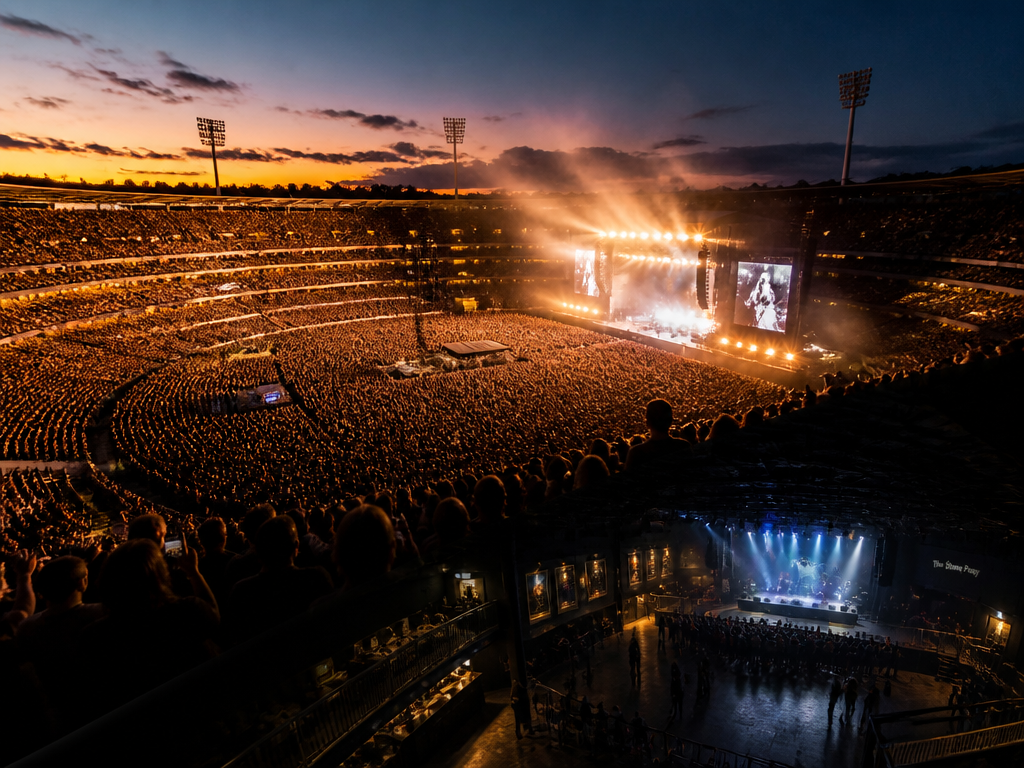
Every abstraction in this piece has a concrete face, and for on-sale failure the face is Chicago, June 2023 — the Eras Tour on-sale that turned into a national object lesson. The demand was real, the humans wanted to buy, and the primary sale buckled while bot-driven and speculative activity flourished around the edges. Fans who did everything right got nothing; fans who got tickets often paid resale multiples to intermediaries who added nothing but a markup.
That collapse is why the transparency wave has political oxygen. It is the story every legislator now tells, and it maps almost perfectly onto the interventions: bots overwhelmed the on-sale, ghost listings promised inventory that was uncertain, deceptive storefronts collected fans who thought they were buying official. The laws are a point-by-point response to what people watched happen.
And here is the thing for the displacement debate: the jobs "lost" in the world the transparency laws are trying to prevent are the jobs of the intermediaries who profited from that collapse. When the industry warns that regulation will cost jobs, a fair number of the jobs in question are the ones running the exact machinery that broke that on-sale. Reasonable people can decide how much they want to protect that machinery. But it should be named for what it is, not laundered into "the live-events workforce."
How I'd assess your own exposure
If you are a promoter, an independent venue owner, or a rights-holder tracking legislative risk, do not take the panel's word and do not take mine. Assess your own position against criteria you can actually check.
-
Which pool are you in? If your revenue comes from selling seats in a room, or from playing the room, or from managing the primary on-sale, transparency laws are close to neutral for your headcount and mildly favorable for your competitive position. If any part of your revenue depends on reselling inventory you do not hold, or on being mistaken for the official seller, your exposure is direct and you should read the statute like it has your name in it.
-
Who reprograms your fee display? Find out today whether all-in pricing compliance sits with your ticketing platform or with you. If it is you, that is a real line item and a real deadline. If it is the platform, get the commitment in writing with an effective date.
-
What are the per-violation penalties in your jurisdiction, and is there a small-operator provision? This is the sentence in the bill that determines whether a good-faith display error is a nuisance or a solvency event. If there is no grace period or size threshold, that is where you spend your advocacy energy — not fighting transparency itself, which is popular and probably inevitable, but fighting for a carve-out that keeps a misconfigured fee from bankrupting a 150-cap club.
-
Does the "jobs" number you are being handed distinguish resale headcount from everything else? If it does not break out speculative-resale labor from venue and event labor, treat the aggregate as advocacy, not analysis. Ask for the disaggregation. The refusal to provide it is itself informative.
-
What is the twelve-month administrative cost, honestly? Not the scary projection — your actual cost. Hours of reprogramming, hours of reading, one consult with someone who understands your state's rule. For most small operators that is a real but survivable number, and knowing it beats fearing an invented one.
Who this matters for, and who can relax
If you run a room or book shows, the displacement panic is mostly not about you, and you can spend the worry elsewhere — on the compliance overhead, which is your true exposure, and on making sure any bill in your state protects operators your size. Your box-office staff are not the endangered class.
If you are a policy watcher or advocate, your job is to keep the two stories separate in public: the cost story (real, administrative, hits small operators hardest, deserves carve-outs) and the displacement story (real only for speculative resale, wildly overstated when applied to the broader workforce). Letting them blur serves whoever wants the whole transparency project stalled.
If your business genuinely lives in speculative resale — the ghost listings, the bot-acquired inventory, the look-alike storefront — then yes, this is aimed at you, and no amount of reframing changes that. The honest move is to argue on the merits about whether that activity should be protected, not to hide behind concessions workers and door staff whose jobs are not in play.
The transparency wave is imperfect, unevenly written, and occasionally hard on the small operators who least deserve the paperwork. It is not the workforce extinction event the folklore describes. The gap between those two statements is where clear thinking lives.
Here is the myth in one sentence: ticket pricing transparency laws will displace a large share of the live-events workforce. And here is the more accurate version in one sentence: they will displace part of the speculative-resale business built on hidden fees, bots, and ghost listings — while leaving the box office, the stage, and the door largely where they were.
Not sure which tool to use?
Compare the top AI music and sound tools side by side — honest reviews, real pricing, no sponsorships.