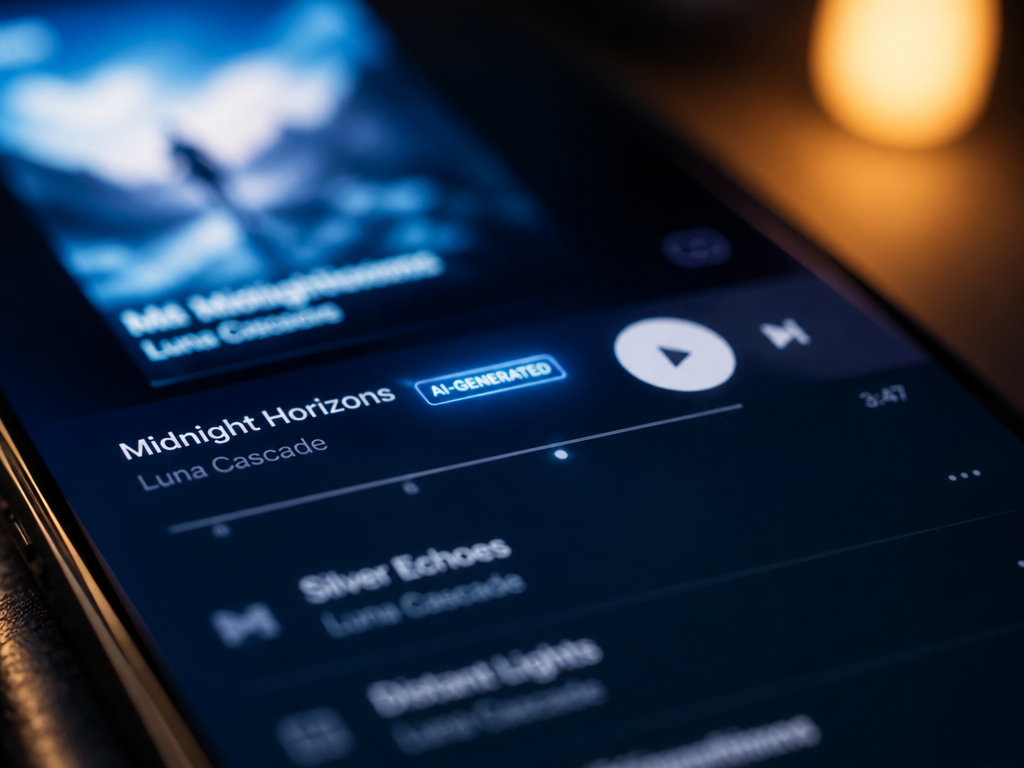
Boy George, by most accounts, should hate this. He is the frontman of an act whose biggest songs are decades old, the kind of artist you would expect to treat a machine singing his catalogue as theft with extra steps. Instead he has been backing it. The reason is uncomfortable and entirely rational: when one of those old songs reportedly generated around four million dollars in a licensing arrangement, the artist who wrote and sang it saw none of it. That money went to the people who owned the master recording. He did not.
That gap — between writing a song and owning the recording of it — is the whole reason AI music re-recording has become a live conversation in label boardrooms rather than a novelty. The technology is not the interesting part. The interesting part is what it does to who collects the cheque.
The wound that makes an artist pro-AI
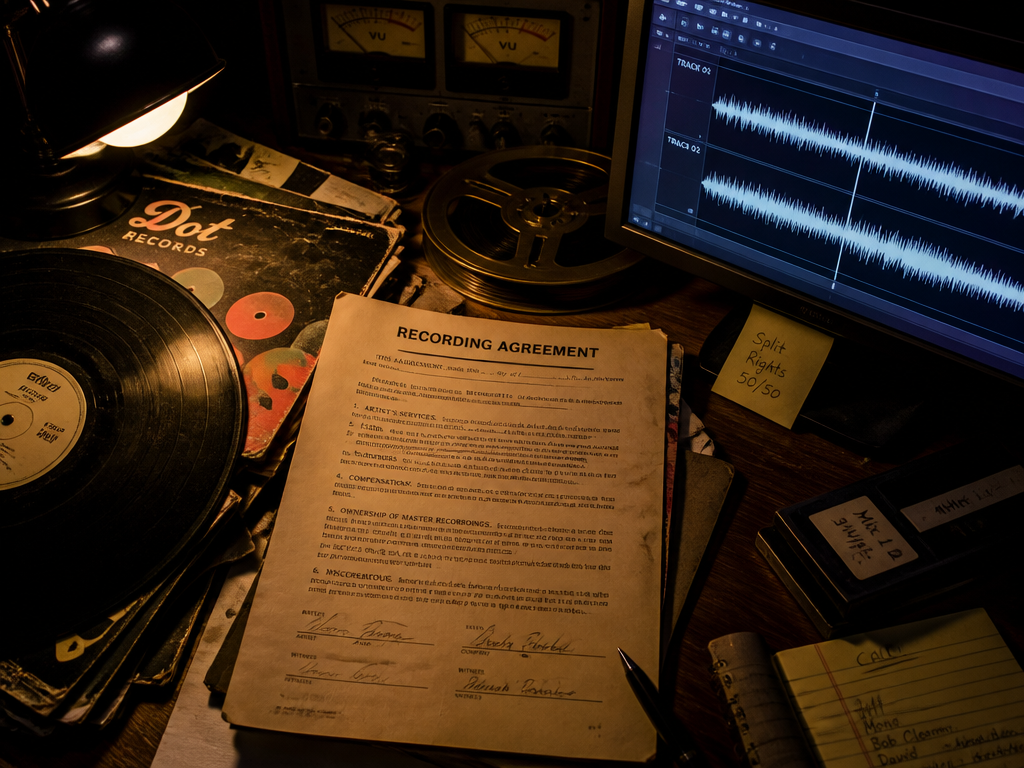
Here is the part outsiders consistently misunderstand. When a sync deal lands — a song in a car ad, a streaming series, a video game trailer — the licensing fee is typically split between two rights: the composition (the song itself, controlled by writers and publishers) and the master (the specific recording, usually controlled by the label that paid to make it).
A legacy artist who signed a standard deal in the 1980s often wrote the song but does not own the recording. So when a brand wants that recording, the master holder negotiates, the master holder collects, and the artist's slice arrives diluted through whatever their original contract specified — sometimes a royalty, sometimes, after recoupment math, close to nothing. Taylor Swift's re-recording project made this mechanic visible to people who had never thought about it: she could not own her old masters, so she made new ones she did own. That worked because she had the voice, the band, the studio time, and the leverage. Most artists have one of those four things at best.
AI re-recording is, at bottom, an attempt to give the other artists the same move without the budget.
How AI re-recording actually works, in order
Strip away the marketing and the mechanism is a sequence. Each step depends on the one before it.
First, you identify a recording you don't control. This is almost always a master owned by a label. The composition underneath it may or may not be yours.
Second, you deal with the composition. This is the step people skip in the excitement and the step lawyers care about most. Re-recording a song does not free you from the songwriting rights. If you wrote it, you clear it through your publisher. If you didn't, you license it like anyone covering a song. The AI changes nothing here.
Third, you generate a new performance. A vocal model trained on the artist's voice — ideally with that artist's consent — renders a new lead vocal. Modern tools can reproduce timbre and phrasing convincingly on a sustained pop vocal; they still stumble on the things that make a take feel alive, like a cracked note held a half-second too long or a breath in the wrong place. A producer's ear is doing real work cleaning up what the model returns.
Fourth, the new recording becomes a master you own. Because no one else paid to make it and no prior contract attaches to it, this recording is a fresh asset. When the next sync request comes in, you are now the master holder. The licensing fee that used to route around you routes through you instead.

That fourth step is the entire pitch. Everything before it is plumbing.
Does an AI re-recording let an artist escape their old master deal?
Not exactly — and the precision matters. An AI re-recording does not cancel or override an existing master contract. The old recording stays under its old ownership and keeps earning for whoever holds it. What a re-recording does is create a competing version that the artist controls, so future licensing dollars can be steered toward the version the artist owns. It is replacement by substitution, not by escape. Whether anyone chooses the new version over the original is a separate question, and often a commercial one decided by music supervisors and brands, not by the artist.
The catch nobody has resolved
The composition rights do not move. If a publisher or co-writer controls part of the song, they still get paid on the re-recording, and they can still say no. Labels also hold a quieter form of leverage: catalogue context, playlist relationships, and the simple fact that the original recording is the one the public knows. A pristine AI master of a hit nobody can find on the platforms they use is worth less than a worn original that surfaces everywhere.
There is also the consent problem in reverse. A voice model is only clean if the voice's owner agreed to it. The same tool that lets an artist re-record themselves lets someone else re-record that artist without asking. Companies in this space lead with language about consent and rights clearance; those claims are mostly unverified by anyone outside the companies making them.
Who owns what
| Original master deal | Artist-owned AI re-record | |
|---|---|---|
| The recording (master) | Label | Artist |
| The song (composition) | Writers / publishers | Writers / publishers (unchanged) |
| Who negotiates a sync of this version | Label | Artist |
| Who the public already knows | This version | Not yet |
| Who can block the re-record | — | Publisher / co-writers |
What the rightsholders are actually calculating
Labels are not panicking, and they are not dismissing this either. They are running the same arithmetic they ran during the tokenization wave a few years back: at what scale does this stop being a curiosity and start moving money off our balance sheet? A handful of legacy artists re-cutting their own catalogue is a rounding error. A normalized practice where any artist can stand up a clean, owned master and pull future sync revenue toward it is a structural change to where licensing income lands.
That is why the posture is watchful rather than hostile. The companies building these tools need label catalogues, label relationships, and label lawyers to operate without litigation. The labels need to know whether they are looking at a partner, a competitor, or a slow erosion.
What this piece can't tell you yet
Two things remain genuinely open. First, nobody has shown durable numbers on what an AI-owned master earns against the original it competes with — the substitution might be real, or audiences and supervisors might keep reaching for the version they grew up on. Second, it is unclear whether labels will permit re-recording of catalogue they control, or quietly write it out of future contracts. Watch the next round of artist deals, not the next product launch — the language in the paperwork will tell you who actually won.
Not sure which tool to use?
Compare the top AI music and sound tools side by side — honest reviews, real pricing, no sponsorships.