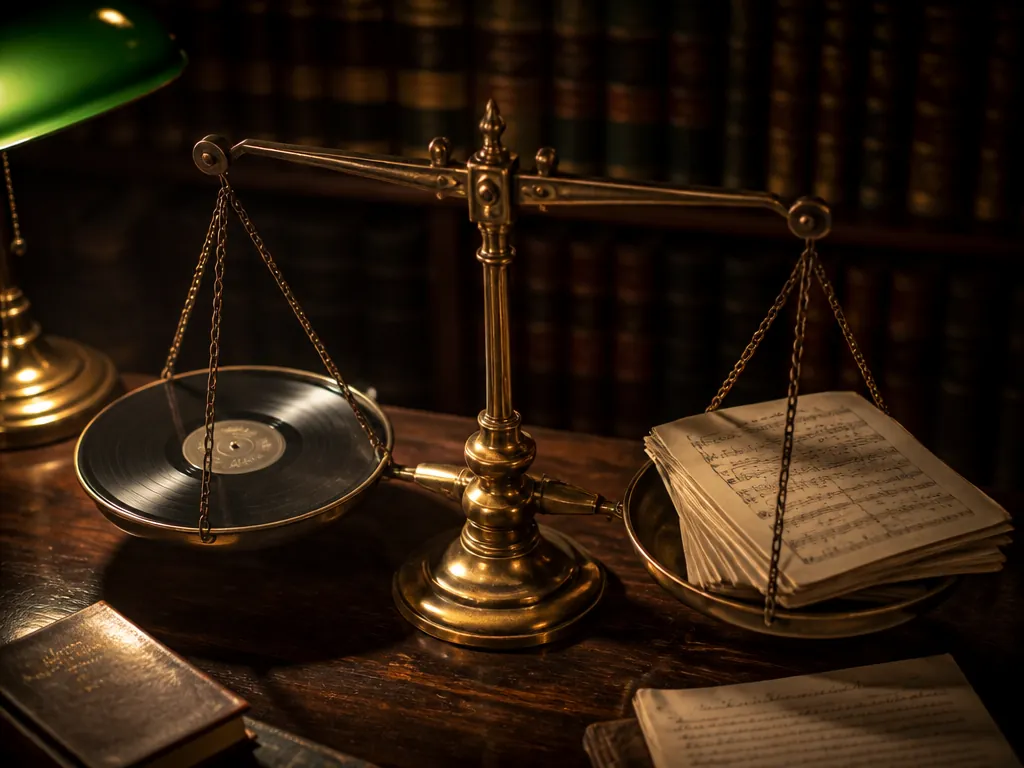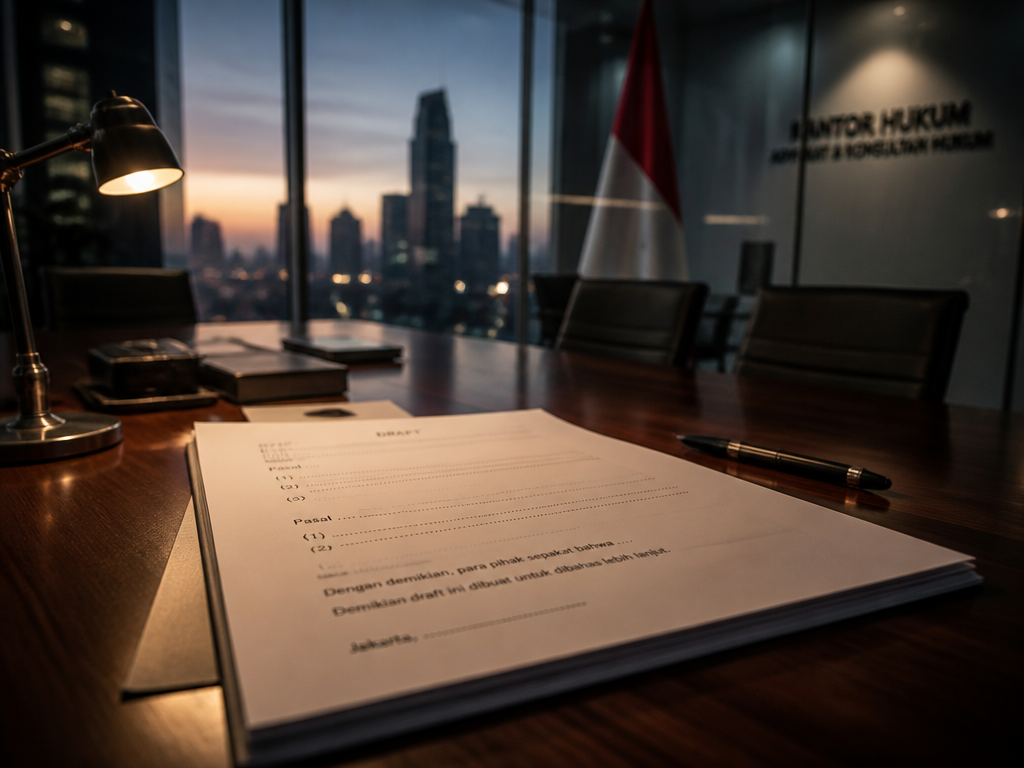
The email had two attachments: a 48kHz WAV of a lo-fi beat, and a PDF of a cease-and-desist. The producer who sent it was sure he'd been robbed. Another track, he said, used the same four-chord loop, the same washed-out Rhodes, a hook sitting in roughly the same pocket at roughly the same tempo. He wanted to know how fast he could sue. What he needed first was a short, unglamorous lesson in what copyright law protects, because the honest answer to "but it sounds like mine" is almost never the answer a wronged-feeling artist is hoping for.
That gap — between resemblance and infringement — is where most music litigation lives and dies. Copyright protection is far narrower than nearly anyone outside a courtroom assumes. And the tools we now build with, including AI generators trained on enormous catalogs of existing sound, are steering a lot more of these disputes toward judges who have already heard the argument and already know how it usually ends.
The myth: if it sounds like mine, someone stole it
The belief runs like this. I made something with a mood, a progression, and a feel. I worked years to arrive at that sound. So if your record shares that feel, you took it from me — and I can make you pay. Own the vibe. Own the theme. Own the two words in the hook everybody's humming.
It is an intuitive belief, and a sympathetic one, especially for people whose whole identity is a sound they sweated to find. It is also, as a matter of law, mostly wrong. Not wrong at the edges — wrong at the center. A smart, experienced musician will still hold this myth, because the emotional logic of authorship keeps insisting that similarity and theft are the same event. The court record says they are not.
The evidence: these cases fail more than they win
Watch what happens to music infringement suits once a judge actually reads them. A large share never reach a jury at all. Claims built on a chord progression, a tempo, a rhythmic feel, a genre convention, a short lyrical fragment, or the general emotional territory a song occupies get dismissed at the threshold — sometimes with language sharp enough to sting. The recurring judicial move is to strip the complaint down to its unprotectable parts and note that what's left is the common property of every writer working in that idiom.
Even the headline cases that do reach a verdict tend to have long, unhappy afterlives on appeal, where courts revisit whether the jury was allowed to compare things copyright never protected in the first place. The pattern is consistent enough to be a planning assumption, not a coincidence: the plaintiff points at a feeling; the defense points at the public domain; the feeling loses.
None of this means infringement isn't real. It means the bar sits somewhere most complainants have never actually looked.
The mechanism: why the building blocks aren't yours
Here's the machinery under the outcomes, and it's worth understanding whether you write briefs or basslines.
Copyright protects expression, not ideas. This is the idea–expression dichotomy, and it's load-bearing. A sad song in a minor key about a breakup is an idea. The specific, particular way you rendered it — the exact melody, the precise arrangement — is expression. You get the second one. Nobody gets the first.
Two doctrines police the boundary:
- Scènes à faire — elements that flow naturally from a genre or subject. A trap hi-hat roll, a IV–I resolution, a drop after the pre-chorus: standard equipment. You can't fence off the vocabulary everyone needs to speak the language.
- Merger — when there are only so many ways to express an idea, the expression "merges" with the idea and stops being protectable. There are a finite number of pleasing four-chord loops. Owning one would let you tax a genre.
Actual infringement analysis then runs two gates. First, access: could the defendant plausibly have heard your work? In an era where everything streams, courts are increasingly skeptical of "they must have heard it" arguments unless there's a real trail. Second, substantial similarity — and specifically similarity of the protected expression, filtered so that shared genre furniture, common phrases, and stock progressions are set aside before anything gets compared.
One genuinely protectable thing does survive that filter: selection, coordination, and arrangement. You may not own a single chord or a two-note motif, but a distinctive combination — the particular way you selected and sequenced otherwise-common elements — can qualify. That's the needle a serious claim has to thread. It is a real needle, and it is thin.
The honest takeaway for the AI era
This matters more now, not less. When a producer types a prompt describing "detuned analog bass, broken 808, roughly 140 BPM, the mood of a specific artist," and a model renders something eerily close to a track they love, the instinct is to reach for infringement — in either direction. But a mood, a BPM, a synthesis approach, and a genre are exactly the unprotectable layer the doctrine has spent a century separating out. Style, as a category, is close to unownable. That cuts against the artist who feels imitated and in favor of the one doing the imitating, which is uncomfortable, and true.
The live legal questions around AI music sit somewhere else entirely: whether training on copyrighted recordings without a license is itself an infringement or a fair use, and whether an output is close enough to a specific protected work — not a style, a work — to cross the substantial-similarity line. Those are unsettled, and the terms shift by jurisdiction and by the month, so treat anything you read, including this, as a description of the terrain rather than a promise about your case.
What you can act on: keep your own project files, versions, and stems as a provenance trail. Read the actual license on every generator you use — output ownership and commercial terms vary by platform and change often — rather than assuming "AI-made" means "clear." And before you send a cease-and-desist, ask the question the judge will ask first: are you pointing at protected expression, or at a feeling you share with everyone else in the genre?
The producer with the lo-fi beat didn't sue. Once we listened past the shared furniture, what was left was two people who'd walked into the same well-lit room and described it in nearly the same words. That's not theft. That's a genre.
The myth says that if a song sounds like yours, someone stole it from you. The more accurate version is that copyright never protected the sound-alike layer at all — only the specific expression you can prove is yours, and only against someone who plausibly heard it.
Not sure which tool to use?
Compare the top AI music and sound tools side by side — honest reviews, real pricing, no sponsorships.