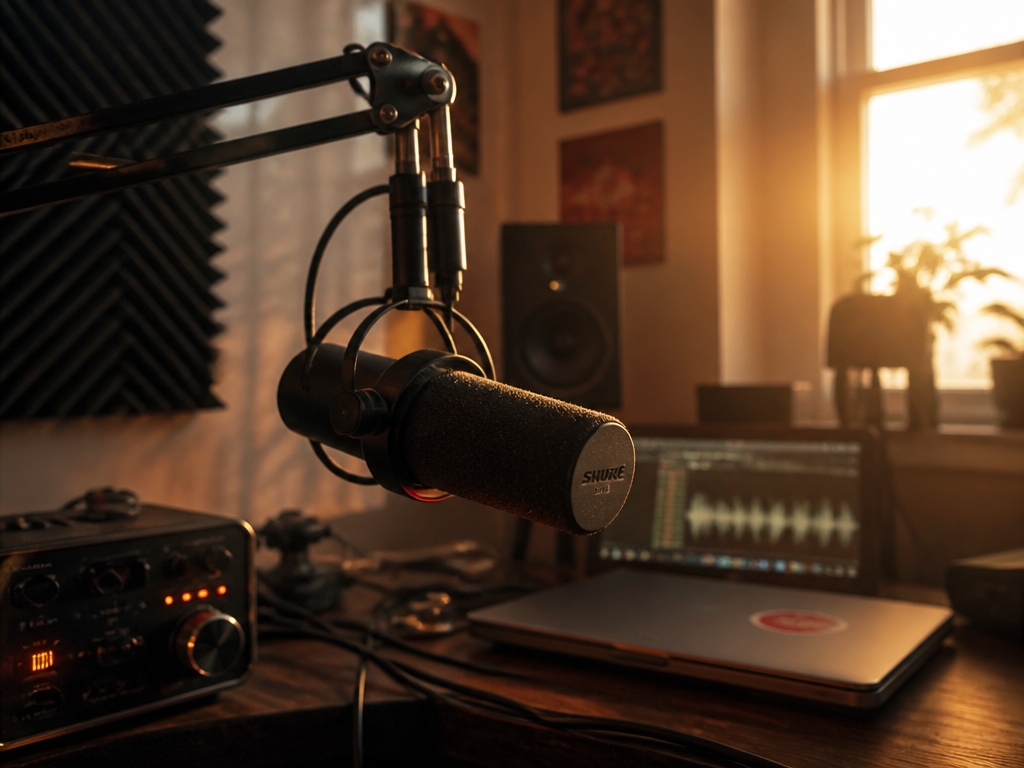
A dispute lands on your desk on a Tuesday. A distributor flagged a track in your catalog as machine-generated, pulled it from three DSPs, and now the artist's lawyer wants to know what produced that decision. You open the detector's report. It says 94% likely AI. That is the whole report. A percentage and a logo. The artist says they tracked the song in a bedroom studio with a borrowed SM7B, and they have the session files to prove it.
You are now in a fight you cannot win on paper, because a percentage is not an artifact. This is the part of AI music detection nobody sells you on: catching the synthetic track is the easy half. Defending the verdict — to a distributor, a label's legal team, or eventually a regulator — is the half that decides whether your compliance process is real or theater.
Disclosure up front: City of Punk builds a generative music product. We make some of the material these detectors are hunting for. That puts me on the awkward side of this conversation, which is exactly why I want the detection side to be rigorous. A sloppy filter that wrongly flags a human artist is bad for everyone, including us. So read the rest as a working sound designer's assessment, not a vendor's.
The short version: most detection tooling gives you a number when what you need is an exhibit, and the gap between those two things is where false accusations and unenforceable verdicts live.
What Most People Do
Right now the default workflow in most rights and compliance teams is some combination of three things, and all three have the same flaw.
They run tracks through a confidence-score detector. You feed it audio, it returns a probability that the file is AI-generated. The good ones are genuinely useful as a triage signal. The problem is that the output is a single scalar with no provenance attached. You cannot hand a judge, or even a serious distributor appeals desk, a number and call it evidence. A score tells you the model's opinion. It does not tell you what the model heard, how often the model is wrong on material like this, or whether the same file run tomorrow returns the same answer.
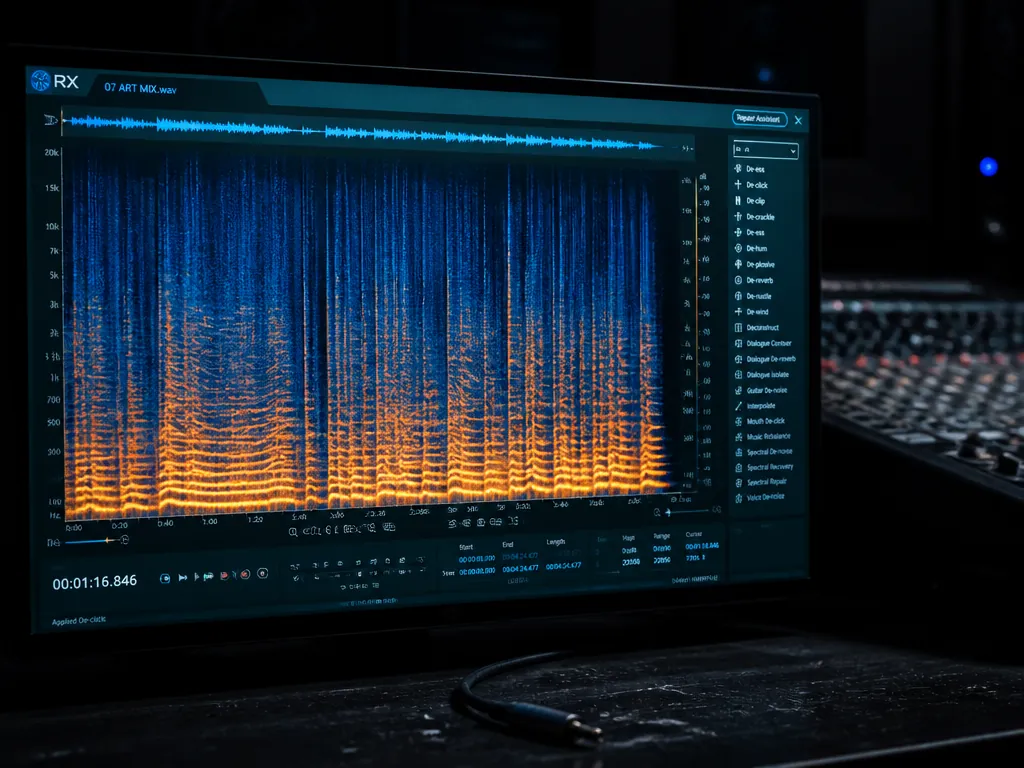
They build in-house heuristics. Someone on the team notices that a lot of the synthetic submissions share tells: spectral energy that flatlines above 16kHz, suspiciously consistent loudness, drum transients that are too clean, vocal formants that smear on sustained vowels. These are real tells, and an experienced ear catches them. But heuristics are brittle. The generators retrain. The 16kHz rolloff that was a dead giveaway last quarter is gone this quarter because the model started rendering at full bandwidth. In-house rules age out faster than you can document them.
They escalate to a human listener only after a complaint. The reviewer is brought in to defend a decision that was already made by an automated score, which means they are reverse-engineering a justification rather than producing one. That ordering is backwards, and it shows the moment the artist's representation asks a pointed question.
What unites all three: the verdict arrives without a record. You can state it. You cannot reconstruct it.
What The Evidence Suggests
Two pressures are squeezing this from opposite directions, and both have hardened over the past couple of years.
The first is that the published research on detector accuracy is less flattering than the marketing. Academic work in music information retrieval has repeatedly shown that detectors which look excellent on the data they were trained against degrade sharply on material from generators they have not seen, and on real-world audio that has been transcoded, mastered, or re-encoded by a streaming platform. A detector validated on pristine renders is not the detector you are running in production, where everything has been through a lossy codec at least once. False positives — flagging a human track as synthetic — are the failure mode that should keep you up, because that is the one that ends in a defamation argument rather than a quiet takedown.
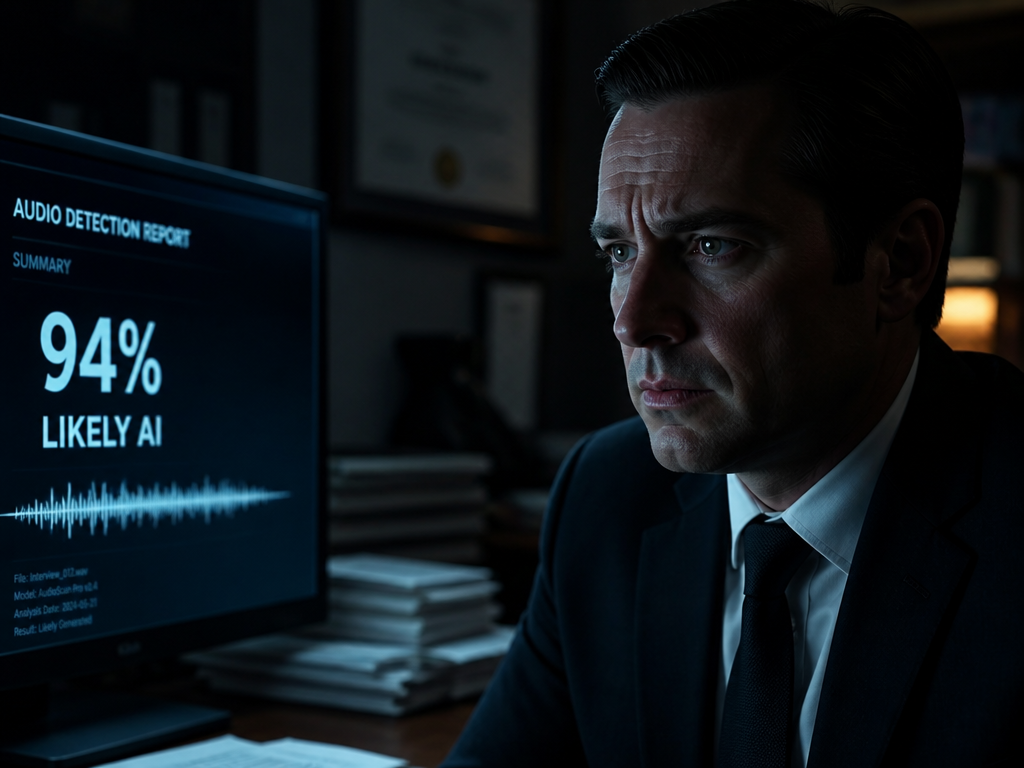
The second pressure is regulatory. Transparency obligations around AI-generated content are moving from proposed to enforceable across multiple jurisdictions, with meaningful financial penalties attached for getting disclosure wrong. The specifics vary by region and keep shifting, so check current text rather than my summary, but the direction is settled: at some point you will be expected to justify a labeling or removal decision, not assert it. "Our detector said so" is not a justification. It is the beginning of one.
Put those together and the requirement becomes clear. Detection has to produce something durable: a record that states the model version, the analyzed audio's fingerprint, the features that drove the call, and a stated error rate for material of that type. Some vendors have started shipping signed, reproducible reports that bind a verdict to a specific file and a specific model build. That is the right idea, regardless of who ships it, because it converts an opinion into a thing you can put in front of someone hostile and have it survive scrutiny.
The honest caveat: a signed report is only as trustworthy as the error rate behind it, and most of those error rates are self-reported. Until there is independent, third-party auditing of detector accuracy on adversarial and real-world data, treat every published false-positive number as a starting point, not a guarantee.
What I Actually Do
When I am asked to advise on filtering submissions, I treat the detector as the cheapest stage of a pipeline, never the verdict.
Triage with the score, decide with the record. Use the confidence detector to rank a queue, not to convict. Anything above your threshold goes to review; anything that gets actioned generates a retained artifact — the file hash, the detector version and date, and the specific acoustic features cited. If you cannot reproduce the verdict from the artifact six months later, it was never evidence.
Keep a human in the loop before action, not after complaint. A trained listener checking the top of the flagged queue catches the obvious false positives — the lo-fi bedroom recording the model mistook for synthetic because it was loud and bandlimited — before the takedown goes out. This is slower and it costs money. It is also the difference between a defensible process and a liability.
Demand provenance from both directions. Where you can, ask submitters for session evidence: stems, project files, raw multitracks at 48kHz. A real session has artifacts a render does not — punch-ins, comp edits, room noise that moves. None of this is dispositive on its own, but it stacks with the detector output into something that holds.
Assume the generators win the arms race on any given week. Build the process so it survives the detector being wrong, because periodically it will be.
Who this is for
Rights managers and compliance officers who will eventually have to defend a verdict to someone with a lawyer. If your decisions never get challenged, a raw confidence score may be all you need, and you can skip the overhead. The moment money or reputation rides on a single call, the overhead is the product.
One thing to try this week
Pull the last five tracks your team flagged as AI-generated and try to reconstruct each verdict from scratch — file, model version, the features that drove it. If you can rebuild three of five into something you would hand to opposing counsel, your process is most of the way there. If you can rebuild zero, you have a number, not a case, and now you know what to fix first.
Not sure which tool to use?
Compare the top AI music and sound tools side by side — honest reviews, real pricing, no sponsorships.