Last month I built a small test bench to answer one narrow question: if I generate a track that obviously leans on a known artist's voice and style, can the current crop of attribution tools actually flag it?
So I made the bait. A 120 BPM track in A minor, a detuned analog bass under a broken 808, and a cloned vocal trained on a single well-known pop performance — the kind of thing that gets a takedown notice if a human hears it. Then I ran the render through a commercial fingerprinting service and a separate stem-analysis pass, and I waited. This is the part of the AI music industry nobody puts in a press release: the gap between what the marketing deck promises about detection and what a single suspicious file does when it hits the system.
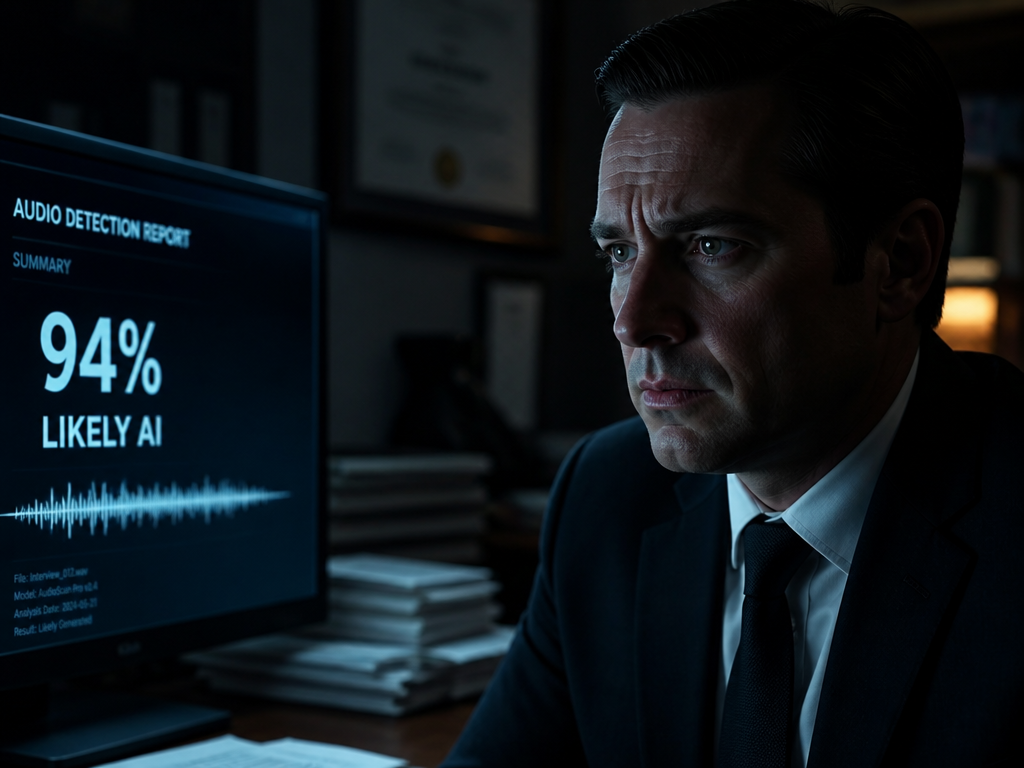
The fingerprinter, built for matching masters, returned nothing. No match, because there was no master to match — the audio was novel even if the voice was not. The stem analysis flagged "synthetic vocal, high confidence" but could not name whose voice it was imitating. One trial, one measurement: the tech told me the file was machine-made, and stopped short of telling me whose rights it touched. Hold that result. It is the whole story.
The verdict, stated plainly
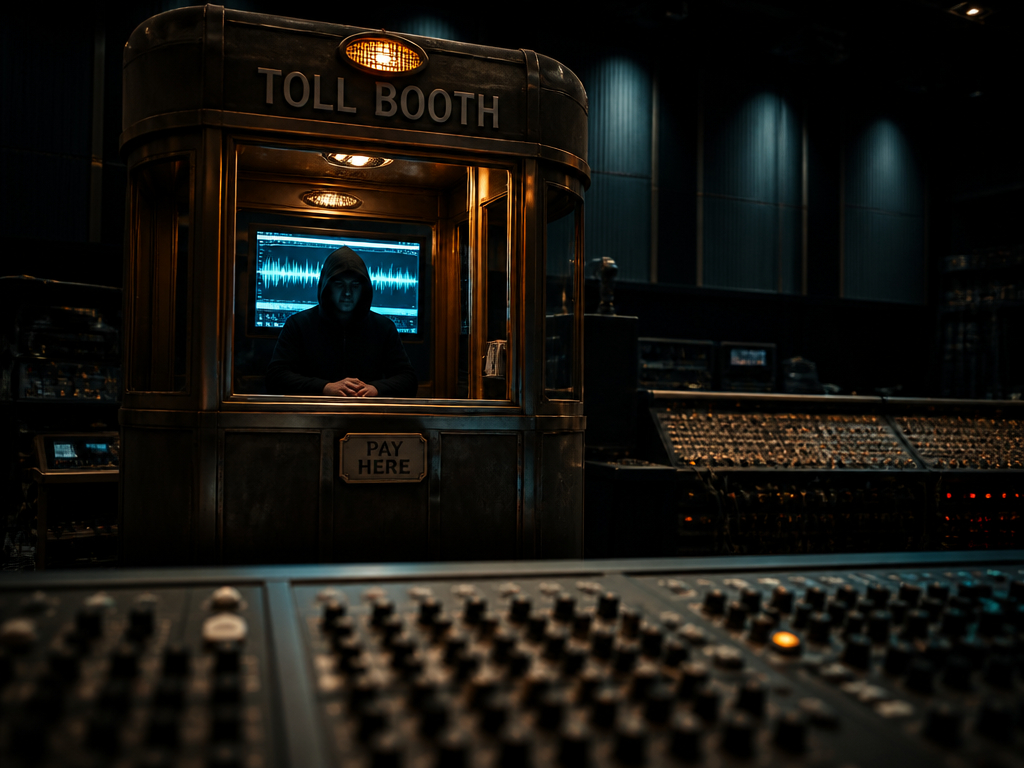
The defining move in the AI music industry right now is not a lawsuit or a model release. It is major labels buying the attribution and licensing infrastructure so they sit at the toll booth instead of chasing infringers down the road after the fact. For a rights holder, the strategic question has quietly changed from "can we stop this" to "who collects when it happens, and on what terms." Owning the meter beats winning the argument.
Disclosure before we go further: City of Punk makes AI music tools, which puts us on one side of this market. I am going to try to keep the scale honest anyway, because the people reading this have to decide whether to license catalog into these systems, and that decision deserves better than a brochure.
Why buying beats suing
Litigation against AI training is slow, expensive, and binary — you win or you lose, years later, on facts about datasets you cannot fully see. Some majors are still pressing those claims, and they may be right to. But a parallel strategy has emerged: rather than litigate the past, acquire the company that can identify, attribute, and bill for AI use going forward. One path ends in a settlement check. The other ends in recurring revenue and a permanent seat in the workflow.
The logic is the logic of performing-rights organizations a century ago. When radio threatened to play recorded music for free, the durable answer was not to ban radio. It was to build the collection machinery — the licenses, the logs, the splits — so every play generated a payment. Attribution-for-AI is the same instinct pointed at a new instrument. Whoever owns the detection and licensing layer owns the relationship between the model maker and the catalog. That is a more powerful position than being a plaintiff.
The pitch to artists is protection: track where your voice and style surface in generated work, and get paid when they do. That is a real benefit, and it is not cynical to want it. The open question — the one the deal announcements skate past — is whether "control" routes value to the artist or mostly to the entity that owns the meter.
How I'd evaluate one of these deals
If catalog or an artist roster is being put into one of these systems, vague promises about "AI DNA" or "protecting creators" are not enough. Here are the criteria I'd press on, in the order that actually determines outcomes.
Detection accuracy on real renders, not masters. Fingerprinting that matches against released recordings is mature and reliable. Detecting that a novel generated track derives from an artist's voice or style is a different, harder problem — closer to forensic stylometry than to Shazam. Ask for the false-negative rate on style-derived generations, not the match rate on uploaded copies. My one test suggests the second is solved and the first is not.
What counts as "use." A cloned voice is the easy case. The hard cases are style, phrasing, a recognizable production signature, a chord movement. Where does the system draw the line, and who decides? A tool that flags everything is as useless as one that flags nothing, because false positives poison the royalty pool and bury rights teams in disputes.
Opt-in versus opt-out defaults. This is the term that burns people. Is an artist's identity tracked and licensed by default once the label signs, or does each artist consent per use? Defaults are policy. Read them like a contract, because they are one.
Who gets paid, and on what split. Attribution without a settled royalty formula is surveillance with a dashboard. The value of the technology is only as good as the plumbing behind it: collection, splits between label and artist, payment cadence, and audit rights. Ask to see a sample statement, not a capability slide.
False positives and dispute load. Every flag that turns out wrong costs someone time and goodwill. A system that generates ten thousand alerts a week needs human adjudication, and that cost lands on the rights team. Find out who staffs it.
Who it's wrong for. An independent artist with a small catalog and no leverage may find that signing into a label-owned attribution system means accepting that label's definition of "use" and that label's split — terms set by the party that owns the tool. The infrastructure that protects a marquee name can quietly bind a smaller one.
The control question nobody answers cleanly
Here is the honest negative, and it applies to every deal in this category, ours included. Attribution technology concentrates power wherever the meter sits. The same system that catches an unauthorized voice clone also defines what a voice is for licensing purposes, sets the threshold for what triggers a payment, and decides whose claim gets honored when two artists have similar tones. Those are not neutral engineering choices. They are policy decisions made inside a private company that increasingly belongs to a major label.
That is not a reason to reject the model. A working toll booth is better for artists than an open highway where machine renders of their voice circulate with no payment and no record. But "better than nothing" is a low bar, and the people signing catalog into these systems should not mistake a control narrative for an artist-protection guarantee. Control is the product. Whether protection rides along depends entirely on the terms underneath it.
Who should care now, and who can wait
If you manage a catalog with recognizable vocal talent — anyone whose voice could be cloned and would be worth cloning — this is on your desk this quarter. The defaults being set now will be hard to renegotiate later. If you advocate for artists, the opt-in language and the split formula are where your leverage is, before signatures, not after.
If you run a small independent operation with no marquee voices, you can watch this develop without rushing in. The detection science for style-derived work is not settled enough to bet a small business on, and the terms will get clearer as the bigger players fight over them.
Back to the bench
I went back to my test track and tried to make the harder case work. I trained a second voice model on a more obscure source, generated a render, and asked the tools whose voice it resembled. They could tell me it was synthetic. They could not tell me whose style it borrowed, because the reference was not in any database they query. The clone of a famous voice might eventually get caught. The clone of an influence — the thing most generated music actually does — slid through untouched.
That is the unresolved part, and it is not a detail. The entire economic case for label-owned attribution rests on the assumption that the tools can reliably identify derived style, not only copied masters. My one bench test is not proof of anything at scale. But it points at the real question, and I don't think anyone has answered it yet: can attribution science actually distinguish a track that infringes a voice from one that was merely influenced by it — and if it can't, whose definition of "use" gets to fill that gap?
Not sure which tool to use?
Compare the top AI music and sound tools side by side — honest reviews, real pricing, no sponsorships.