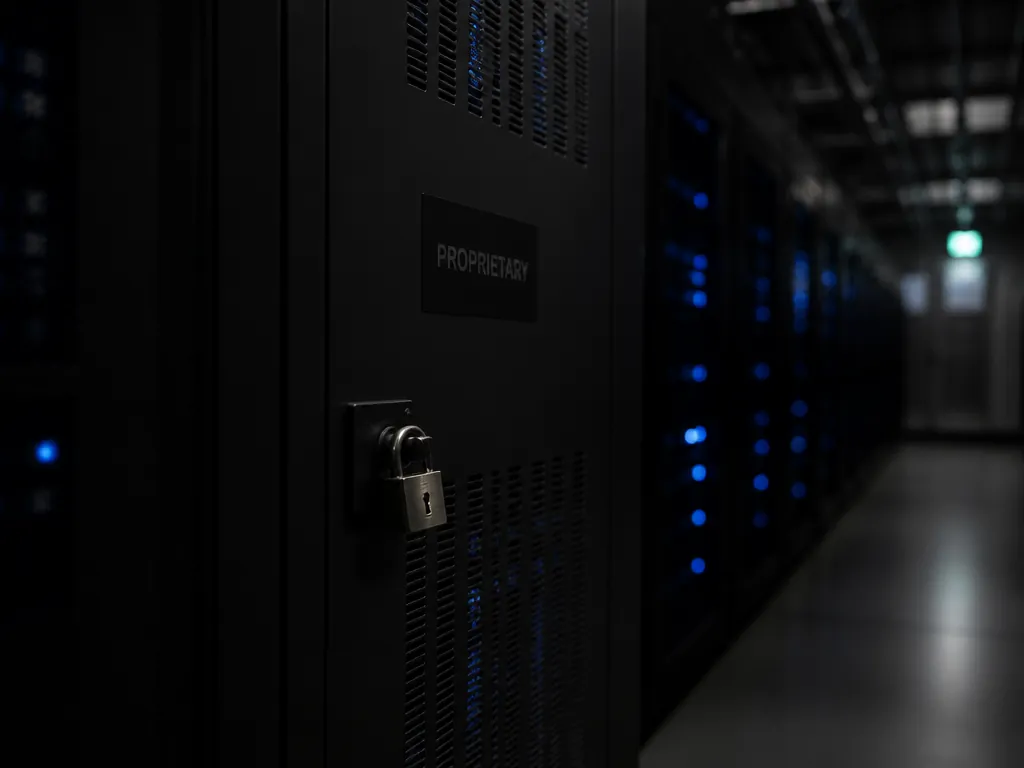
The first time I tried to trace where a popular text-to-music model got its training data, I got a marketing page, a terms-of-service link, and a paragraph that leaned on the word "proprietary" three times in four sentences. That is the shape of AI music generation as an industry right now: the outputs are startlingly specific — a detuned Rhodes over a broken 808, rendered in under a minute — and the inputs are a sealed box. For a market this loud, the quietest question is also the most consequential one: what was the model fed, and who agreed to it.
This matters well beyond the liner notes. Streaming platforms have started reporting that a large and rising share of daily uploads are machine-made; one major service said in early 2026 that AI tracks had crossed half of its daily submissions. Every one of those uploads is downstream of a training set that nobody outside the labs has fully seen. If you are tracking this market as a disruption story, the training data is the part of the machine you are least allowed to look at — which is usually a sign it is where the money and the liability actually live.
What most people assume
Most observers — including people who follow this market closely — land on one of two stories.
The first is charitable: the models were trained on properly licensed catalogs, the way a sample library gets cleared, and the "proprietary" language is ordinary corporate caution. The second is cynical: nearly everything was scraped off the open web — video rips, upload sites, artist pages — and the licensing talk is a fig leaf over that.
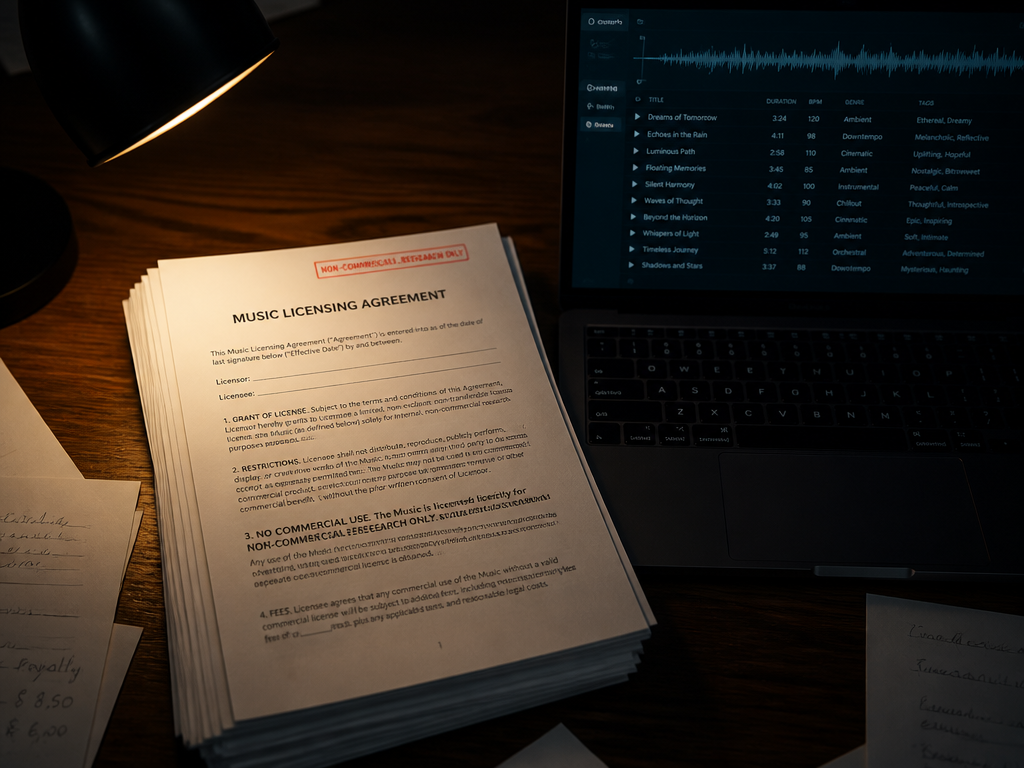
The reality is messier than either, and the companies have a strong incentive to keep it blurry. Admitting to licensed data invites the follow-up of which licenses, from whom, and at what scope. Admitting to scraped data invites lawsuits. So the public answer stays at the altitude of "we train on a broad range of data," which is true, unfalsifiable, and useless to anyone trying to make a decision. The blur is not an accident. It is the product of two legal risks pointing in opposite directions, and it will hold until something forces a disclosure.
What the evidence suggests
We can't read the training manifests, but we are not blind either. Several signals point the same way.
Litigation is doing the discovery the labs won't. Major labels have taken the largest generative-music companies to court, arguing their systems were trained on copyrighted recordings without permission. Those cases are unresolved as of writing, and I am not going to guess at outcomes. But the filings themselves are evidence of what sophisticated rights holders believe they can prove — and discovery in suits like these can eventually compel the kind of disclosure no marketing page ever volunteers.
The models sometimes tell on themselves. Steer a system toward a named artist's style and you often get back something uncomfortably close — a phrasing, a timbre, a signature drum sound. Researchers probing image and text models have repeatedly shown that large systems can memorize and reproduce fragments of their training data verbatim. There is little principled reason to assume music models are categorically immune, and some outputs behave exactly as if they aren't.
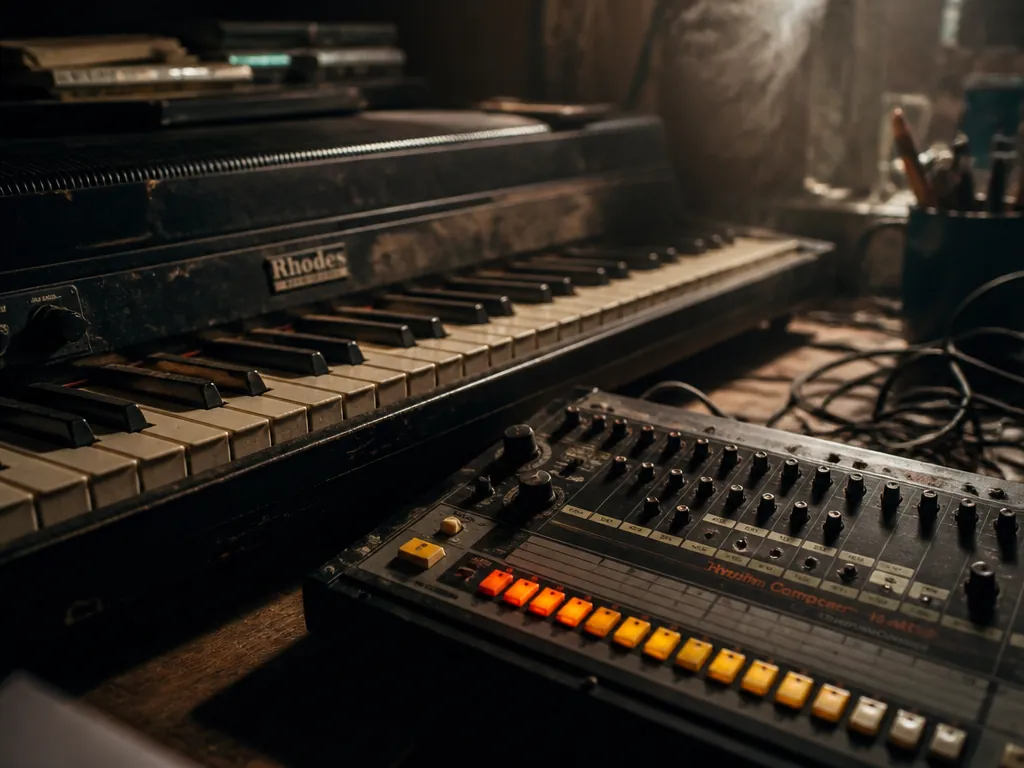
Breadth of output implies breadth of ingestion. A model that convincingly produces drill, gamelan, close-harmony gospel, and vaporwave in the same afternoon did not learn all of that from a small, cleared library. The range is the tell. Broad competence across the recorded history of popular music is very hard to assemble with everyone's permission, and easy to assemble without it.
None of this proves any specific company's sourcing. It is the gap between what the labs say and what the outputs demonstrate — and for anyone pricing risk in this market, that gap is the story worth following.
What I actually do
I score these tools for commercial use, and I advise people who have to bet a shipping product on the answer. Here is the working process, minus the hedging.
I don't ask "is this legal." I ask "who is holding the risk." A vendor's terms almost always push liability back onto you, the user, and the shape of that push tells you how confident the company really is in its own training data.
In order:
- Find the indemnity. Does the vendor promise to defend you if an output draws a claim? Some now do, often capped. Silence is itself an answer.
- Match the license grant to your use. "Royalty-free" and "you own the output" are different promises, and neither one resolves the training-data question sitting underneath both.
- Test for mimicry. Prompt the tool toward three artists you would never be able to license. If it nails them, the model has clearly heard them — and so will anyone auditing your project later.
- Keep provenance records. Save the prompt, the date, the model version, and the terms exactly as they read that day. Terms get revised quietly; your paper trail shouldn't move.
- Assume disclosure comes eventually. Build so that if a tool's sourcing becomes a headline, you can swap it out without re-clearing your entire catalog.
For a platform operator or a rights holder reading this, the mirror image applies. Your leverage is not detection — it is provenance. Knowing a track is machine-made is already easy and getting easier by the quarter. Knowing what the generating model was trained on is the fact that actually decides who owes whom, and right now it lives entirely inside the labs. Detection tells you the water rose. Provenance tells you where it came in.
That is roughly where my confidence ends, because it is where the science and the law both run out.
The unsettled line is the one between learning and copying. A human producer who internalizes a thousand records and writes something new is celebrated for it; a model that statistically internalizes the same records and outputs something new is in a courtroom. Nobody — not the engineers, not the copyright scholars, not the judges hearing these cases — has a settled, testable definition of where absorbed influence ends and a derivative work begins. Until someone does, every confident claim about AI music training data, in either direction, is standing on ground that has not set. So here is the question I can't answer, and neither can the person selling you the tool: if a model never stores a single copyrighted file but can reproduce the feel of one on command, what exactly did it take?
Not sure which tool to use?
Compare the top AI music and sound tools side by side — honest reviews, real pricing, no sponsorships.