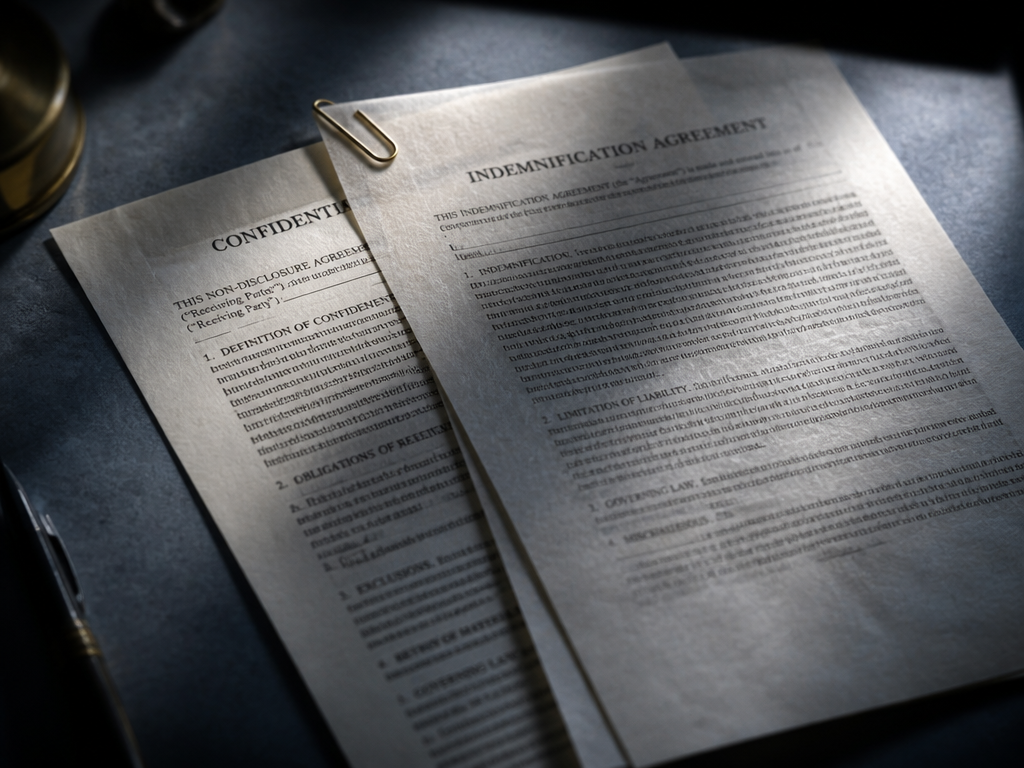
There is a sentence in YouTube's terms of service that most artists scroll past on their way to hitting publish. It grants the platform a license to use, reproduce, distribute, and create derivative works from the content you upload. That clause was written long before anyone was building generative models. Read it again now, in the context of AI music training, and it stops looking like boilerplate and starts looking like a supply line.
This is not a panic piece. It is a piece about a mechanism — what happens to your master when it leaves your hard drive, what happens to it inside a platform, and what comes out the far end with your fingerprints sanded off. Follow it in order, because the order is the whole story.
What happens first: the upload and the grant
The moment audio lands on a platform, you have entered into a license agreement, whether you read it or not. You keep your copyright. What you hand over is a broad, royalty-free, worldwide license for the platform to do a long list of things with your file.
For two decades that license powered the obvious stuff — streaming your video to a viewer in Lagos, caching it, transcoding it, recommending it. "Create derivative works" meant thumbnails and clips. Nobody litigated it because nobody needed to.
The breadth of that grant was always there. It only matters now because there is suddenly a use for every second of audio ever uploaded: it can become an example a model learns from. The grant didn't change. The value of what it covers did.
What happens next: the corpus
Here is where pattern-recognition beats outrage. Platforms have been deliberate about what they say and careful about what they don't.
When companies announce music-generation tools, the public language tends to point at "licensed and partnered" catalogs — deals with the majors, with publishers, with named libraries. That framing does real work. It is true, and it is also incomplete, because it describes the front door without describing the whole house. The uploaded long tail — the indie EP, the library cue you sold once, the beat you posted as a loop pack — sits in a different category, governed by the terms you accepted on upload rather than by a negotiated contract.
Whether that long tail is or isn't in any given training set is something the public mostly cannot verify. That opacity is the point worth sitting with. The opt-out conversation only exists at all because the default leans the other way — you are generally asked to remove yourself from something already in motion, not asked to join it.
The question to actually ask
Forget "did they train on me." You can rarely prove that. The durable questions are:
- What does the current terms-of-service language permit, in plain reading?
- Has the platform published an opt-out or training-exclusion mechanism, and does it apply retroactively or only going forward?
- Are the protective statements about "partner catalogs," or about all uploaded audio?
What happens last: the output, and why you can't unwind it
A trained model does not store your song. It stores statistical relationships learned across millions of files. So when something comes out the other side that sounds like your low-slung detuned bass and your specific way of leaving the hi-hats slightly behind the grid, there is no clean way to point at the file it came from.
This is the irreversibility problem, and it is the reason the upstream clause matters more than any takedown you might file downstream. A copyright claim works when you can identify a copy. It strains when the "copy" is a tendency — a 124 BPM, A-minor melancholy that the model absorbed from a thousand sources including, possibly, yours. You can pull a track that samples you. You cannot pull the influence out of a model that learned from you. The cake is baked.
That is why advocates have pushed the fight upstream, toward consent and transparency at the training stage, rather than relying on detection and removal after the fact. Once it's in the weights, the leverage is mostly gone.
The leverage gap nobody designed but everybody benefits from
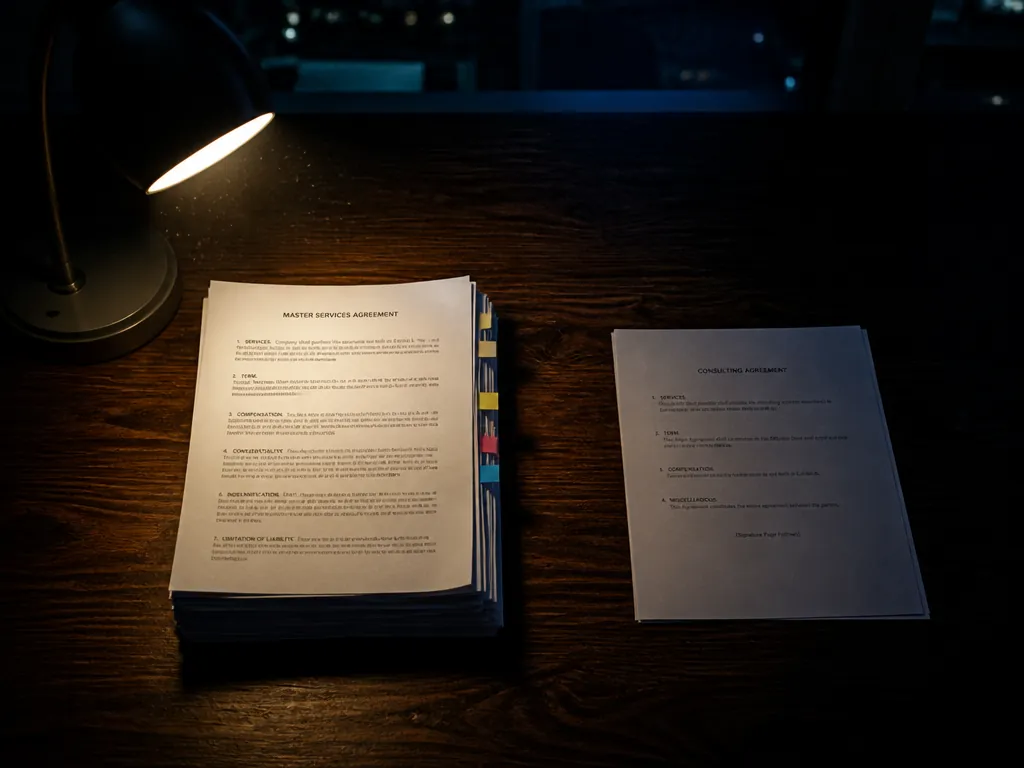
Stack the steps up and a structural asymmetry appears. A major label negotiates a training deal — terms, payment, opt-outs, audits. An independent artist gets the terms of service, which is to say a contract written entirely by the other side and accepted with a click.
This is not a villain story. It is an economics story. Platforms pursue licensed catalogs first because majors can credibly sue and credibly walk. Indies can do neither at scale, so the default applies to them by gravity. Rights organizations and collective bodies exist precisely to close that gap — to give the long tail something resembling a bargaining table — and the live question across the industry is whether they can move at the speed the models are moving.
A short audit you can actually run this quarter
You will not solve this with a clause of your own. You can reduce your exposure and document your position.
- Read the current grant. Find the "license you grant" section on every platform hosting your masters. Copy the derivative-works language into a dated note. Terms change; your record shouldn't depend on memory.
- Locate the opt-out, if any. Check whether a training-exclusion setting exists and whether it covers past uploads or only future ones. Screenshot it.
- Separate what you control. Masters you host yourself, under your own terms, are governed by your terms. That is the one part of the chain you fully own.
- Watch the wording of announcements. "Trained on licensed content" and "trained on user content" are different sentences. Track which one a given product uses.
- Talk to your collective body. Whether that's a PRO, a guild, or a rights org, the upstream consent fight is where representation has leverage you don't have alone.
If you are generating new work rather than defending old work, the cleaner position is using tools whose training provenance is disclosed — City of Punk's catalog is built that way for exactly this reason — so the output you ship carries no inherited claim.
That one sentence in the terms of service hasn't changed a word in years. What changed is that it is no longer describing how your music gets played. It is describing how your music gets learned — and that is the clause to read twice before you upload again.
Not sure which tool to use?
Compare the top AI music and sound tools side by side — honest reviews, real pricing, no sponsorships.