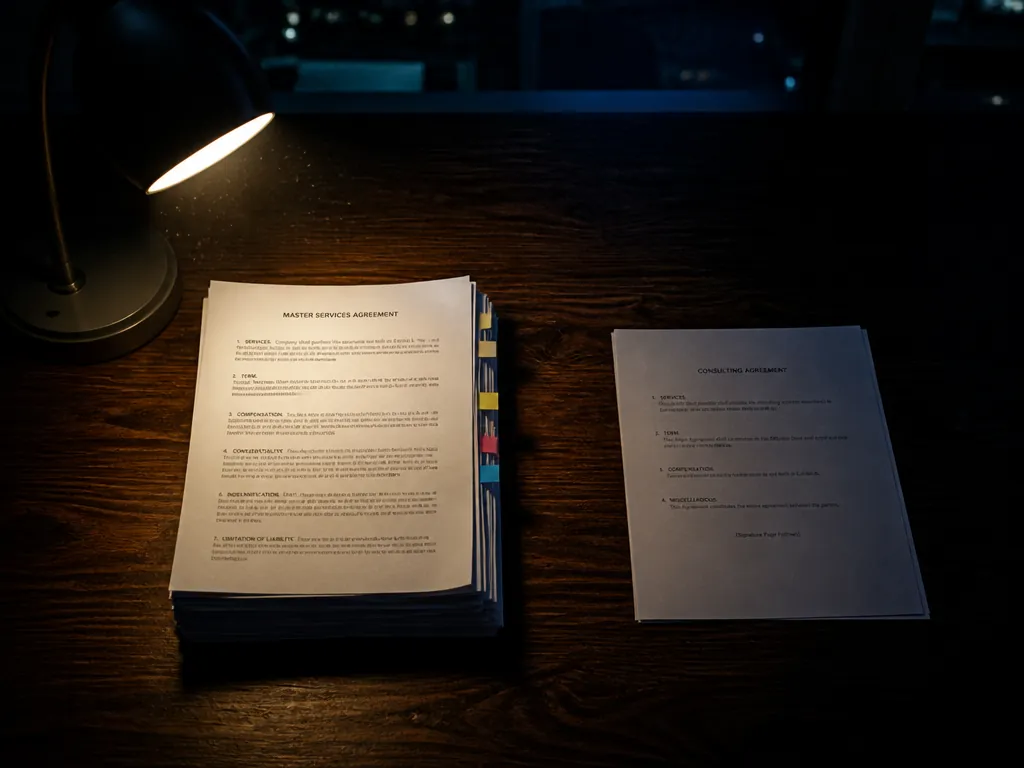
The one-pager landed at eleven at night with a question mark in the subject line. A product manager I know at a small generative-audio company had five sentences of compliance copy her counsel had blessed, and the last one read: all training material is licensed, therefore output is cleared for commercial use. She wanted to know whether she could ship it.
That sentence is roughly where the industry has landed on AI music generation licensing, and I understand the appeal. It is short. It survives a board meeting. It maps onto the one risk that has actually dragged companies into court. It is also doing about half the work people think it does.
Where the advice holds
Start with the part that stands up, because it stands up well.
Input-side exposure is the kind that ends companies. Output-side exposure is the kind that ends a track. If a rights holder establishes that you ingested their catalogue without permission, the exposure scales with the number of works in the corpus, and the corpus is the entire business. There is no version of that fight that gets cheaper with time. Licensing the training material converts an existential, uncapped question into a line item, and a line item is something you can put in a data room.
The market has noticed. As of writing, at least one major European collecting society is simultaneously litigating against a large AI music company and selling developers a cleared corpus for training, assembled from its own membership and a handful of production-music partners. Read as a contradiction, that looks cynical. Read as market-making, it is the obvious move: the same institution sets the price of doing it wrong and the price of doing it right, and both prices point at the same cash register. Rights holders have spent three decades learning that the only durable position in a format shift is being the toll booth rather than the plaintiff.
There is also a practical benefit that gets less airtime than the legal one. Licensed corpora arrive with metadata — real stems, declared BPM and key, instrumentation tags, identifiers that resolve to an actual human. Scraped audio arrives as a 128 kbps MP3 of unknown provenance with the genre field filled in by someone's ripping software in 2006. If you have ever tried to train reliable conditioning on that, the clean corpus earns its invoice before a lawyer opens their mouth.
Does licensed training data make the output safe to use?
No. Those are two separate licenses answering two separate questions, and a yes to the first says almost nothing about the second.
An input license is permission to copy and process specific recordings for a specific purpose. It typically says nothing about what your users may do with what comes out: whether they can sync it to a monetised video, register it with a distributor, resell it inside a sample pack, or ship it in a game distributed in territories your dataset agreement never mentioned. That is your output license, which you write and which you either indemnify or don't.
It also says nothing about the two output claims that never route through your training set at all. The first is substantial similarity, where a generated passage reproduces a recognisable chunk of a protected work — regurgitation risk is a function of model behaviour and prompt pressure, not of paperwork. The second is personality rights: voice, name, likeness. Those live outside copyright, vary by jurisdiction, and no dataset license can pre-clear them. A model trained on immaculately cleared material can still be prompted into a passable impression of a living singer. The contract upstream does not reach that far downstream.
What "licensed" actually covers
Here is the distinction that catches the most product teams, and it is not subtle once you see it: a song is at least two properties.
There is the composition — notes, structure, lyrics — and there is the master recording, the specific performance captured on a specific day in a specific room. Different owners, frequently different countries, usually different administering bodies. A collecting society can only license what its members assigned to it, and composition societies were built to administer composition rights. The recordings often sit with labels; the performances sit with a neighbouring-rights organisation that may not be in the room at all. A dataset described as fully cleared can mean every writer share is accounted for while the audio you are actually training on is cleared by a separate agreement you have not read.
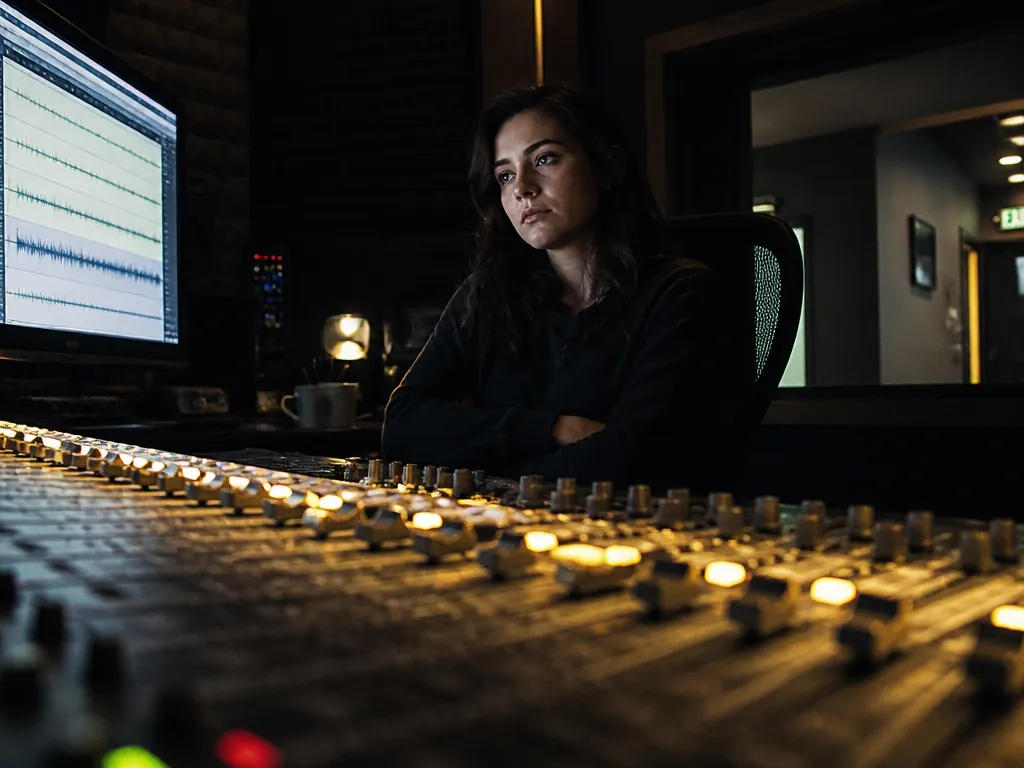
Which is why production-music libraries turn up as launch partners in nearly every licensed-dataset announcement. They control both sides, so they can sign both. It is a genuinely elegant answer to the clearance problem, and it has an audible consequence: a corpus weighted toward production libraries teaches a model what production libraries sound like. Competent, mid-tempo, harmonically polite. A great deal of 100 BPM four-on-the-floor with a filtered pluck and no discernible point of view. If your users are scoring corporate explainers, that is a match. If they came to you for a detuned bassline that sounds like the room it was tracked in, your licensing decision has quietly become an A&R decision, and nobody in the negotiation was hired to make that call.
Five questions to ask before you sign
| Ask | Why it bites |
|---|---|
| Compositions, masters, or both? | A society license can clear the notes and leave the audio uncleared. |
| Which territories, and for how long? | Perpetual and worldwide are negotiated outcomes, not defaults. |
| Training only, or training plus commercial distribution of output? | Some grants stop at ingest and say nothing about what you sell downstream. |
| What happens to already-trained models on termination? | Deletion and retraining clauses are where all the renewal leverage lives. |
| Is there an indemnity, and is it capped? | Capped at fees paid is common, and it is not the same thing as protection. |
Every tool that comes through the comparison desk at City of Punk gets some version of those questions. The pattern in the responses is consistent: vendors answer the first two quickly and the last three slowly.
The part nobody has published numbers for
The reassuring frame around licensed corpora is that the money flows back to creators. Structurally that is true — the license fee enters a distribution pool. The open question is what happens after that, because society distribution rules were engineered for radio spins and live performance, contexts where you can count plays. Training is not a play. A work either sat in the corpus or it didn't, and it shaped the weights in a way nobody can meter per track.
So the pool gets divided by a proxy, and proxies reward the members with the most registered works and the cleanest metadata: publishers and catalogue owners, not the writer with eleven registrations and a day job. I have yet to see a published per-writer figure from any AI training license. Until one exists, "creators are fairly compensated" describes a mechanism rather than a measured outcome. That is not an accusation — the infrastructure is a year or two old and the accounting genuinely is hard. But it is the number I would want in front of me if I were a rights holder deciding whether to opt my catalogue in, and it is the number that would settle the argument faster than any press release.
The more honest version of the rule
The advice is not wrong. It is compressed to the point where it stops being checkable. Uncompressed, it reads something like this:
Our training material is licensed for training — these rights, these territories, this term. Our output license is a separate document that grants users the following. We indemnify against these claims, up to this amount. We do not and cannot clear voice or likeness, so we filter for it at generation time.
Longer. Harder to fit on a pricing page. It is also the version that survives a serious enterprise procurement review, and the version a rights holder can evaluate without guessing. Music AI licensing is not one permission; it is a stack of them, and the stack is only as clean as the layer you forgot to ask about.
I keep a folder beside every project called PROVENANCE. One text file per stem: tool, model version, render date, the exact prompt, and the license page saved as a PDF with the date in the filename. Nothing in that folder has ever made a track sound better. It exists because I have read the same tool's terms twice in eighteen months and found two different documents.
Not sure which tool to use?
Compare the top AI music and sound tools side by side — honest reviews, real pricing, no sponsorships.