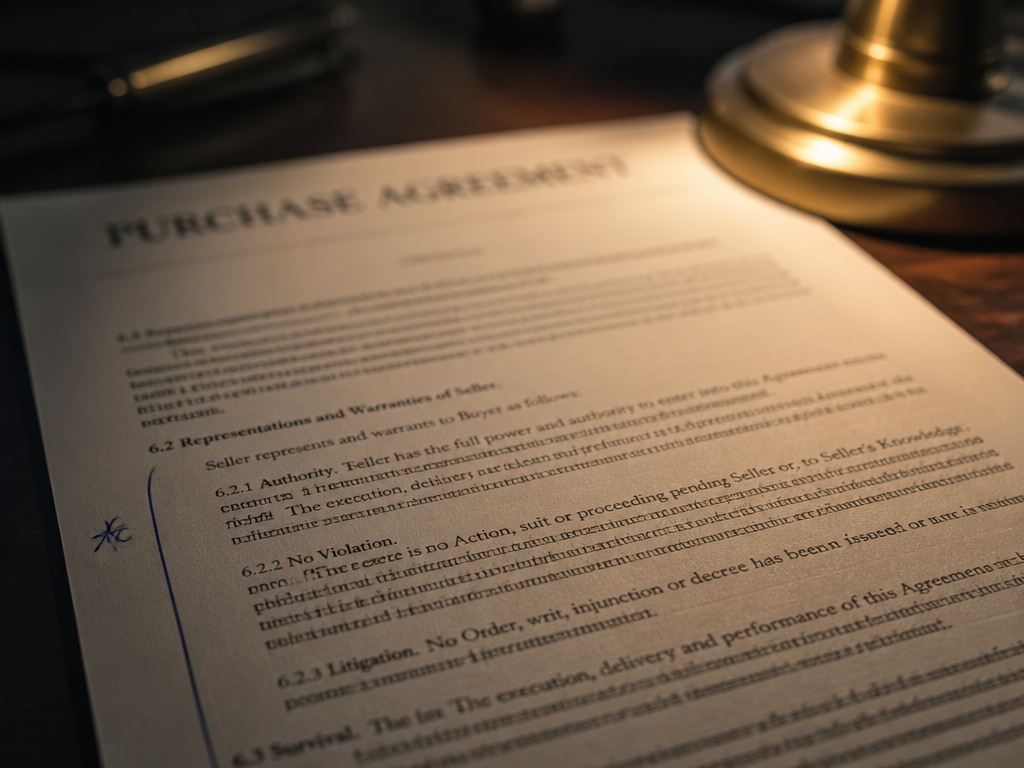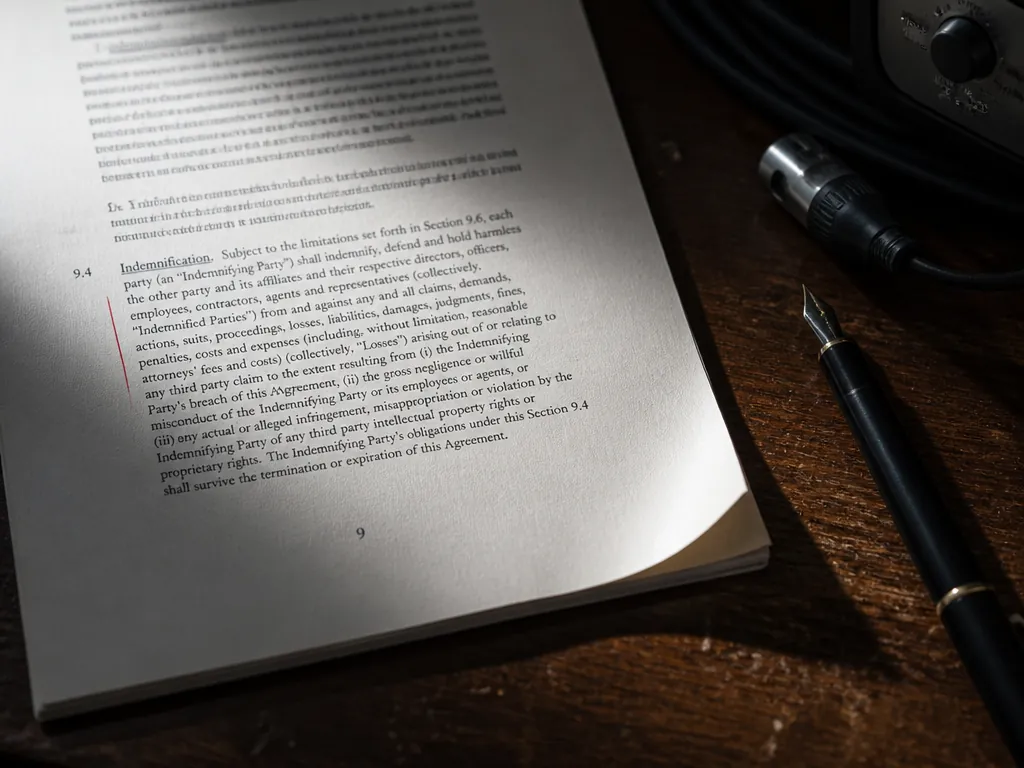
The clause sat on page nine of a production-library agreement, between the delivery specs and the credit language: the licensee could use delivered stems "for the development, training and improvement of machine learning systems and related technologies." Forty-one words. No separate fee, no term limit, no named model, no deletion obligation. Whoever drafted it filed it under boilerplate. It was the entire negotiation, and it is where AI music licensing ethics actually lives — not in the principles PDF, not on the conference panel, but in the sentence nobody bothered to price.
The verdict, up front: consent and compensation are solved on paper and unsolved in practice, because the industry keeps drafting training rights as a grant when they need to be drafted as a licence with a meter on it. Everything below is about closing that gap.
I am not a lawyer, and none of this is legal advice. I am a sound designer who has spent a decade on the receiving end of the clauses you draft — game loops, short-film cues, library beds — and who now reads a lot of AI deal paper. You have the contracting authority. I have the view from the other side of the signature line, which is its own kind of evidence.
What most people do
Most training rights are still being acquired by accident. The mechanism is the legacy sweep: a grant of rights "in all media now known or hereafter devised," drafted in 2009 for a world of ringtones and streaming, now quietly doing the work of a machine-learning licence. Nobody negotiated it. Nobody priced it. It converts an existing catalogue into a perpetual, irrevocable, worldwide training corpus for zero incremental consideration. Yikes is the correct professional response.
Second move: AI income gets swept into "other income" or "other exploitations," which in most artist agreements carries the least favourable split on the page. A category invented for compilation fees and TV clearance is now the default bucket for a revenue line that may outlive the term.
Third: approvals get written as a covenant rather than a right. "Approval not to be unreasonably withheld" is a fine standard for a poster crop. Applied to a synthetic vocal, it means the artist's consent is adjudicated after the fact, against a reasonableness standard defined by the party that wants the yes.
Fourth: containment as a strategy. The model lives inside the licensee's walled garden, outputs are watermarked, DRM holds. Every artist representative I have talked to about this in the last two years has smiled politely at that sentence.
And fifth, when something leaks: the enforcement reflex. Find the infringing uploads, send the notices, repeat. The industry has run this experiment before and knows what it costs in goodwill.
What the evidence suggests
Start with the litigation record, because it is the clearest signal available. The major labels filed infringement suits against the best-known text-to-music companies in 2024 on a training theory. Within roughly eighteen months, several of those disputes had converted into licensing arrangements with the same defendants. Read that sequence honestly: the suits functioned as market-making leverage, not as a defence of a principle. That is not a criticism — leverage is what litigation is for — but it tells you where the durable protection is. It is not in the case law. It is in the deal that ends the case, and in the clauses your clients' contracts do or do not contain.
Statute is moving on two of the four questions and staying quiet on the others. Tennessee's ELVIS Act put voice squarely into protectable-likeness territory in 2024; federal likeness bills of the NO FAKES variety have been introduced repeatedly; and the EU's AI Act obliges general-purpose model providers to publish a summary of training content, with those obligations beginning to bite from 2025. The direction of travel is clear enough to plan around: disclosure and voice rights are hardening; compensation is being left to contract. Which means compensation is your problem, permanently.
On containment, the technical evidence is not encouraging. Weights get distilled, outputs get re-uploaded, fine-tunes propagate. Fingerprinting a synthetic output back to the specific works that shaped it remains immature — good enough to flag near-duplicates, not good enough to run a royalty pool on. Any compensation formula that depends on per-output attribution needs a stated fallback, or it pays nothing.
One more piece of evidence, from the studio rather than the docket: the models are not as good as either the marketing or the panic suggests. Renders still come out mushy in the low mids. Vocals are hard. Prompt-roulette is real — you get four takes, one is usable, and it is rarely the one you asked for. What this means commercially is that substitution is uneven. It arrives first in library, background, and low-budget sync, where nobody is listening for a performance. That is precisely the corner of the business where the boilerplate lives and where the artists have the least representation. Plan for the risk where it actually lands.
What I actually do
When I have leverage — and increasingly I ask for it even when I do not — these are the terms I fight for, in priority order.
Price training as its own right. Separate consideration, stated term, named purpose, named model family. Not "machine learning" as a category, but the specific system and its successors-in-kind, with an expiry. A perpetual training licence is a sale, and it should be priced like one or refused.
Approvals as a specified right, not a reasonableness standard. Written, per use case, per model, revocable prospectively. Consent that cannot be withdrawn going forward is not consent, it is a waiver with better manners.
A two-part meter. A per-work floor fee payable on ingestion, plus a share of output-attributable revenue using an attribution method named in the contract. When attribution cannot be measured to the stated standard, the share reverts to a pro-rata catalogue calculation, with audit rights and a real inspection window. Define the fallback or you have defined nothing.
Contingency drafting for escape. Assume the weights leave the garden. Deletion and retraining obligations with a deadline; and because verified deletion of a trained model is frequently theatre, a converted royalty that survives when deletion cannot be demonstrated. If the leak cannot be stopped, meter it.
Voice as a separate instrument. Never inside the composition or master grant. Separate agreement, separate fee, hard expiry, named uses.
| Deal point | Language that shows up | What I ask for instead |
|---|---|---|
| Training grant | "all media now known or hereafter devised" | Named purpose and model family, stated term, separate consideration |
| Approvals | "not to be unreasonably withheld" | Written approval per use case and model, revocable prospectively |
| AI revenue | swept into "other income" | Own line, own split, defined attribution method plus fallback |
| Voice | inside the composition/master grant | Separate agreement, separate fee, hard expiry |
| Model escape | silent | Deletion deadline, plus converted royalty where deletion is unverifiable |
Who can win this list: rights managers and publishers with catalogue leverage, and any counsel renewing a term deal in the next cycle. Who should skip most of it: the solo composer signing a one-off library agreement, who will not get five concessions. Get two — a term limit on the training grant, and separate consideration for it. Those two alone convert a giveaway into a licence.
A closing note from the other side of the table. I have four broken synthesizers and a hard drive of cues that paid my rent, and I do not think a model trained on them is an insult to the craft. It is an instrument, and instruments are fine. What is not fine is the accounting. The people drafting these agreements are deciding, right now and mostly in silence, whether a generation of working composers gets paid for the corpus they built. That decision is being made in language, not in principle.
A right you did not price is a right you gave away.
Not sure which tool to use?
Compare the top AI music and sound tools side by side — honest reviews, real pricing, no sponsorships.