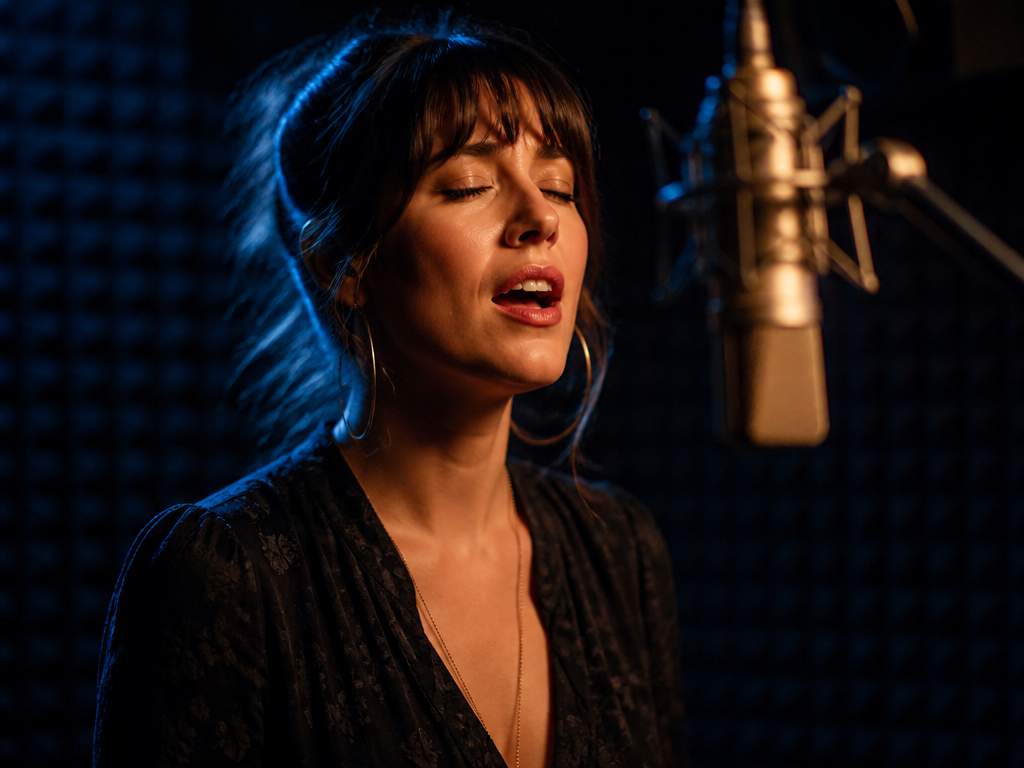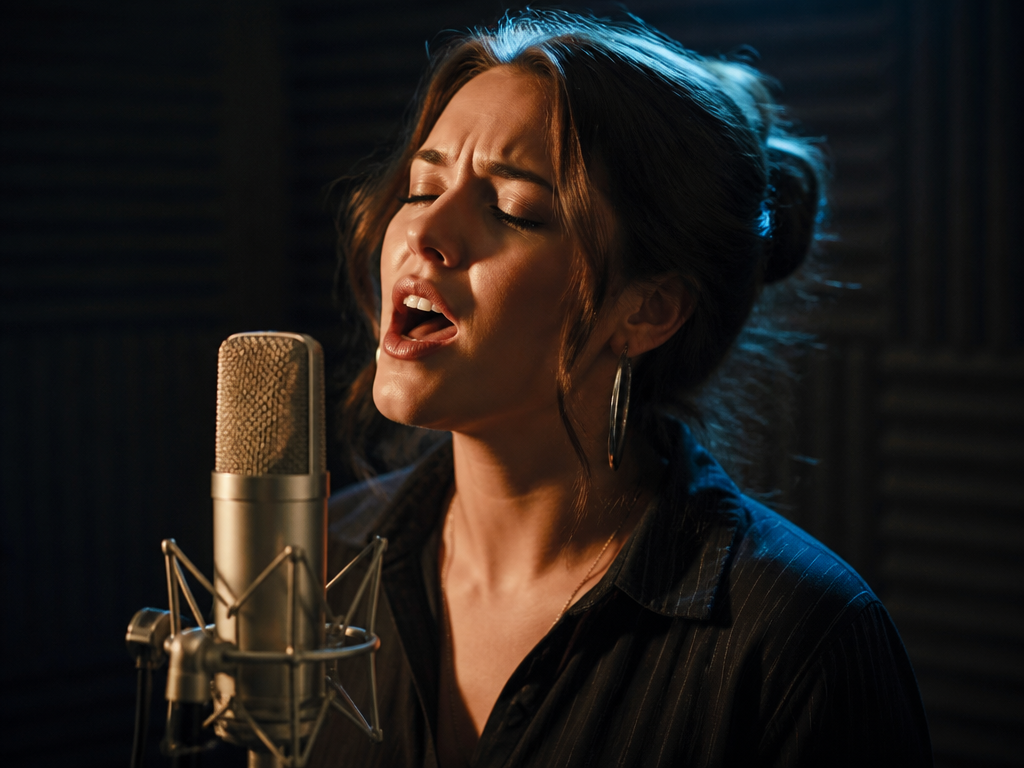
Last week I spent an afternoon trying to clone a voice you'd recognize in two syllables. I won't name the singer, but the source was four minutes of clean a cappella, 48kHz, no reverb tail to confuse the model. The render came back uncanny on the sustained vowels and fell apart on the consonants — a slight smear on the plosives, the kind of artifact a careful editor catches and a casual listener never does. Good enough to sell a fifteen-second ad bumper. Not good enough to fool the artist's own mother. That gap, between "good enough to monetize" and "good enough to deceive," is exactly where voice trademark protection has started showing up on attorneys' desks, and it's worth understanding what those filings actually buy before you advise a client to chase one.
Because the answer is messier than the press releases suggest.
Why artists started filing in the first place
The trigger is obvious to anyone who's run the experiment I just described. Copyright protects a specific recording and a specific composition — the master and the song. It does not protect the timbre of a person's voice in the abstract. So when a synthetic model reproduces an artist's vocal character on a brand-new performance the artist never sang, copyright has nothing fixed to grab onto. There's no copied master, no copied melody, sometimes no copied lyrics. Just the sound of them, generated from scratch.
That gap is why a handful of high-profile names have started treating their voice as a brand asset rather than only a creative work. The logic borrows from trademark thinking: a distinctive sound that the public associates with a single commercial source — the way a few notes signal a phone maker, or a roar signals a film studio. If your voice functions as a source identifier in the marketplace, the argument goes, maybe it deserves the same protection as a logo.
It's a smart angle. It is also far from settled, and the distance between those two facts is the whole story.
Can you trademark your voice?
In principle, yes — U.S. trademark law has long allowed for "sound marks," and a human voice is sound. In practice, registering a voice as a trademark is much harder than registering a jingle or a startup chime, because the law asks the voice to do something most voices don't do on their own: function as a brand. A sound mark has to be distinctive (the public hears it and thinks of one commercial source), used in commerce in a consistent, identifiable way, and non-functional (it can't be the product itself). A singer's voice tends to fail at least one of those tests, because the voice usually is the product, not a label stuck on the product. That's the central tension, and it's why a filing existing is not the same as a registration issuing.
So when you read that an artist "trademarked their voice," read it as "filed an application." The examination is where the real questions live.
What an examiner will actually push on
Three pressure points come up again and again, and they're worth walking a client through before the filing fee is spent.
Distinctiveness. A trademark identifies one source. A voice that sounds like a genre — a husky soul tenor, a breathy pop soprano — describes a category, not a company. The applicant has to show the public connects this specific vocal signature to them and them alone, usually through evidence of long, prominent commercial association. Newer artists have a steeper climb here than legacy names with decades of recognition.
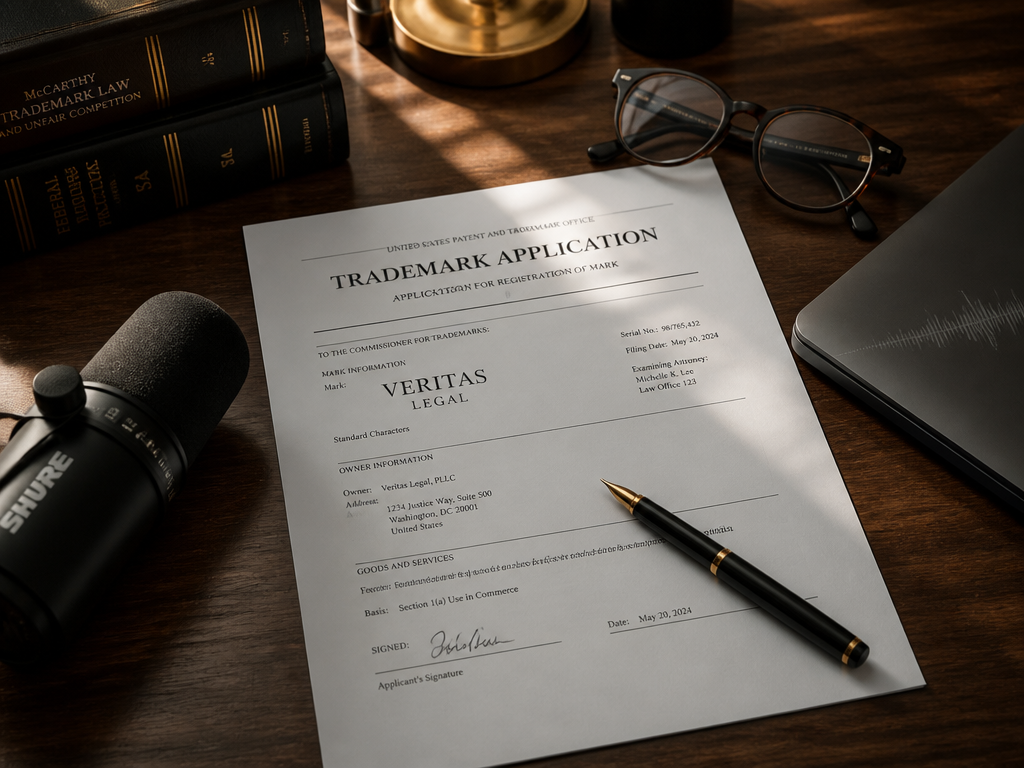
Use in commerce, in a defined class. Trademarks attach to goods and services. "My voice" is not a good or service; "audiobook narration services" or "branded promotional recordings" might be. The application has to pin the voice to specific commercial uses, and the protection only reaches those uses. That's narrower than most clients expect.
Functionality. This is the quiet killer. If the voice is the essential thing being sold — the singing on the record — an examiner may treat it as functional and therefore unregistrable as a mark. The cleaner cases tend to involve a voice used as an identifier attached to something else, not the creative performance itself.
None of these are automatic disqualifiers. They are reasons a filing can sit in examination for a long time, draw refusals, and require evidence most artists haven't been collecting.
The three lanes, and which one your client actually needs
Voice protection isn't one tool. It's three overlapping ones, and the right strategy usually braids them together rather than betting on a single filing.
| Lane | What it protects | Where it's strong | Where it's weak |
|---|---|---|---|
| Copyright | A fixed recording or composition | Cloning that copies an actual master or melody | Synthetic performances of new material in the artist's voice |
| Right of publicity | A person's name, likeness, and voice for commercial use | Unauthorized commercial imitation; the classic precedent for soundalikes | State-by-state patchwork; thinner for non-commercial or transformative uses |
| Trademark (sound mark) | A voice functioning as a source identifier | Consistent brand-style use; deterrence value of a registration | Distinctiveness and functionality hurdles; narrow class coverage |
For most working artists facing AI cloning today, right of publicity is the more direct weapon — it already contemplates voice imitation and doesn't demand the voice behave like a logo. The trademark filing is better understood as a complementary, forward-looking play: a registration on the wall, a cease-and-desist with more teeth, a signal to platforms. It is not a substitute for the publicity claim, and it is not a guarantee.
If you advise artists, the practical move is unglamorous: start documenting commercial voice use now. Dates, campaigns, the contexts where the public hears the voice tied to the artist's brand. That evidentiary record is what a distinctiveness argument lives or dies on, and it's the thing nobody has when they suddenly need it.
Back to the render
Here's what nagged me about that cloned vowel. The model didn't steal a recording — there was no master to point a copyright lawyer at. It didn't claim to be the artist, so the deception case gets slippery. It produced a new performance in a borrowed timbre, and the legal system is still deciding which lane that even belongs in. The trademark filings are a bet that the answer is "treat the voice as a brand." The publicity claims bet it's "treat the voice as the person." The technology, meanwhile, keeps getting better at the consonants.
What I keep coming back to is the threshold question none of the doctrines have answered cleanly: at what point does a synthetic voice stop being an imitation and become a use of someone's identity — and does that line sit with how close the render sounds, or with what the listener believes they're hearing?
I ran the experiment. I still don't know.
Not sure which tool to use?
Compare the top AI music and sound tools side by side — honest reviews, real pricing, no sponsorships.