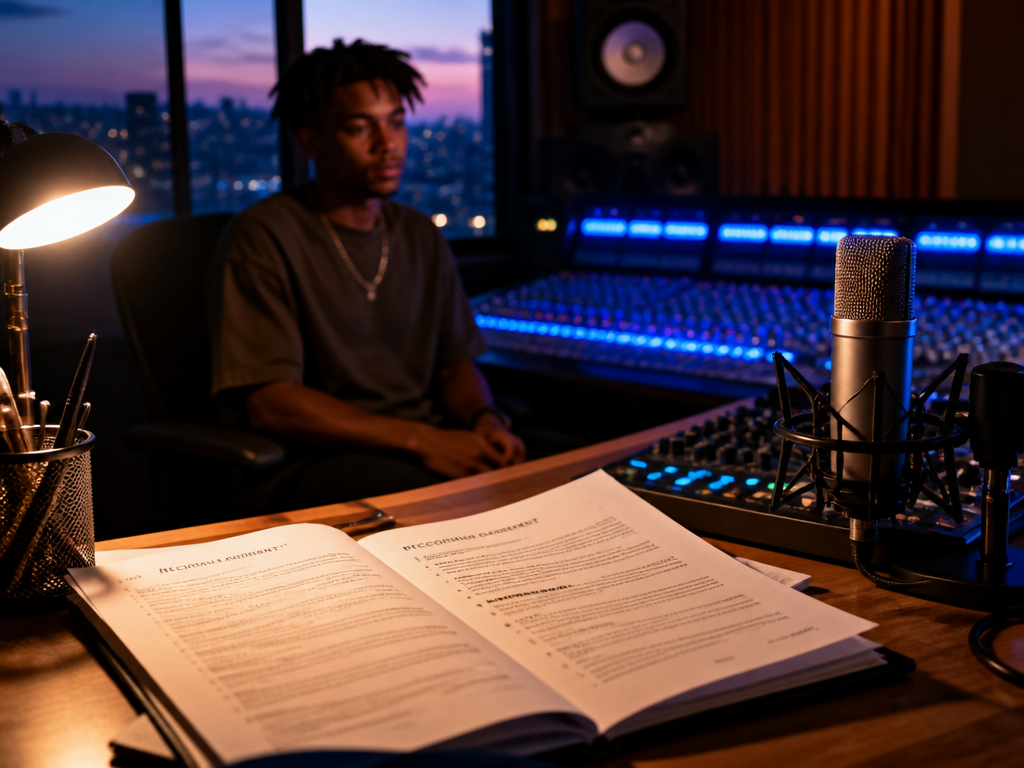
The advice going around the studios in Windhoek and Walvis Bay is clean and easy to repeat: when a development partner or a label brings you a contract, make sure AI use is disclosed, make sure the AI music labeling is in writing, then sign and get developed. It sounds like protection. It sounds like the industry finally putting a stamp on who made what.
It is roughly right. And it breaks down in ways that matter to your rights and your money, especially if you are an emerging Namibian artist being offered a first real deal.
AI music labeling — the streaming-side tags and industry disclosure schemes that mark a track as AI-generated or AI-assisted — was built to answer a listener's question: was a machine involved here, and how much? That is a useful question. It is not the same question a rights holder asks before signing a five-year development agreement. The gap between those two questions is where artists get hurt.
What AI music labeling actually tells you
Here is the plain answer, up front: a label on a track tells a listener whether generative AI touched the recording. It does not tell you who owns the master, who controls the publishing, or whether the tools your development partner used were trained on music like yours without permission.
Disclosure is a transparency mechanism. It is aimed at the fan scrolling a playlist and, increasingly, at platforms managing their catalogues. The industry bodies pushing these schemes are trying to keep listener trust intact as more uploads arrive with synthetic elements. That is a real problem worth solving. Streaming services have reported that a large and rising share of new daily uploads are fully AI-generated — the exact figures shift by platform and by month, so treat any single percentage you read as a snapshot, not a law of nature. The direction is not in dispute. The volume is going up.
But a transparency stamp is a consumer-protection tool wearing a copyright-protection costume. When someone tells you the label "strengthens your rights", ask them which right, exactly, and read the clause.
Where the advice holds
Give the advice its due, because it is not wrong so much as incomplete.
If a development partner is required — by platform policy or by their own distribution deal — to declare AI use, you get a paper trail. That trail is leverage. If the contract says your EP is "artist-created" and the delivered stems carry an AI-generated tag at the distributor, you have a documented contradiction you can point to. Before labeling existed, that contradiction was invisible.
Disclosure also sets a floor for honesty inside the deal. A partner who has to tag their outputs is a partner who has to tell you, on paper, when they used a text-to-music generator to build the instrumental under your topline. You may be completely fine with that — plenty of working producers use AI for a scratch arrangement or a placeholder bassline, a detuned pad at 90 BPM to hold a session together until the real player arrives. The point is you get to decide with the information in front of you instead of finding out later.
And for a catalogue owner, labeling makes due diligence cheaper. If you are buying or administering rights, knowing which tracks are AI-assisted changes how you value them and how you defend them.
That is the honest case for the common advice. Get it in writing. It helps.
Where it breaks down
Now the parts nobody puts on the slide.
Disclosure is not authorship. A track can be truthfully labeled "AI-assisted" and still be the subject of a total dispute over who owns the songwriting. Labels describe process. Copyright turns on human contribution and on the contract you signed. A development agreement can bundle your masters, your publishing share, and your name and likeness into terms that survive long after the AI tag is forgotten. The tag protects the listener's trust; the clause governs your income.
The training question stays open. The tools a partner uses were trained on something. If that something included work like yours — the kwaito and Damara punch, the shambo and the house records that define the local sound — no streaming label discloses that upstream. This is the concern that keeps experienced artists wary, and they are right to hold it. A wary artist reading these schemes is not being a Luddite. They are noticing that the disclosure ends at the platform's front door and does not reach back into the data the machine learned from.
Labeling can be used against emerging artists. Here the fair-minded worry cuts both ways. Optimists point out, correctly, that AI lowers the cost of a professional-sounding demo, and that a young artist in Rundu with a laptop can now compete for placement. The wary counter, also correctly, that if a partner can generate a serviceable AI-assisted track for less than the cost of developing a person, the incentive to develop that person weakens. Both things are true at once. That tension is not a crisis to be resolved in an article — it is the actual condition of the market you are signing into.
None of this makes AI music labeling bad. It makes it narrow. The mistake is treating a narrow tool as a wide shield.
The questions to ask before you sign
Take this into the meeting. It is not legal advice — get a Namibian entertainment lawyer or NASCAM to read the actual document — but it is the checklist that turns a vague "AI is disclosed" into something you can act on.
- Who owns the master and the publishing, in plain numbers? Percentages and term length. AI status is irrelevant if the split is bad.
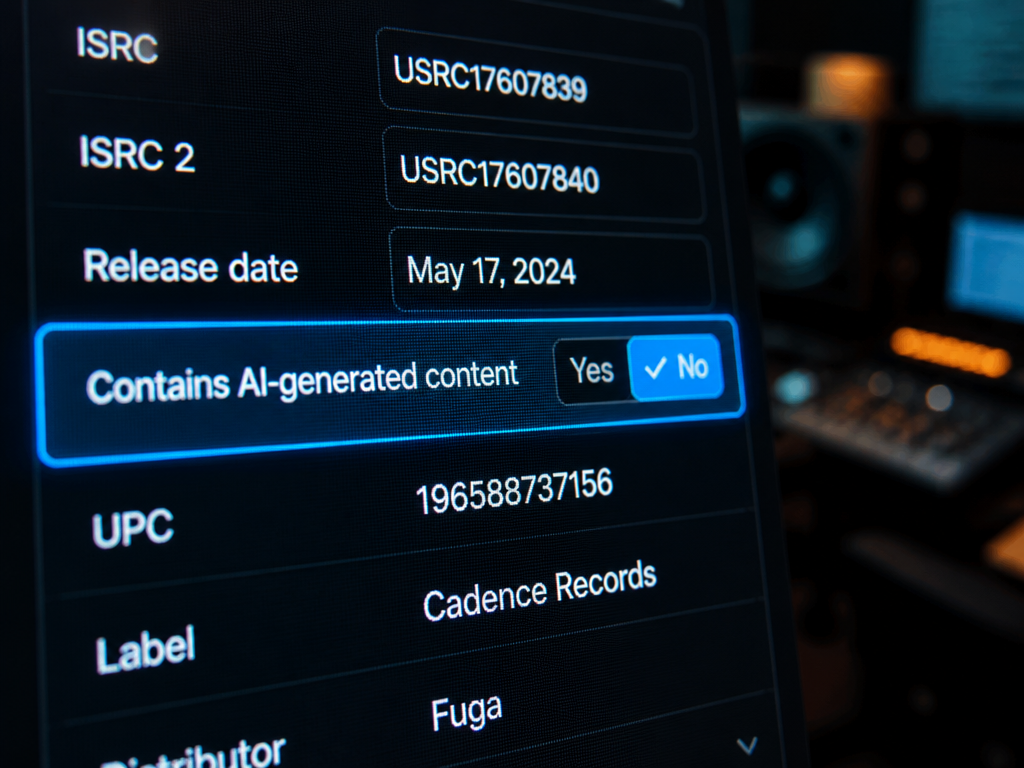
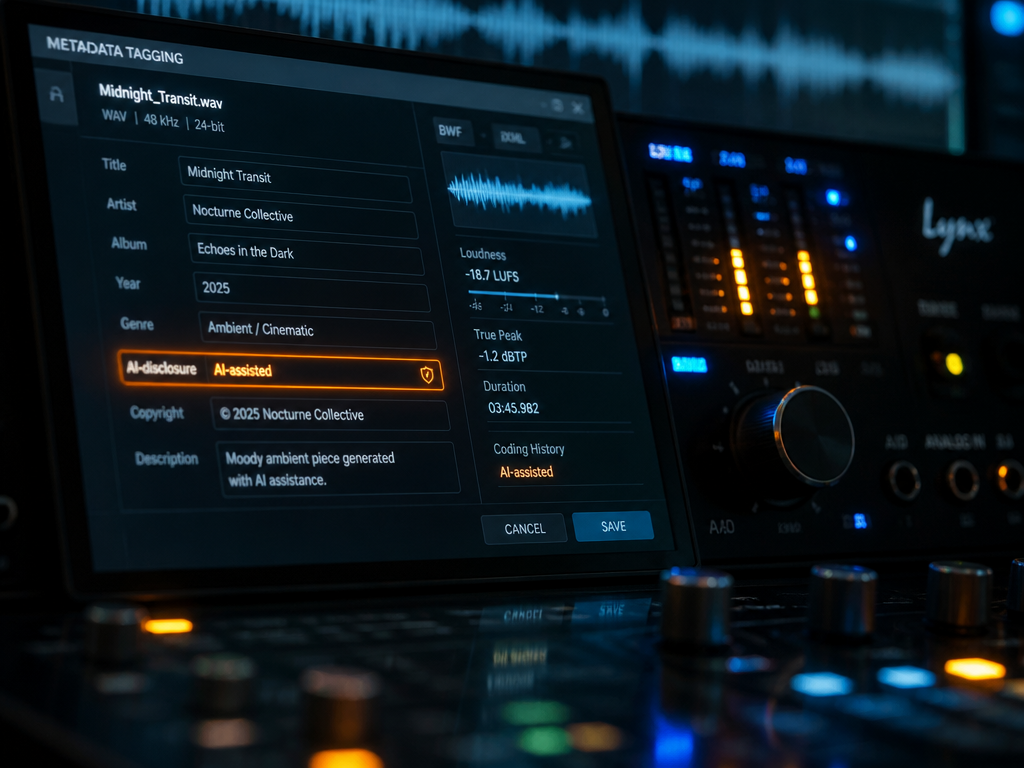
- Will any deliverable carry an AI-generated or AI-assisted tag at the distributor? If yes, on which tracks, and does that match what the contract says the record is?
- What tools were used, and can the partner state whether those tools' training data is licensed? You may not get a full answer. The quality of the non-answer tells you a lot.
- If AI generated part of the composition, who is credited as writer for royalty purposes? Get names and shares in writing.
- Can you audit the disclosures? A right to see how your own records are tagged downstream.
- What happens to your name and likeness? Voice models and AI vocals make this clause more dangerous than it was five years ago.
If a development partner treats these as reasonable, that is a good sign. If the questions make the room tense, that is also information.
The more honest version of the rule
The clean advice — disclose AI, then sign — collapses into something less tidy but more true:
AI music labeling tells you and your listeners that a machine was involved. It does not tell you who gets paid, who owns the work, or where the machine learned its moves. Use the label as a starting question, not a settlement. The protection you actually keep lives in the contract, not the tag.
That is less quotable. It is also the version that keeps your publishing.
For what it is worth, I ran the check on my own last release. Three of the tracks used an AI-generated pad and a placeholder drum loop I later replaced; two were fully played and sung. When I filed the metadata I tagged the three honestly, kept the session recall so I could prove which parts were mine, and wrote the writer splits down before the mix was even finished. Nobody made me. But I would rather be the one holding the paper trail than the one asking, two years from now, why my name is on a record I am not sure I own.
Not sure which tool to use?
Compare the top AI music and sound tools side by side — honest reviews, real pricing, no sponsorships.