You have probably asked yourself some version of this in a Monday meeting: when a private-equity shop or a major label puts real money behind AI music generation, what are they actually buying — and should your clients position with it or against it?
Here is the short answer, the one Google can lift out of this paragraph: institutional money is not betting on songs, it is betting on the plumbing — rights data, licensing rails, and catalog control — because that is where AI-generated music creates durable cash flow and, more importantly, durable liability that someone has to own. The creative output is the part nobody has figured out how to underwrite yet.
One disclosure before we go further: City of Punk builds a competing tool in this space. That is exactly why this piece stays on the money and the contracts rather than telling you which generator sounds best. We have a dog in the fight; we are going to keep our hands where you can see them.
What the money is actually chasing
When you read "fund invests in AI music," the headline collapses three very different bets into one sentence. Pull them apart before you advise anyone.
The catalog bet. This is the oldest play wearing new clothes. Buyers have spent years acquiring back catalogs as bond-like income — predictable royalty streams that pay regardless of fashion. AI changes the math two ways. It threatens to dilute streaming-pool payouts by flooding platforms with low-cost tracks, and it makes catalogs newly valuable as clean, licensable training material. A fund buying a publisher today may be buying the right to license that corpus to model builders later. That optionality is real, and it rarely shows up in the press release.
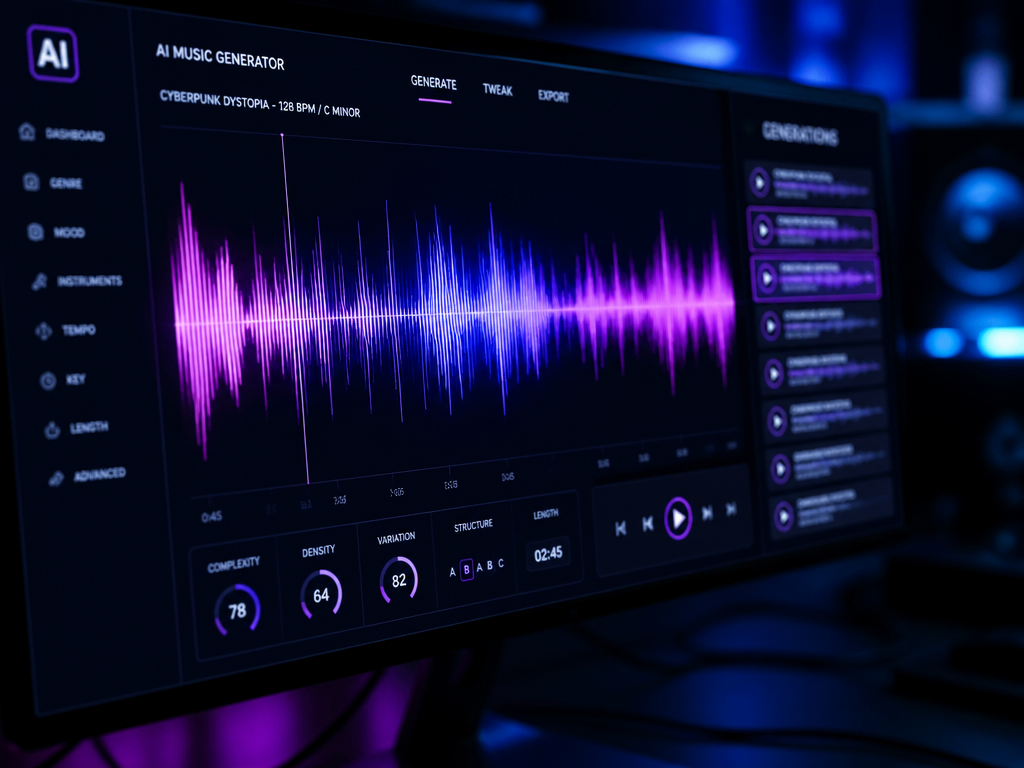
The tooling bet. Money into generators, stem-separation engines, mastering automation, and voice models. This is venture-shaped: high failure rate, winner-takes-most, and a roadmap that can be obsoleted by a single open-weights release. The honest read is that most tooling investments are bets on a team and a distribution wedge, not on a sound. A generator's output quality at the moment of the term sheet tells you almost nothing about its position eighteen months out.
The rights-infrastructure bet. The least glamorous and, I would argue, the most defensible. Companies building attribution, consent ledgers, opt-out registries, and royalty-routing for AI-derived works. If you believe regulation and licensing settlements are coming — and the institutions placing these bets clearly do — then the firm that sits in the middle taking a clip of every licensed transaction looks a lot like a toll road.
The licensing fault line they are pricing around
Here is where "it depends" earns its keep. Institutions are not allergic to AI music generation. They are allergic to unpriced legal exposure, and right now the biggest unpriced item is training data.
The question every serious investor asks in diligence is some version of: what was this model trained on, and can the seller prove it had the right? A generator trained on scraped commercial recordings is a lawsuit with a user interface. A generator trained on licensed or fully owned material is an asset. Two products that sound identical in a blind test can be separated by an order of magnitude in valuation purely on provenance.
This is why you see the smart money clustering around licensing deals between model builders and rights holders rather than around the flashiest demos. A signed agreement converts an existential risk into a line item. For your clients, the practical signal is this: read the data story, not the audio demo. If a company cannot tell you cleanly where its training corpus came from, that silence is the most important fact in the room.
Artist sentiment is now a balance-sheet item
It is tempting to treat artist backlash as PR weather — noisy, temporary, beneath the spreadsheet. That has stopped being true.
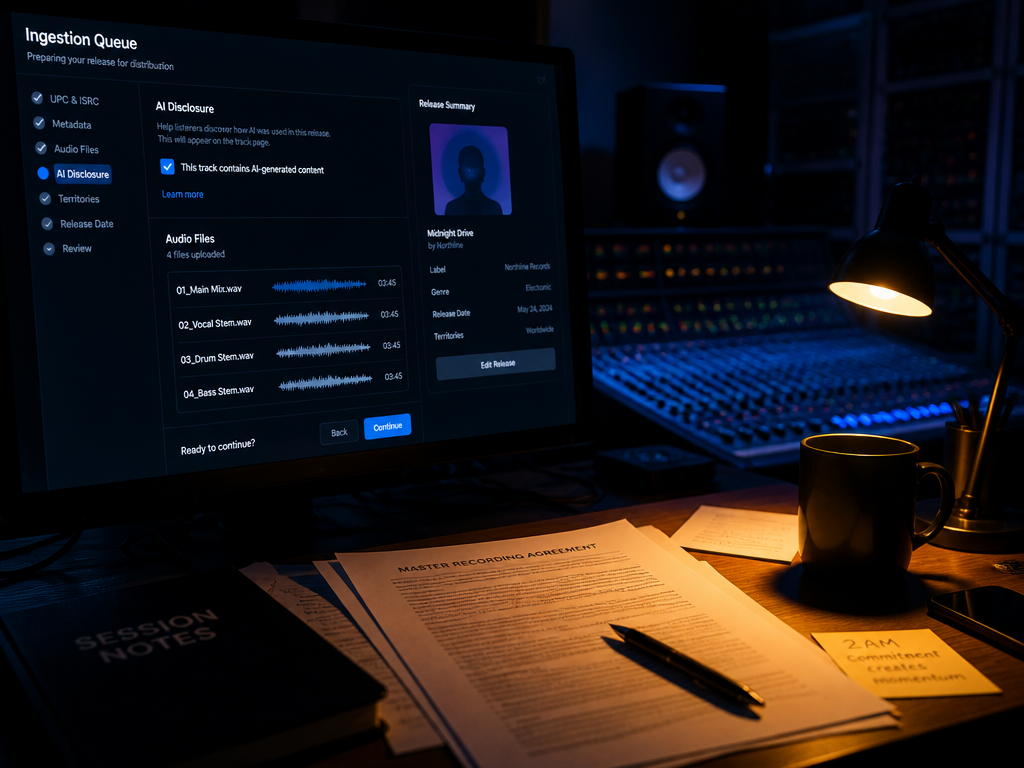
Sentiment moves three things that institutions care about. It moves platform policy, because distributors respond to creator pressure with disclosure rules and takedown regimes that change what a model's output is worth. It moves talent flow, because a roster that perceives a label as anti-artist becomes a recruiting liability. And it moves regulatory appetite, because lawmakers follow organized creator coalitions more readily than they follow venture decks.
So when a managed artist says publicly that they will not work with a label cutting AI licensing deals behind closed doors, that is not a tantrum. That is a data point about future churn and headline risk. The funds that get burned here are the ones that modeled the technology and forgot the people whose consent the technology depends on. Consent is not a moral footnote in this market; it is the input cost.
How to read a deal as a strategist
When the next round-up of "AI music investment" crosses your desk, run it through four questions before you form a view:
- What layer is this? Catalog, tooling, or infrastructure. Each has a different risk shape and a different time horizon. Conflating them is how clients overpay.
- Where did the training data come from? If the answer is vague, treat the valuation as speculative regardless of revenue.
- Who carries the indemnity? Read who is liable if an output infringes — the platform, the model maker, or the end user. That clause tells you who the deal really protects.
- What does it do to the people in your clients' contracts? Royalty dilution and consent terms eventually land on a specific artist's statement. Trace it there.
Who needs to act on this, and who can wait
If you advise rights holders, platform strategists, or anyone with catalog exposure, this is live — the licensing terms being set now are the ones you will be litigating or renegotiating in two years. If you manage developing artists with no catalog and no platform leverage, you can watch rather than move; your exposure is to platform policy downstream, not to the deal flow itself. Track it, do not chase it.
What this piece did not answer
I have dodged the largest question on purpose, because nobody can answer it yet: how the courts and regulators will treat training-data liability. Every valuation above rests on a guess about that ruling. Until there is settled law or a landmark settlement, the money is pricing a coin flip and calling it a model.
Watch three places for the next real signal: training-data litigation outcomes, the disclosure rules major platforms publish for AI-assisted uploads, and whether organized artist coalitions get a seat at the licensing table or stay outside it. The deal you should worry about is the one whose entire thesis collapses the day one of those three resolves the wrong way.
Not sure which tool to use?
Compare the top AI music and sound tools side by side — honest reviews, real pricing, no sponsorships.