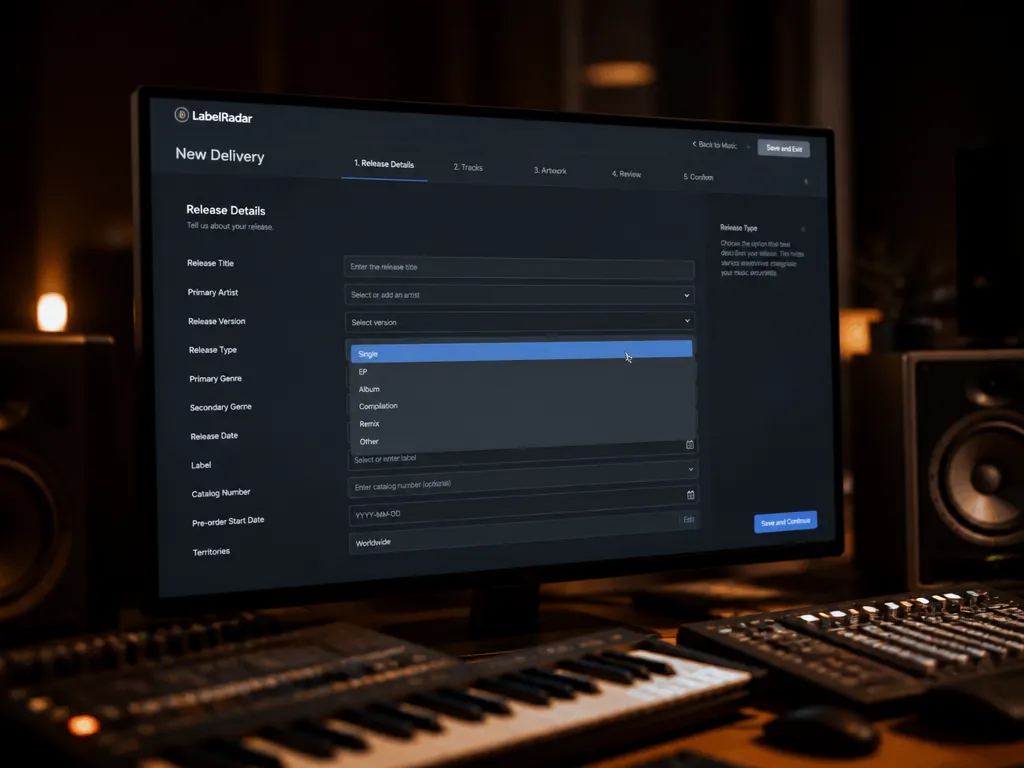
Somewhere between your final master and your release date, there is now a checkbox. It asks whether the recording was created with generative tools, and in what proportion, and the answer you give does not stop at the distributor's dashboard. For most people reading this, that field is what AI music regulation actually looks like day to day: not a statute, not a verdict, but a line in a delivery spec that decides how a release gets labeled, where it gets shelved, and whether it counts toward a chart.
The myth: everyone is waiting on a courtroom
The version I hear most often, usually from someone smart enough to have read the filings: the major labels are suing the generative platforms, the training-data question is unsettled, therefore nothing is settled, therefore nothing applies yet. Hold the release, wait for the ruling, sort it out later.
That is a reasonable read of the news cycle and a bad read of the calendar. Copyright litigation will answer who owes whom for what was scraped. It will not answer whether your track is eligible for a chart on Tuesday, whether a streaming service tags it in the app, or whether your distributor accepts the delivery at all. Those are different systems with different clocks, and the second set is already running at full speed.
The evidence: the binding rules are private, not public
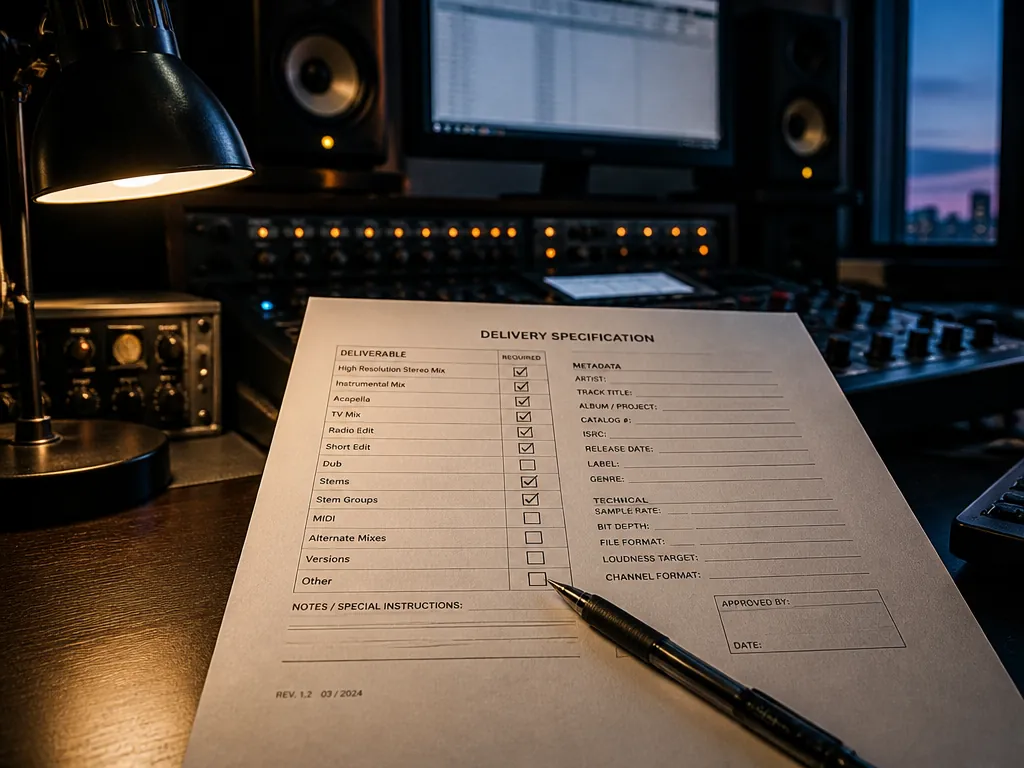
Almost every rule with teeth right now is a private one. It lives in terms of service, chart eligibility criteria, delivery specifications, and distribution agreements — documents that change by version number, not by legislative session.
Four layers are worth tracking.
Chart eligibility. Chart operators have always policed what counts. They define what a release is, which stores report, and which activity gets stripped out before a position is calculated. Extending that to AI provenance is a short step for a body that already disqualifies releases over bundling, over gaming, over bad metadata. The tests being floated across the trade press cluster around three questions: was the underlying material licensed, was the AI involvement disclosed, and was the consumption organic.
Platform policy. As of writing, one major streaming service has said it will carry AI-involvement credits supplied through DDEX — the metadata standard the industry already uses to move release information — and another has been labeling fully synthetic albums inside its own app. Impersonation rules, the voice-clone-of-a-living-artist problem, have moved faster than anything else, because that one arrives with a plaintiff who has a name.
Distributor attestation. This is the checkbox. Most distributors now ask you to declare AI involvement and to warrant that you hold the rights to what you upload. The warranty is the part that matters. You are the one signing it.
Registration and credits. Rights societies and registration systems need a human author to attach a share to. If nobody can name who wrote it, the paperwork stalls regardless of how the audio sounds.
Does an AI-assisted track qualify for the charts?
Generally, yes — where a human is meaningfully the author, the rights underneath are cleared, AI involvement is disclosed wherever it is asked for, and the streams are organic. What the emerging standards test is provenance and conduct, not timbre. Nobody is running your master through a spectral analyzer to decide whether it has a soul. They are asking who made it, what it was made from, and whether the plays are real. A producer who used a generative tool for a pad layer and a drum bounce, kept the session, and named the humans in the credits sits in a very different position from an account uploading two hundred tracks a month with no writer listed.
The mechanism: disclosure is a metadata problem
Here is the part most coverage skips. AI disclosure is not a listening test. It is a field that travels.
When a release goes out, it moves as a structured message — DDEX ERN through most of the chain — carrying the ISRC, the contributor roles, the territories, and increasingly a flag or credit describing AI involvement. Your distributor populates that from what you declared. The service ingests it and may display it, may weight it, may route the release into a different pool. The chart body reads the consumption data downstream of all that.
That design has a consequence worth sitting with: the system trusts your declaration more than it trusts its own ears, because its ears are not reliable. Detection models return probabilities, not verdicts. Heavily processed human recordings — a bass DI through three stages of saturation, a vocal comped from forty takes and tuned hard — can read as synthetic. A generated stem printed to tape, re-amped, and captured back in a room can read as human. Anyone selling certainty about audio-side AI detection is selling you a confidence score with the error bars removed.
So enforcement leans on the two things that are legible: what you declared, and how the streams behave.
Where it actually bites: the streams, not the sound
The sharpest edge of AI music policy is not aesthetic, it is anti-fraud. Bot-driven plays get stripped, royalties get clawed back, catalogs get delisted, and accounts that publish at industrial volume attract that scrutiny by default — because industrial volume is the same signal fraud produces.
If you are running a large generated catalog, the realistic risk is not that a chart body rules your music inauthentic. It is that a fraud system decides your consumption pattern is. Those cases tend to resolve badly and quietly.
The paper trail worth keeping
The whole compliance surface reduces to being able to answer four questions about any release two years from now, without depending on a vendor's account page still existing.
| Keep this | Where | What it proves |
|---|---|---|
| Generation record: tool, version, date, prompt | Text file in the project folder | What made the sound, and when |
| Dated copy of the license terms | PDF or screenshot, same folder | What you were granted at generation time, not today |
| Session file and stems | Your DAW archive | Human authorship, arrangement, editing decisions |
| Contributor credits | Distributor metadata | Who a share attaches to |
| Your disclosure answer, verbatim | Release checklist | What you told the platform |
The dated license copy is the row people skip and the one that saves them. Terms get rewritten. What you agreed to in March may not be what the page says in September, and "the site said it was cleared for commercial use" is not a document. Export the terms as a file — whatever you generate with, City of Punk included — and store it beside the stems.
The honest part
None of this is settled, and I would not trust anyone who tells you otherwise. The criteria described here are the shape of the current conversation, not a rule you can lean on next quarter. AI music regulation is being written in changelogs rather than statute books, which means it moves quickly and without much ceremony: chart rules get amended mid-year, sometimes with retroactive effect, and detection tooling will improve in ways that produce a fresh crop of confidently wrong calls. This is a description of how the machinery works, not legal advice. If a release matters commercially, the terms and a lawyer beat a blog post.
What looks stable is the direction of travel: disclosure over concealment, provenance over vibes, human authorship as the thing being asked about. The framework rewards people who can show their work, and quietly penalizes people who cannot.
Try this week
Take your three most recent releases. For each one, make a plain text file next to the session — call it provenance.txt — with five lines: the tool and version used, the date, the license URL, what you generated versus what you played or recorded, and the exact disclosure answer you gave your distributor. Save a dated PDF of the license terms alongside it. Twenty minutes, all three, and you never have to reconstruct any of it from memory.
The rules will keep moving. The receipts you kept will not.
Not sure which tool to use?
Compare the top AI music and sound tools side by side — honest reviews, real pricing, no sponsorships.