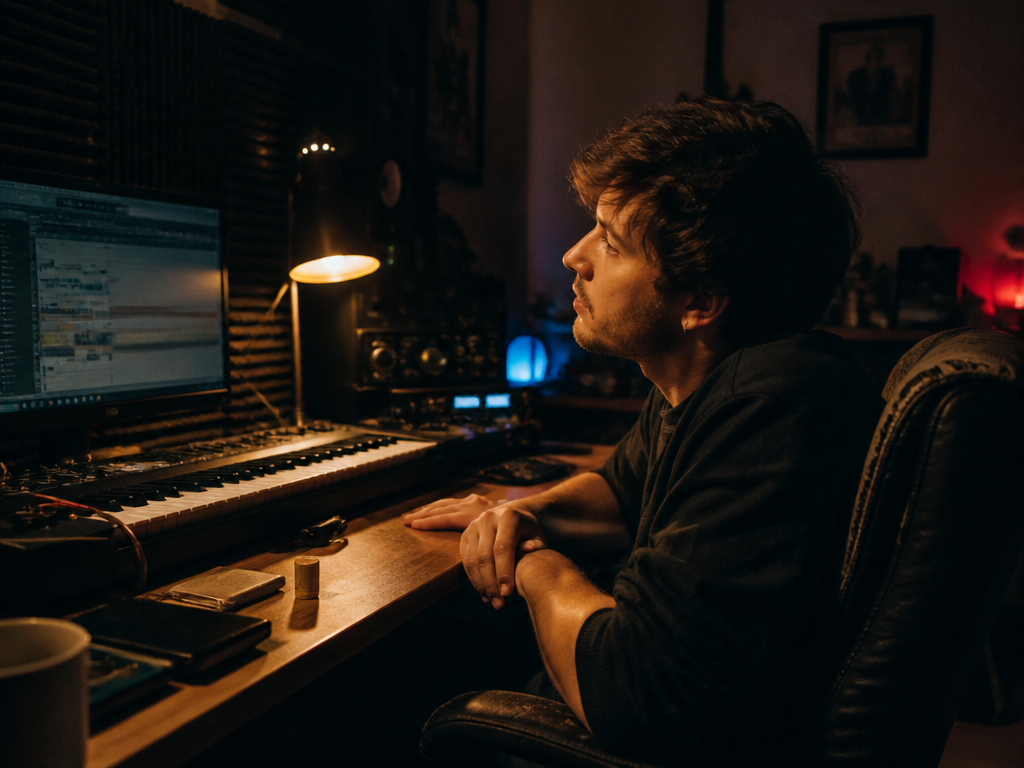
A label-adjacent "artist development program" emailed me last spring. The subject line promised mentorship, funding, and "platform support." I clicked through three pages of aspirational copy and landed on a Discord invite and a Google Form. No grant amount. No selection criteria. No name attached to anyone who'd actually cut a check. That's the version of artist development a lot of independent musicians are being sold right now, and AI music generation has made the pitch louder, not clearer — because the cost of looking like a music company has dropped to near zero.
So let's talk about what artist development means when machine-assisted production is already in your toolkit, gatekeepers are rebranding as "incubators," and you still have to pay rent. I'll lay it out the way I think about it: what most people do, what the evidence actually suggests, and what I do in my own room.
What most people do
Most independent artists treat the announcement as the opportunity. A platform reveals a fund, a residency, an incubator. The pitch is sympathetic and well-produced: making a living as an indie artist is hard, here are resources and connections, apply now. So you spend a weekend writing an application, you tell your group chat, and you wait.
There's nothing shameful in this. The pain point is real — most working musicians are chronically underfunded and over-isolated. But the behavior pattern underneath it is the problem. People who chase programs tend to:
- Treat a platform as a patron. They optimize for being selected rather than for being undeniable. A fund's selection rubric becomes the creative brief, which means the work starts sounding like everyone else's application.
- Outsource leverage. They hope a mentor, a placement, or an algorithm bump will do the thing that only a catalog and an audience can do.
- Skip the boring asset work. No clean splits documentation, no stems archived, no email list, no consistent release cadence. The stuff that compounds gets deferred until "after I get picked."
And here's the part nobody says out loud: when a program doesn't disclose grant sizes, selection criteria, or where past participants ended up, applying is closer to buying a lottery ticket than building a business. You can play the lottery. Don't confuse it with a strategy.
What the evidence suggests
Pull back from any single program and look at what actually moves an independent career, and a consistent picture shows up. The leverage is in three things you own: your catalog, your audience, and your clean licensing. AI changes the economics of one of those and leaves the other two exactly as hard as they've always been.
AI collapsed production cost, not attention cost
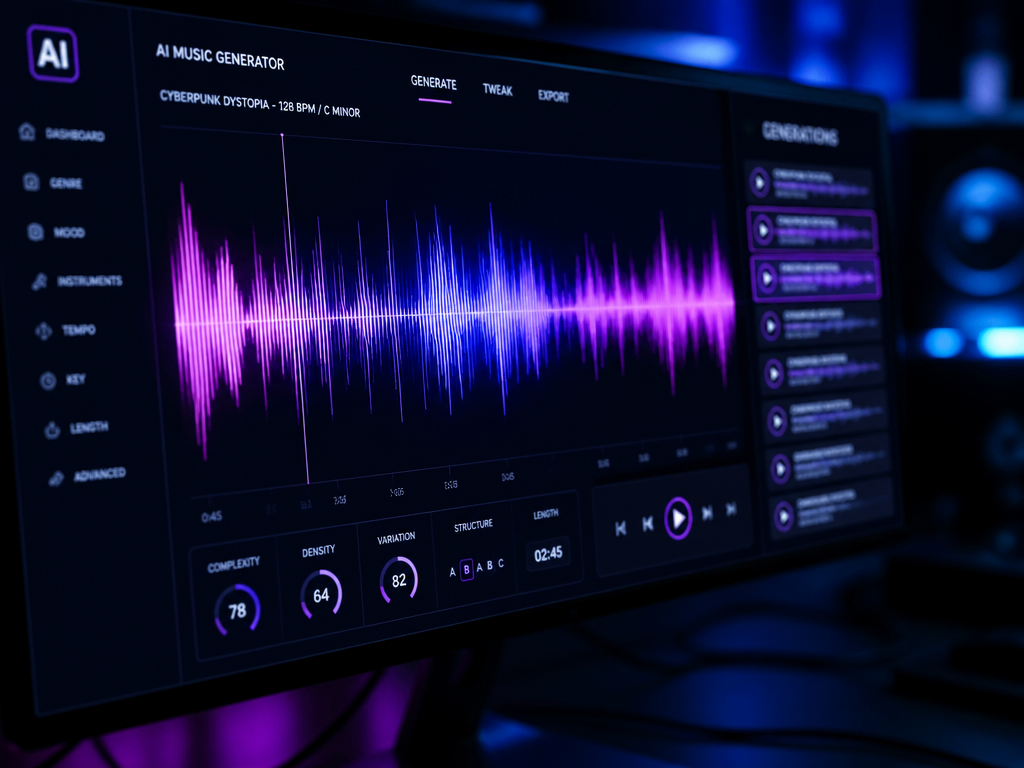
Generative tools dropped the price of a finished-sounding master toward zero. A bedroom artist can now produce a 48kHz WAV with a detuned analog bassline, a broken 808, and a passable mix in an afternoon. That's real, and it matters most for the work nobody pays you for anyway: scratch demos, alternate versions, instrumental beds, the third remix nobody commissioned.
What didn't get cheaper is getting a stranger to care. Attention is still the scarce resource, and no amount of AI music generation buys it for you. The artists who are compounding aren't the ones generating the most tracks — they're the ones with a recognizable signature and a reason for people to come back. The tool lowered the floor. It did not raise your ceiling.
Ownership beats access
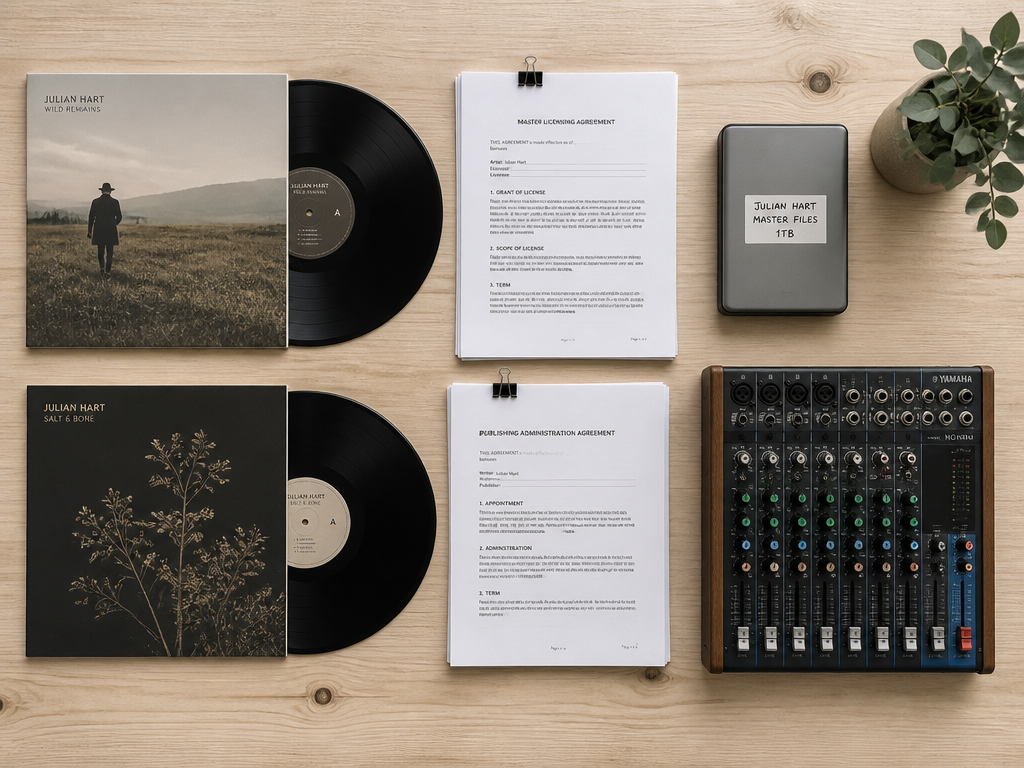
A residency gives you access for a season. A catalog you fully own and a list of people who chose to hear from you give you leverage for years. When you read a development program's terms, the question that matters isn't "how much support do I get?" It's "what do I keep, and what do they take a claim on?" Rights, masters, publishing, and any AI-output ownership language vary wildly between platforms and change often, so read the actual terms in front of you the day you sign — not the summary in the announcement, and not what a forum told you last year.
Multiple small funding sources beat one savior
The artists who stay solvent tend to stack income: sync placements, direct fan support, a bit of licensing, the occasional grant. One big program isn't a plan; it's a bonus if it lands. Treat every fund as one line in a portfolio, never the whole budget.
What I actually do
Here's the workflow in my room, as someone who scored indie games for a decade and now runs AI tools alongside four broken synthesizers.
I use generation for the parts that cost money and time, and I keep my hands on the parts that earn loyalty. Practically:
- I generate the beds, not the hooks. Atmospheric loops, alt-version stems, tempo-matched filler — that's where machine speed pays off. The motif a listener will hum, I still write. That's the signature, and the signature is the brand.
- I export stems every time, in 48kHz WAV. Stems are what make a track sync-ready and remixable later. A flat stereo bounce is a dead end; stems are an asset you'll monetize three times.
- I keep a one-line provenance note per release. What was AI-assisted, what was played, which tool, what version, as of that date. When a sync licensor or a distributor asks about clearance, I have an answer ready instead of a panic.
- I release on a cadence I can sustain. Something every two to three weeks beats a perfect album once a year, because the audience — the asset — only grows when you show up.
- I treat programs as portfolio entries. I apply, I keep the deadline on the calendar, and I don't reorganize my creative year around getting picked.
Here's where I'd put a unit of energy if I had exactly one this week:
| Where you spend the hour | What it returns | Compounds? |
|---|---|---|
| Polishing one more application | A maybe, months out | No |
| Shipping one finished track with stems | An owned asset, sync-ready | Yes |
| Emailing your 50 real fans | Direct attention, repeatable | Yes |
| Reading the actual license terms | Avoided rights disaster | Yes |
A platform like City of Punk fits this picture as a production source for commercially-safe, original sound you don't have to clear — useful precisely because it removes one cost so you can spend your scarce hour on the things that compound. If a different tool serves your genre better, use it. The principle outranks the brand.
None of this sneers at traditional development, mentorship, or the labels that still do it well. It's a recognition that the leverage moved, and AI moved the production half of it within reach. The career half is still yours to build, slowly, in public.
Rule of thumb you can use tonight: finish and fully own one track before you fill out one more application.
Not sure which tool to use?
Compare the top AI music and sound tools side by side — honest reviews, real pricing, no sponsorships.