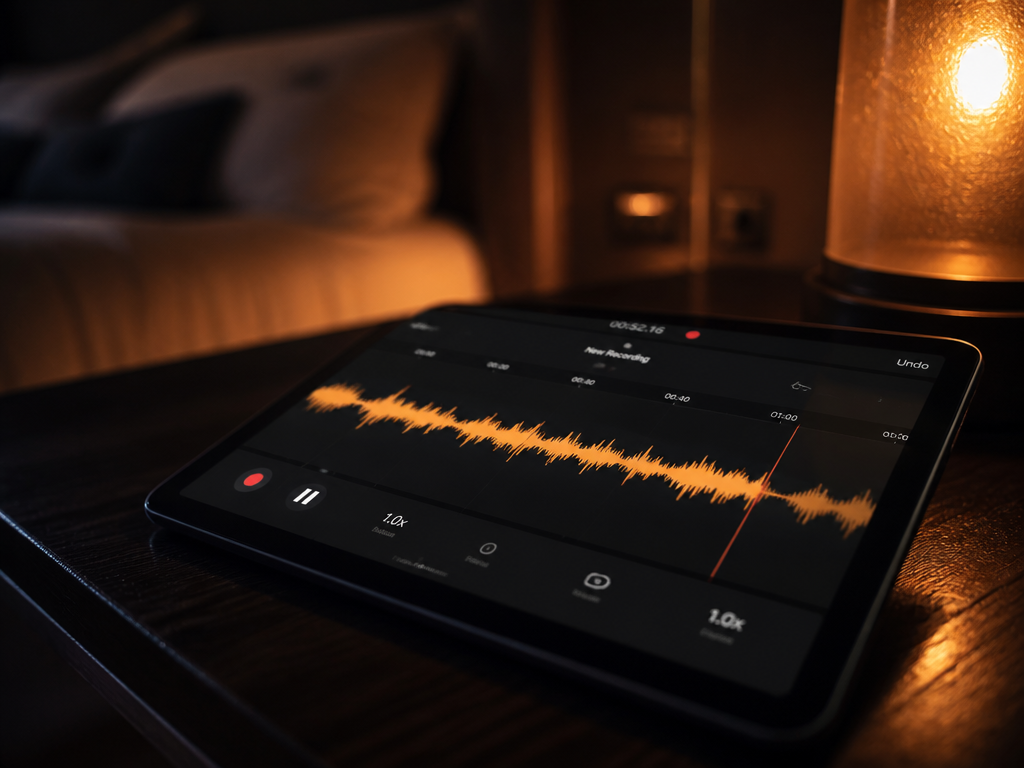
The standard advice for a brain that won't power down at midnight is some version of: put on a looping rain track, or a white-noise app, or one of those eight-hour "deep sleep" playlists, and let it carry you out. It is cheap advice. It is everywhere. And as someone who has spent a decade cutting loops for games and films, I find it about sixty percent right and forty percent quietly wrong in a way that keeps people awake.
Here is the short version before I earn it: AI music generation lets you build sleep audio shaped to your own nervous system instead of someone else's median listener, and the common advice gets the conditioning part right while getting the looping part backward. The thing keeping you up at 1 a.m. is often the very thing the advice told you to trust.
Quick disclosure, said once: City of Punk builds a generative audio tool of its own. I am going to talk about how these tools work in general, name the trade-offs straight, and tell you where any of them — ours included — will let you down. If this reads like a brochure, I have failed.
The advice, stated fairly
The "play familiar sound every night" school is not wrong about the mechanism. Sleep responds to conditioning. If the same audio texture shows up every night as you wind down, your body starts reading it as a cue — a signal that the shift from awake to not-awake is permitted. That is real. Athletes do it with warm-up routines. You can do it with sound.
So the consistency instinct behind "just keep a sleep playlist" is sound. Repetition builds association, association lowers the activation energy of falling asleep, and a predictable wash of noise genuinely does mask the refrigerator compressor and the upstairs neighbor. Credit where it's due.
Where it breaks down
The advice falls apart in three specific places, and they are all about sound, not willpower.
The loop point. Most cheap sleep audio is a short bed — thirty seconds to two minutes — repeated for hours. Your conscious mind doesn't catch the seam. Your auditory cortex does. Every time the file snaps back to bar one, there's a micro-discontinuity: a reset in the reverb tail, a transient that doesn't belong, a pitch artifact at the splice. For a brain already scanning for threats at bedtime, those seams are tiny taps on the shoulder. The track meant to settle you is handing you a beat to track.
The wrong texture. Generic sleep music is mixed for the average. You are not average at 1 a.m. Some people are wound up by high-frequency shimmer — those bright bell pads in every "calm" playlist read as alertness, not rest. Others can't settle without low-end to lean on. A stock track can't know which one you are. It picks the safe middle and the safe middle works on nobody in particular.
The sameness. If you've been burned by a stock-music subscription, you know the feeling of recognizing a track from an ad, a YouTube intro, and a meditation app in the same week. Familiarity built on a sound you also associate with selling you insurance is not the conditioning you want.
This is the gap a generative tool fills. Not because AI sound is magic — it isn't, and I'll get to the mushy renders — but because you can specify the texture, the tempo, and the length, and you can make something that exists only in your bedroom.
How I'd build it: three phases, three prompts
Think in phases, not in one eight-hour file. Your nervous system isn't in the same state at 10:30 p.m. as it is at midnight, so the audio shouldn't be either.
Phase one — wind-down (still upright, maybe reading). You want movement without stimulation. Something with a pulse so the room isn't dead, but slow.
Slow ambient bed, 60 BPM, key of C minor, warm analog pad,
soft tape hiss, no percussion, gentle low-pass filter,
no melody hooks, long evolving texture
Phase two — pre-sleep (lights out, lying down). Drop the tempo and the brightness. Pull the high end down so nothing glints.
Drone ambient, no discernible tempo, deep low pad in D,
sub-bass swell, dark and dim, heavily filtered highs,
no rhythm, no melodic motif, slow attack and release
Phase three — sleep (you're going under). This should barely be music. Texture, not events.
Minimal sustained drone, single sustained chord, very dark,
near-silent dynamics, no movement, no changes, no transients,
soft and continuous, masking texture for sleep
The aim across all three: fewer "events." A melody is an event. A snare is an event. A loop seam is an event. The closer you get to sleep, the fewer events your audio should contain. That single rule will outperform any playlist you can buy.
The mechanics that actually matter
A few tool features change whether this is usable.
- Length and extension. Most generators produce short clips by default. Look for a way to extend or stitch a track to real duration. A continuous twenty-minute render beats a two-minute loop precisely because there's no seam to detect. This is the whole ballgame for sleep audio.
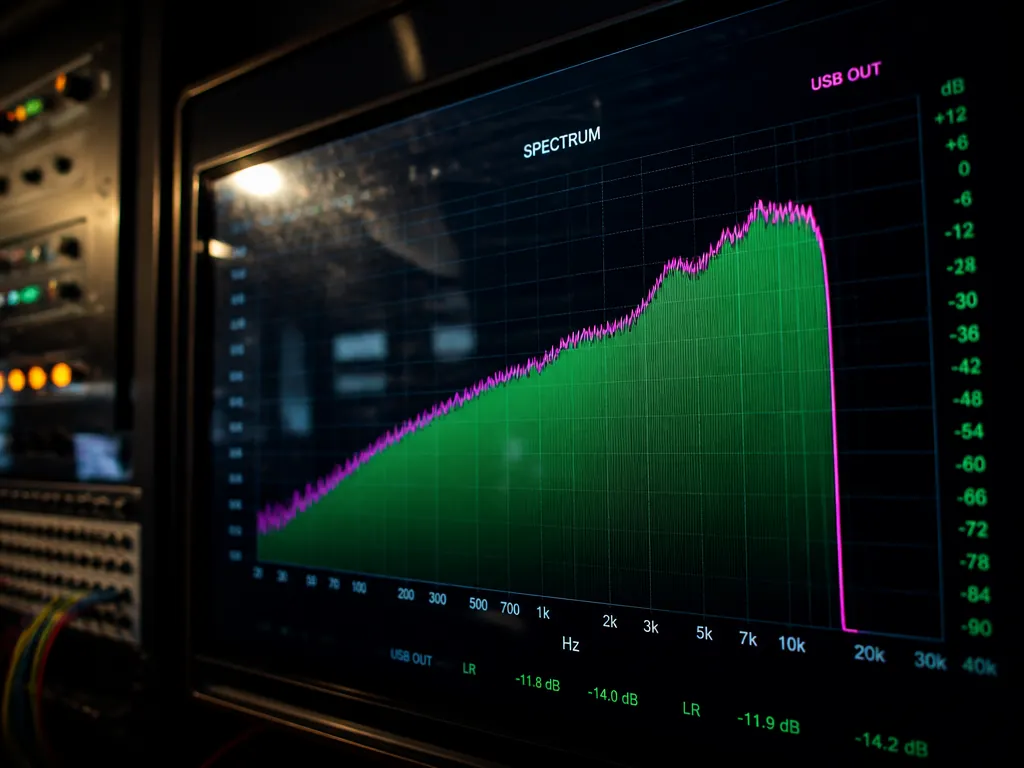
- Export quality. You want at least 44.1kHz audio, WAV if it's offered. Compressed, low-bitrate exports add a faint top-end fizz that, at sleep-level volumes, reads as tension.
- Vocal handling. Ask for instrumental explicitly. Generators love to sneak in breathy vocal pads, and a half-formed human voice in the dark is the opposite of restful.
- Licensing. Read the terms before you build a routine on it. Some tools grant broad royalty-free use; others gate "commercial use" or downloads behind a tier, and terms shift over time. For private bedtime use this rarely bites, but check before you assume.
Now the honest part. Prompt roulette is real. You will ask for a dark drone and get a mushy, undefined smear of low-mid that sounds like a tractor idling two streets over. Vocals, when you don't want them, leak in. Renders sometimes arrive with a low-frequency wobble that's worse than silence. Budget for generating four or five versions of each phase and keeping the one that works. The tool is an instrument, not a vending machine.
Who this is for, who should skip it
This is for the remote worker, the student, the racing-thoughts adult who wants sleep audio fitted to their own ears and is willing to spend twenty minutes tuning prompts once. If you've tried the generic playlists and woken at 3 a.m. anyway, the customization is worth the fiddling.
Skip it if you genuinely sleep fine with rain on a free app — don't fix what isn't broken. Skip it also if prompt iteration sounds like a chore rather than a small craft; you'll resent it, and resentment is not restful.
The honest version of the rule
So here's the advice, rewritten: keep the same sound every night, yes — but make it seamless, make it dark, make it yours, and let it carry fewer and fewer events as you sink. Consistency is the part the old advice got right. The loop was the part it got wrong.
As for me: my sleep track is a single sustained chord in D, twenty-two minutes long, no seam, generated on a night I couldn't settle and kept ever since. I've heard it maybe two hundred times. I have never once heard it end.
Not sure which tool to use?
Compare the top AI music and sound tools side by side — honest reviews, real pricing, no sponsorships.