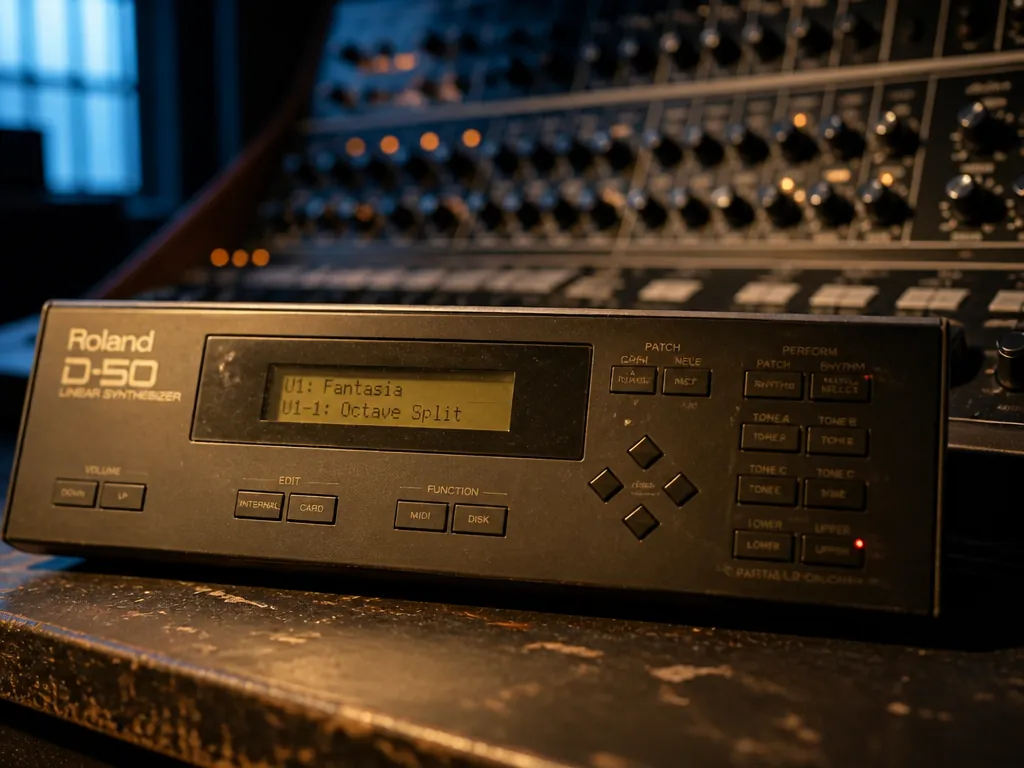
Twenty-three. That's the count Noise Engineering attached to its Legio platform: 23 firmware options, any of which loads onto any Legio module, and none of which costs extra. Among Eurorack modules, where a single function usually lives behind a single faceplate, that number reads like a spec-sheet win. Twenty-three voices and processors, one slot of HP, no second purchase.
The number is real. It also measures something narrower than it first appears to. Here is what it counts, what it leaves out, and how I'd weigh it if I were deciding whether a Legio module earns a place in a rack.
The verdict, in one sentence: 23 is a count of possibilities, not a measure of usefulness, and Legio is worth buying for the one or two firmwares you'd run most of the time, with the other 21 as a free bonus rather than the reason.
What the number actually measures
Legio is a hardware platform. Noise Engineering builds the panel, the jacks, the controls and the processor once, then writes different firmware for that same physical object. Flash one image and the module is a drum voice. Flash another and it's an effect. The 23 is the size of that catalogue: how many distinct software instruments the company has published for the shared hardware so far.
Two things about that count matter.
First, it's cumulative. It grew from smaller numbers and will probably keep growing, which is why I'd treat "23" as a snapshot from when the announcement went out rather than a fixed property of the platform. If you're reading this months later, check the current list before you plan around a specific count.
Second, it's universal across the platform. The pitch isn't "this module has 23 modes." It's "every Legio module can become any of these 23 things." Those are different claims. A multi-mode oscillator puts its modes behind one knob, so you switch between them live. A multi-firmware platform puts them behind a reflash, so you switch between them deliberately.
The range of the catalogue is wide on paper. The descriptors in the release read like a cross-section of modern digital synthesis: a stereo pitch-tracking downsampler, granular metallic synthesis, a Karplus-Strong voice, alongside more conventional voice and processor designs. That's a spread from plucked-string physical modelling through to bit-and-sample-rate destruction that follows the incoming pitch. For a single hardware footprint, that's a lot of territory.
What the number doesn't measure: the panel
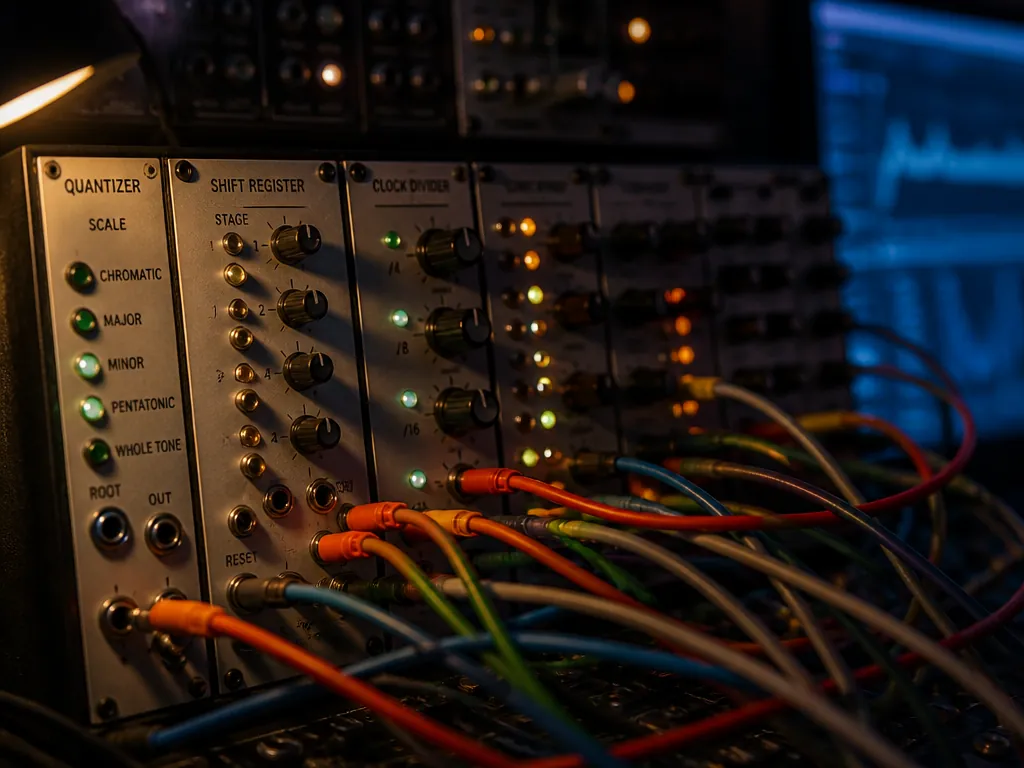
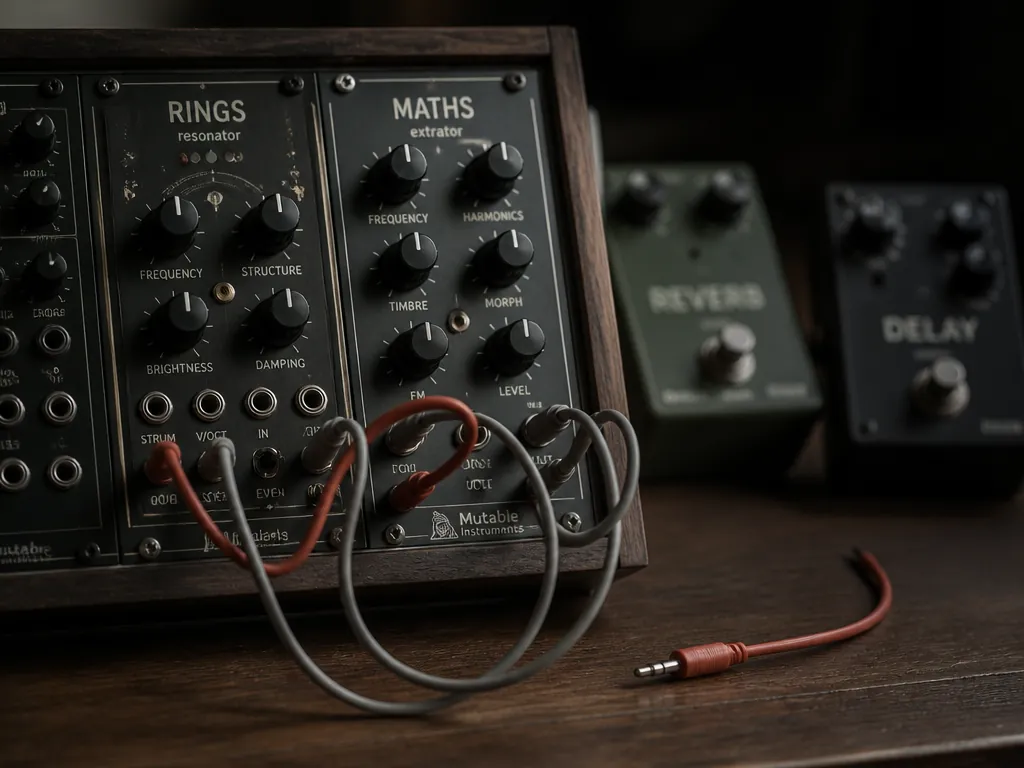
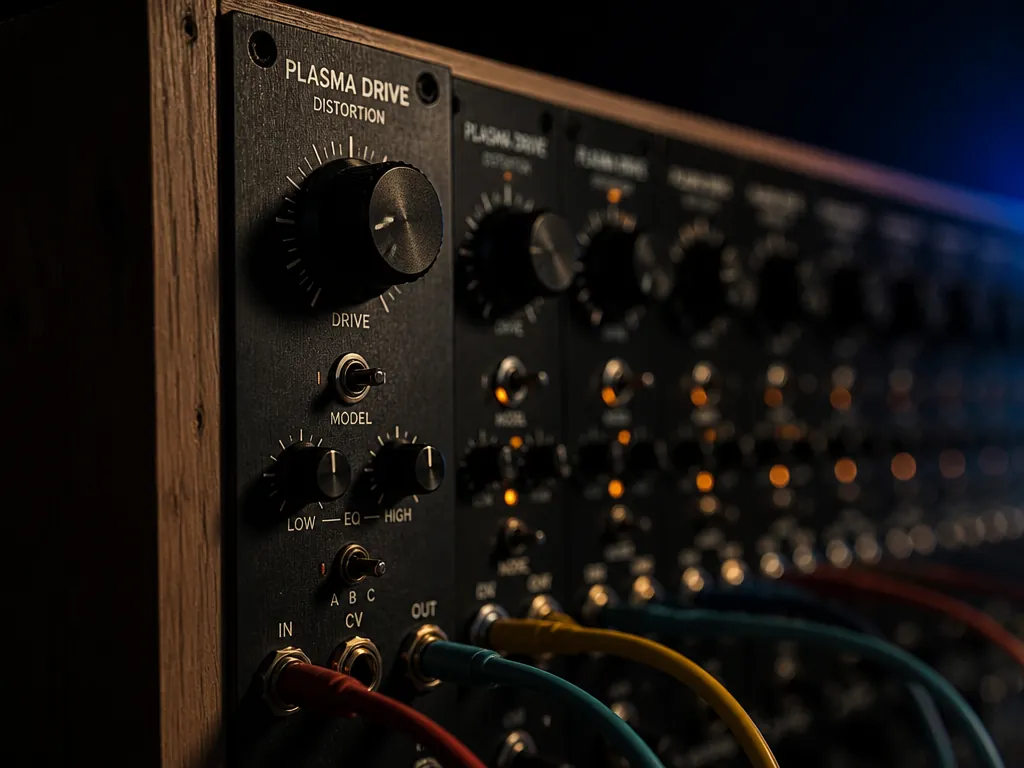
The first thing 23 leaves out is the interface. Every Legio firmware has to live on the same knobs, the same switches, the same jacks. Whatever is printed on the panel was printed for one design. Load a different firmware and those legends describe a different instrument from the one you're now playing.
In practice, that means a knob labelled for one parameter may now control decay, grain density or the downsampler's tracking ratio, depending on what's loaded. Developers on multi-firmware hardware usually map controls by convention, with the big knob doing the most musical thing and the switches picking ranges or modes, and that helps. It doesn't replace a legend you can read in a dark room with a patch cable in your teeth.
If you play modular by feel, this matters more than the firmware count. I've watched people return otherwise excellent alt-firmware modules because they couldn't build muscle memory around a panel that kept lying to them. Twenty-three firmwares on one faceplate means up to 22 of them are running under the wrong labels, unless you track down alternate overlays or tape a cheat sheet to the case.
What the number doesn't measure: depth and sound
A count treats every entry as equal. A Karplus-Strong voice that you'd happily build a whole generative patch around counts as one. So does a niche processor you'd load once, enjoy for an afternoon, and forget. The number has no weighting for depth, range or how well a firmware sits in a mix.
It also says nothing about character. Two firmwares can both be described as "metallic" and still behave nothing alike once you push FM depth or open a filter. One granular voice turns sustained input into a glassy shimmer; another goes grainy and broken at the same settings. Spec-sheet descriptors don't tell you which one you're getting. Recordings do, and so does your own patch time with the module.
The honest way to use the 23 is as a menu you'll taste from, not a meal. In most racks I've seen built around flashable platforms, one or two firmwares end up doing most of the work. The rest get auditioned and shelved. That isn't a failure of the platform. It's how anyone with taste uses a large preset bank, and it's worth pricing in before you treat the full count as value.
What the number doesn't measure: the cost of switching
The third gap is workflow. Swapping firmware isn't a live gesture. It means stopping, connecting the module to a computer, flashing, and then rebuilding whatever patch depended on the old behaviour. Your cables are still in the same jacks, but those jacks now mean something else.
That cost shapes how you should think about the platform:
- Between projects, reflashing is cheap. One firmware runs the percussion bed for a game score for a month; another runs the textures for the next film.
- Within a session, reflashing is expensive. If a cue needs both a plucked voice and a pitch-tracking downsampler at the same time, one Legio module can't be both. You need two modules, or one of those functions has to come from somewhere else.
- For patch recall, it adds a step. Recreating last month's patch now means remembering which firmware was loaded as well as where the knobs were. Write it down.
The 23 counts what a module can become over time. It can't tell you how many of those things the module can be at once, and the answer there is always one.
How I'd decide
If a Legio module is on your shortlist, these are the criteria I'd use, in roughly this order:
- Role in the rack. Name the job first. Drum voice, oscillator, effect, texture generator. Then find the one firmware that does that job best, and judge the module on that firmware alone. If it doesn't earn its HP on its primary firmware, the other 22 won't save it.
- Reflash frequency. Be honest about how often you'll actually reflash. Monthly, between projects, is realistic for most people. Weekly sounds appealing and rarely survives contact with a deadline.
- Legend tolerance. If you perform live or patch quickly under pressure, mismatched panel labels are a real tax. If you're a studio patcher who sits with one instrument for a long stretch, they matter less.
- HP budget. The platform pays off most in small cases, where one slot that can become a voice or a processor is worth more than a dedicated module that only does one thing. In a large system with room for dedicated hardware, that flexibility is worth less.
- Sound, not description. Listen to each firmware you care about before you buy. The descriptors in a release are accurate as categories, but they're no substitute for hearing a firmware run through your own signal chain.
Who this is for, and who should skip it
It's for the patcher with a small or travel case who wants one slot to cover several roles across different projects; the sound designer who works in long, single-instrument sessions and treats firmware swaps like changing a lens; and anyone already invested in the platform, for whom each new firmware is a free extension of hardware they own.
Skip it if you perform live and need every control legible at a glance; if you need two of its functions running at the same time and don't want to buy two modules; or if you know you'll never reflash and the firmware you want already exists as a dedicated module with a purpose-built panel. In that last case, the dedicated module is the better tool, and the 23 is a number you'll never use.
For anyone tracking how flashable Eurorack modules are changing the way people plan a case, Legio is a useful reference point. It shows that one physical module can carry a whole catalogue of instruments. It also shows that a catalogue isn't a workflow. The second fact is the one you'll live with.
My own case has two flashable modules in it. Across a year of scoring work, one has run the same firmware since the week I installed it, and the other has been reflashed four times, each time between projects and never in the middle of one, with the current firmware's name written on a strip of masking tape above the jacks.
Not sure which tool to use?
Compare the top AI music and sound tools side by side — honest reviews, real pricing, no sponsorships.