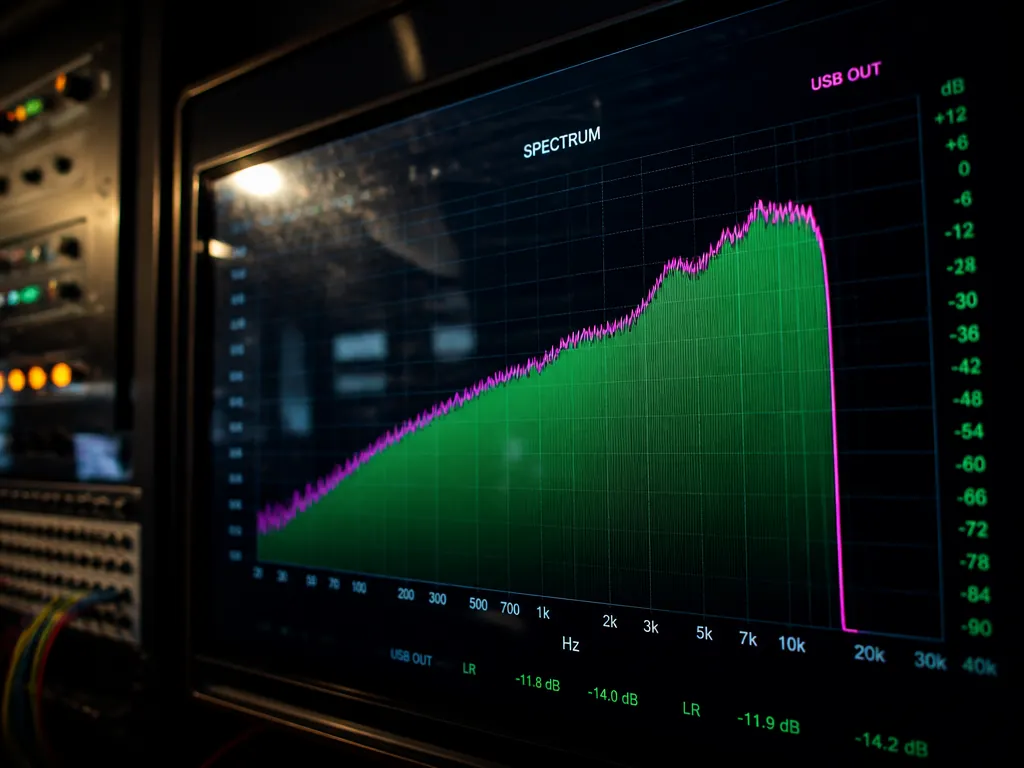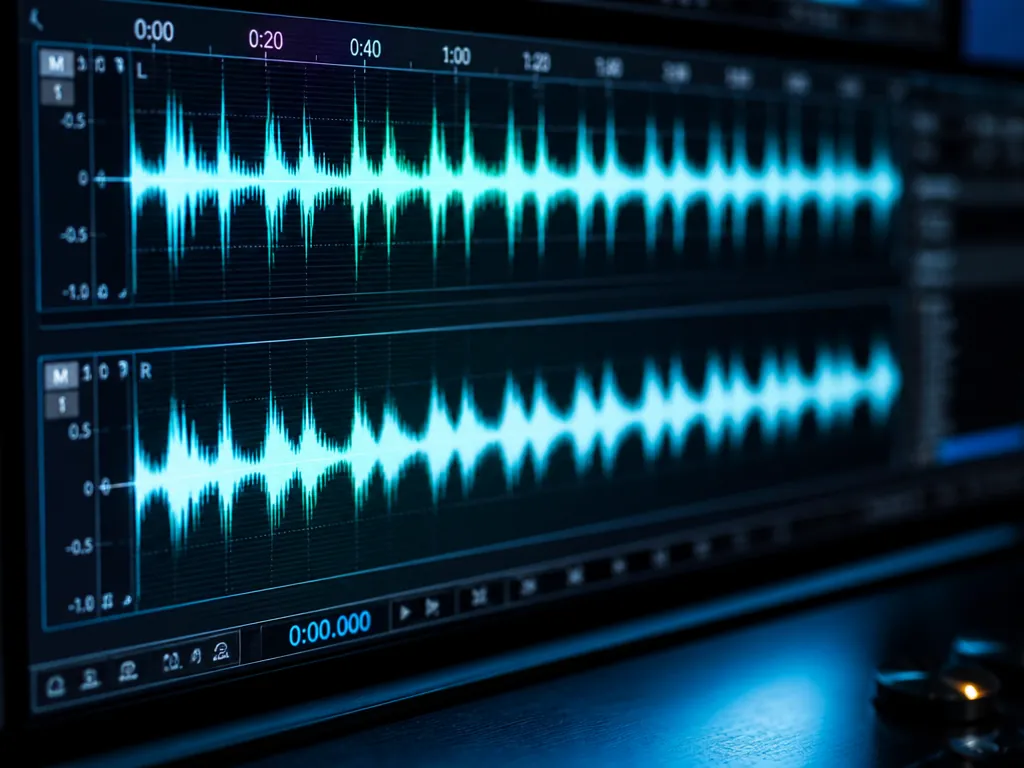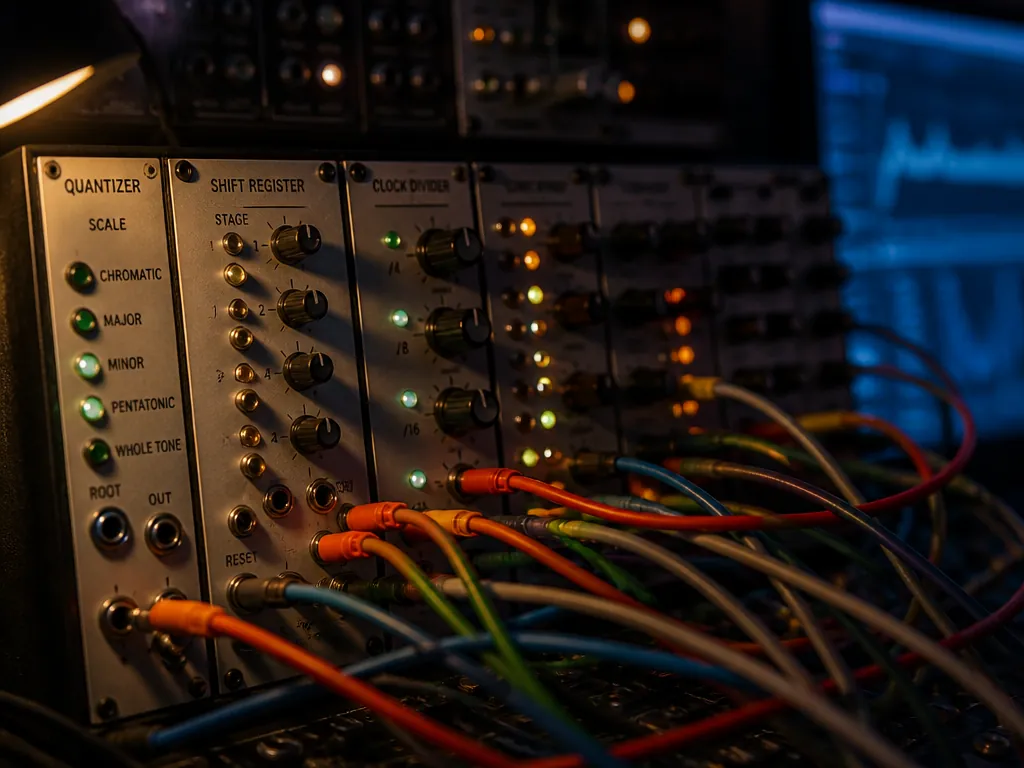
The first generative patch I left running overnight produced nine hours of audio and roughly forty seconds I would put in a game. Everything was technically moving: three random sources, a quantizer, a filter breathing on a slow LFO. None of it went anywhere. If you have spent time with modular synthesis and generative techniques, you probably know that recording. It sounds alive for two minutes and like a screensaver after five.
This piece is about why that happens and how to patch around it, so the next long take you record has structure a player or a listener can feel.
The myth: set it running and the music writes itself
The version most people have heard goes like this: patch enough randomness into enough voices, clock it, and the rack composes. You become a curator instead of a writer. It is an appealing idea, and it is repeated in forum threads, product demos, and more than a few YouTube thumbnails showing a wall of cables and the word ENDLESS.
The smart version of the myth is subtler. It concedes you need a quantizer, but it still treats randomness as the engine and rules as a cosmetic filter on top. Tune the random to a scale, the thinking goes, and you have music.
What the recordings actually show
Go back through your own long takes and mark the moments you would keep. In my archive, the keepers share three traits, and none of them is randomness:
- A phrase repeated at least twice before it changed. The ear needs a second hearing to recognize a motif as a motif.
- A rhythmic hierarchy. Something on the bar, something on the beat, something between. Flat, evenly random gates read as rain, not rhythm.
- Change arriving on a boundary. A new note or density shift landing on the downbeat of a 4- or 8-bar phrase sounds intentional; the same change landing mid-bar sounds like drift.
The forgettable stretches were the opposite: every step a fresh random value, gates at uniform probability, modulation unsynced to anything. Quantized, in key, and completely without memory.
What is generative modular synthesis, really?
Generative modular synthesis is a patch that makes musical decisions from rules you define, using controlled variation to choose between outcomes. The rules — clock divisions, scales, repetition lengths, probabilities, logic — do the composing. Randomness only decides which rule-approved option plays next. When the ratio tilts toward randomness, the output loses memory and the listener stops following it.
That is the whole mechanism. Structure is perceived through repetition and hierarchy, so every source of variation in the rack needs a matching constraint.
| Source of variation | Constraint that tames it |
|---|---|
| Random CV (S&H, noise) | Quantizer with a reduced scale, often 5 notes or fewer |
| Random pitch sequence | Shift register with a lock/loop length control |
| Random gates | Clock divisions and per-step probability, not free-running triggers |
| Slow modulation | Reset or sync it to a phrase-length clock |
| Voice density | Logic (AND/OR) so voices answer each other |
A constrained generative patch, step by step
This patch uses common module types rather than one specific rack. A shift-register sequencer in the Music Thing Modular Turing Machine mold is the heart of it; Mutable Instruments' Marbles (discontinued, widely cloned) covers several roles at once if you have one.
-
Set a master clock at a fixed tempo. Pick something the project needs — 90 BPM for an exploration loop, 120 for a menu. You should see a steady LED pulse and hear nothing yet.
-
Split that clock into at least three divisions. Send x1 (sixteenths), /4 (quarters), and /16 (bars) to separate outputs. Patch the /16 to a spare envelope and listen: a thump once per bar confirms your phrase grid.
-
Patch the shift register's CV output into a quantizer set to a five-note scale. A minor pentatonic in D is forgiving. Clock the register from the x1 division. You should hear a busy but in-key melody with no repetition — this is the screensaver stage, and it is supposed to sound aimless.
-
Set the register's loop length to 8 steps and turn the lock/probability knob almost fully toward locked. Now you should hear the same 8-note phrase cycle, with an occasional single note mutating. This one move does more for musicality than anything else in the patch.
-
Gate the melody voice through a probability stage at around 60–70 percent. Use the x1 clock as input. The phrase should now breathe: same pitches, with rests that shift each pass. If it sounds too sparse, raise the probability before you touch anything else.
-
Add a bass voice clocked from the /4 division, pitched from the same quantized CV through a sample-and-hold. You should hear a root-heavy line moving once per beat that locks harmonically to the melody because it reads the same source.
-
Create accents with logic. AND the /4 clock with the melody's probability gate and use the result to open the filter or raise the VCA level. Accents should land on beats where both voices coincide — the patch now has emphasis instead of uniform velocity.
-
Automate change on phrase boundaries. Clock a second sample-and-hold from the /16 output and use it to nudge the shift register's lock knob or the probability threshold a small amount. You should hear the piece evolve every bar or every few bars, never mid-phrase.
-
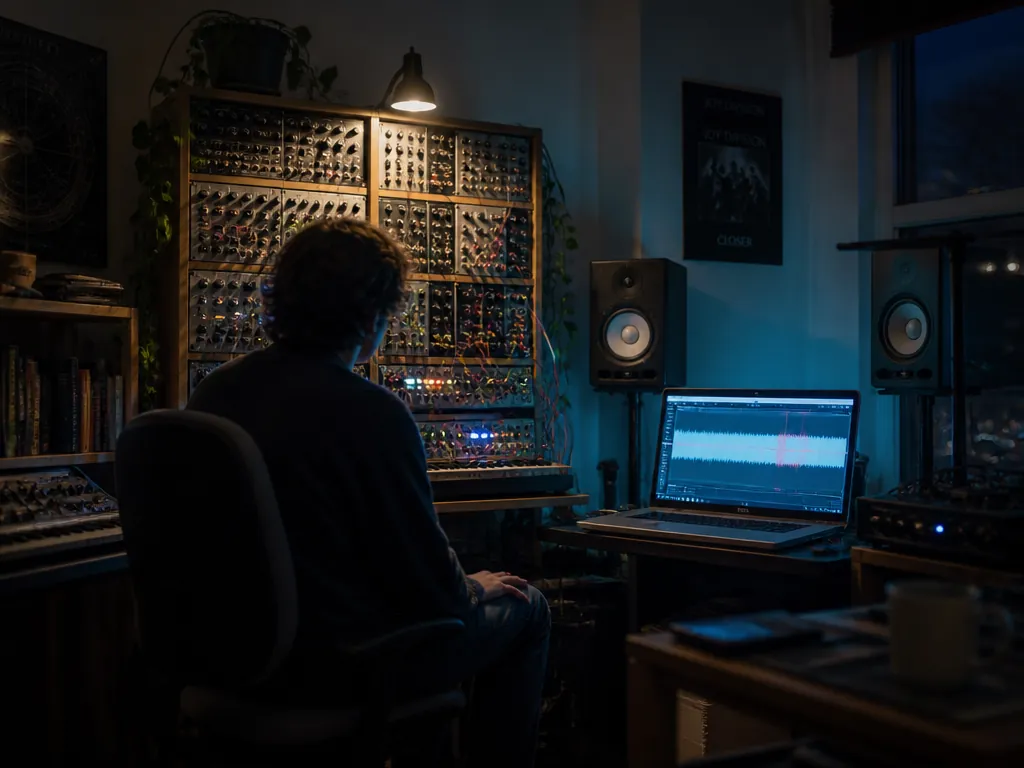
Record stems, not a stereo mix. Capture each voice to its own track at 48kHz, 24-bit WAV, plus the /16 clock as an audio click track. When you edit later, the click tells you exactly where phrase boundaries sit, which is where your loop points and cuts belong.
Run it for twenty minutes. The ratio of keepable material should be noticeably higher than a free-running random patch, and the keepers will be easier to loop because they already begin and end on the grid.
Where algorithmic composition modules fit
A newer category of Eurorack modules goes further than shift registers: they encode whole composition systems — counterpoint rules, fugue-style voice leading, Markov-chain note choice — and output multiple CV and gate voices from them. One recently announced module frames itself explicitly around Bach-style algorithms. Check the maker's current spec sheet and pricing yourself; details change between announcement and shipping.
These modules are the mechanism above, pre-built. The rules are denser and more musically literate than anything you would patch from logic and dividers, which is their real value: voice leading is genuinely hard to patch. What they do not change is the editing problem. A counterpoint engine still produces long passages you would not use, and it still needs a clock hierarchy and a record-and-cut workflow around it. Treat one as a very capable rule source feeding the same patch structure, not a replacement for it.
One licensing note for anyone scoring commercial work: a patch you designed and recorded is your performance, but if a module ships preset material or sample content, read its terms before that audio ends up in a game build or client edit.
The honest takeaway
Generative patching does not remove composing from the process; it moves the composing into the rules and the edit. Randomness is the cheapest part of the rack. Memory — loop lengths, locks, clock hierarchy, changes timed to boundaries — is what turns voltage into something a listener follows. Some sessions will still come out mushy, and prompt-roulette has a hardware cousin in knob-roulette. The difference is that a constrained patch fails in a narrow, fixable way instead of drifting.
These days my overnight takes run with the lock knob at about two o'clock and a bar-clock click on its own track, and the morning edit takes twenty minutes instead of three hours.
Not sure which tool to use?
Compare the top AI music and sound tools side by side — honest reviews, real pricing, no sponsorships.