Fifty-one seconds.
That was all the clean audio I had of an actor's voice on a game project — one usable take before the room's air handling kicked on. No budget for a pickup session, and I needed six more lines. So I did what a lot of sound designers now do: built a voice model from those fifty-one seconds, generated the lines, spent an afternoon sanding the seams. The client approved it. The actor was paid and signed off. That's the dull, legitimate face of AI voice cloning.
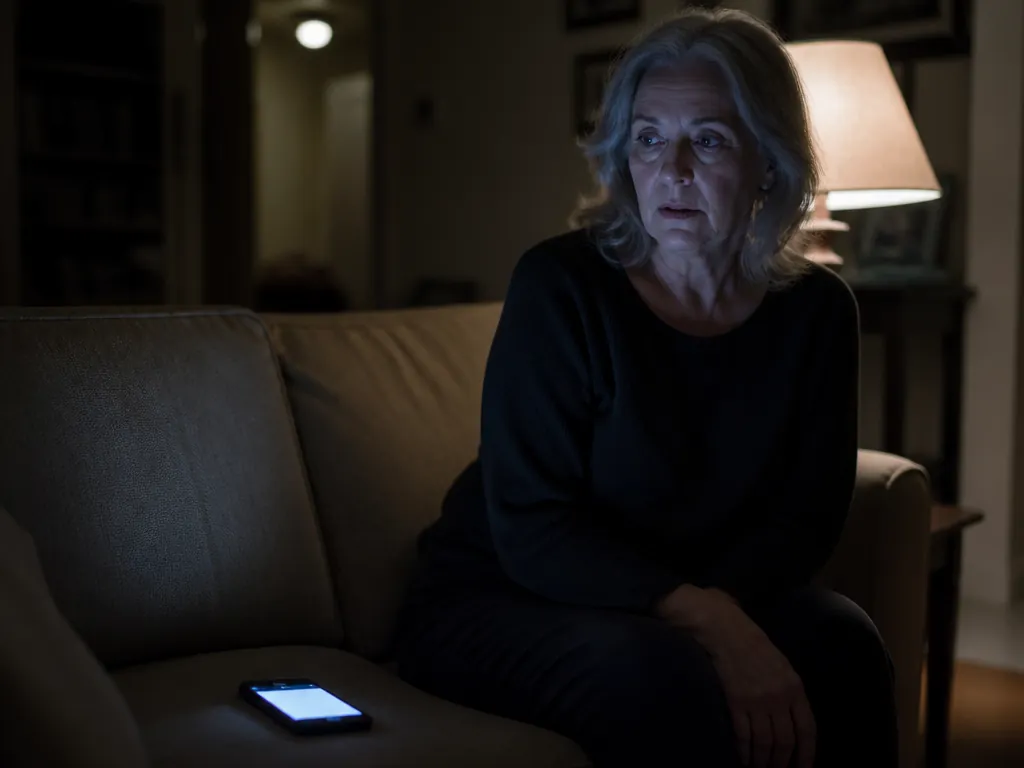
The other face rings your phone at 11:40 on a Tuesday and sounds like your daughter.
I'm not writing this as a fraud investigator. I'm writing it as someone who knows how the sausage is made — where this technology is genuinely strong, where it's still thin, and why the scam script that reaches your parents is built precisely around that difference.
How much audio does a voice clone actually need?
Less than most people assume. The exact figure varies by tool and changes constantly, but as of writing, a short stretch of clean, uninterrupted speech — well under a minute in many cases — is enough to produce something that survives a phone call. Not enough for a feature film. Enough for eleven seconds of "Mom, I'm in trouble."
What that clone reproduces well is timbre and cadence: the specific weight of a person's vowels, where they breathe, the little upward flick at the end of their sentences. What it still handles badly is unrehearsed emotion, overlapping speech, unusual proper nouns, and any conversation that runs long enough to need actual improvisation.
Hold that list next to the typical scam call: short, one-sided, tearful, urgent, over in under two minutes. That is not a coincidence. That is the format that hides the weaknesses.
What most people do
The default defense is to listen harder.
It's the most natural response in the world, and I've watched competent, skeptical people fall back on it. They replay the call in their head. They say some version of I'd know her voice anywhere. They ask the caller a question, get a sobbing half-answer, and take the emotion as proof, because grief and panic are exactly the states in which we stop auditing details.
The second thing people do is check the number on the screen. Caller ID has been trivially spoofable for years; it is a display field, not an authentication step. A familiar number appearing on your phone tells you what the caller wants you to see.
The third is a quiet assumption I hear constantly: nobody has recordings of my family. Anyone with a voicemail greeting, a wedding toast on a public feed, a work webinar, a podcast guest spot, or a teenager who posts talking-to-camera video has a usable sample sitting somewhere. Fifty-one seconds is not a high bar.
And the fourth thing people do is comply, fast, because the script gives them ninety seconds and a crisis. That's the whole design.
What the evidence suggests
Start with the unglamorous part: imposter scams were a problem long before any of this. The FTC's consumer fraud reporting has placed imposter scams at or near the top of complaint categories for years running — the grandparent call, the fake sheriff, the bogus bank fraud department. What AI voice cloning changed is not the existence of the crime. It removed the weakest link in the old version, which was a stranger doing a bad impression and hoping the phone line covered for him.
Researchers who study voice perception have a useful point here: recognizing a voice is fast and largely pre-conscious. You don't decide it's your son. You've already decided by the time he finishes the first word, and everything after that gets processed as your son, upset rather than an unknown speaker, to be evaluated. Faces we scrutinize; we hold them up to the light. Voices authenticate themselves under the radar, which is why a synthetic voice lands differently than a doctored photo.
Then there's a technical detail I'd bet most consumer coverage misses. Standard phone audio is narrowband — roughly 300 Hz to 3.4 kHz, a fraction of what you'd get from a 48 kHz WAV. The artifacts that give a mediocre clone away, the glassy top end and the slightly wrong sibilance, live above that ceiling. The phone network deletes the evidence before it reaches your ear. In my studio I can hear a bad render in two seconds. Through a compressed mobile call, with someone crying, at midnight, I am not confident I could.
Which means "listen harder" is a losing axis. You are being asked to detect something the channel has already stripped out, under emotional conditions engineered to stop you from trying.
The useful axis is different. The audio is only the wrapper. The payload is always the same handful of demands, and those haven't changed in thirty years.
What I actually do
Six habits, ranked by how much they'd survive a better model than the one that called you.
1. Hang up and call back on a number I already have. Not a number the caller gives me. Not a callback offered on the line. The contact already in my phone. This is the single defense that doesn't depend on my ears, and it costs nothing. You know it worked when the real person answers, confused, from somewhere ordinary.
2. A code phrase, chosen out loud and never typed. Not the dog's name, not a birthday, not anything sitting in a breached database or a public post. Something arbitrary and slightly stupid — the kind of phrase nobody would guess and everybody in the family remembers. Say it in a room. Don't text it, don't email it, don't put it in a shared note.
3. A question that can't be retrieved. Mother's maiden name is a data-breach field. "What did we eat at the airport in March" is not. The test isn't difficulty; it's whether the answer exists anywhere outside two people's heads.
4. A hard stop at the payment rail. Gift cards, wire transfer, crypto, or a courier coming to the door for cash — those are chosen because the money can't be pulled back. I don't argue with the story. I stop at the mechanism.
5. Trim the easy training data where it's cheap. Use the default carrier voicemail greeting instead of your own. Think twice about the ten-minute talking-head video. This buys margin, not immunity, and I won't pretend otherwise; plenty of voices are already out there and can't be recalled.
6. Have the conversation before the call. With my parents, in advance, in plain terms. The sentence I want in their head is: if it's an emergency, I'll still be reachable in ninety seconds when you call me back.
| What the caller wants | What it signals | The move |
|---|---|---|
| "Don't tell Dad" | The script needs you isolated from anyone who'd verify | Tell that person first, immediately |
| Gift cards, wire, crypto, cash pickup | An irreversible rail, chosen for that reason | Refuse at the rail, regardless of the story |
| "Stay on the line" | Hanging up ends the illusion, and they know it | Hang up. Call the number you already have |
| A new number, "my phone broke" | Cuts you off from the contact you'd check against | Call the old number anyway |
None of this is foolproof, and I'd distrust anyone who told you otherwise. Models get better. Longer, more interactive fakes are coming. But every item on that list works by refusing to adjudicate the audio at all, which is why they hold up as the renders improve. A code phrase doesn't care how good the synthesis is. Neither does hanging up.
Fifty-one seconds bought me six lines of dialogue and a game shipped on time. The same fifty-one seconds of your voice, scraped from a voicemail greeting, buys someone else a phone call your mother will believe. The defense isn't fifty-one seconds of harder listening — it's the one call you make instead of the one you take.
Not sure which tool to use?
Compare the top AI music and sound tools side by side — honest reviews, real pricing, no sponsorships.