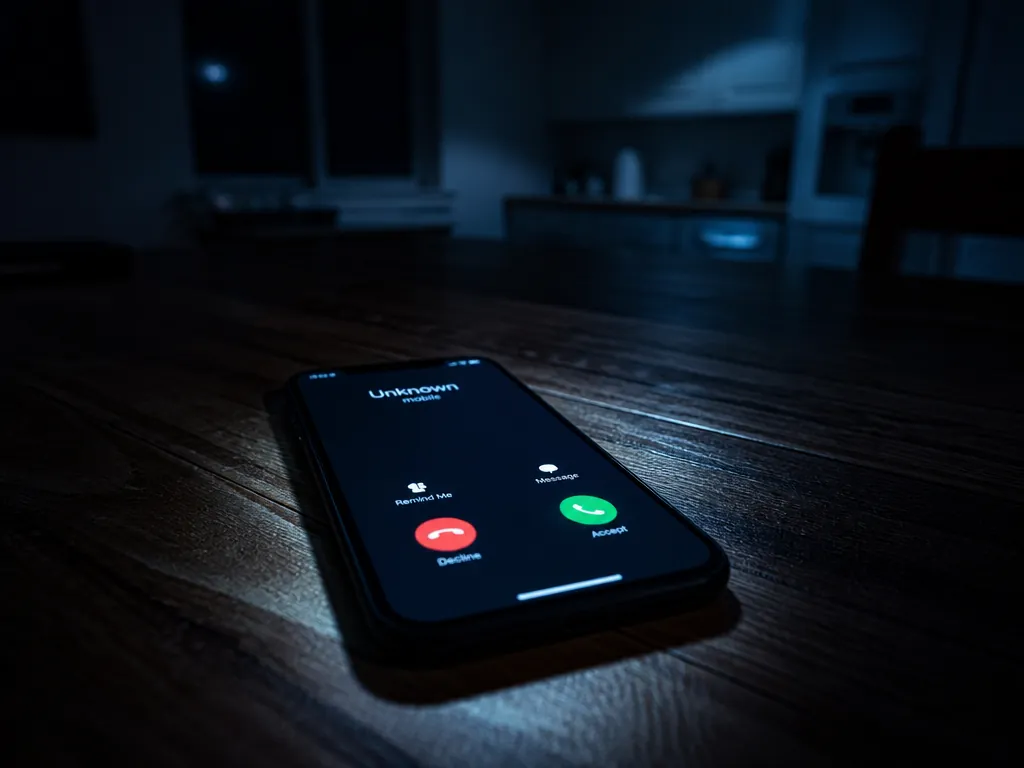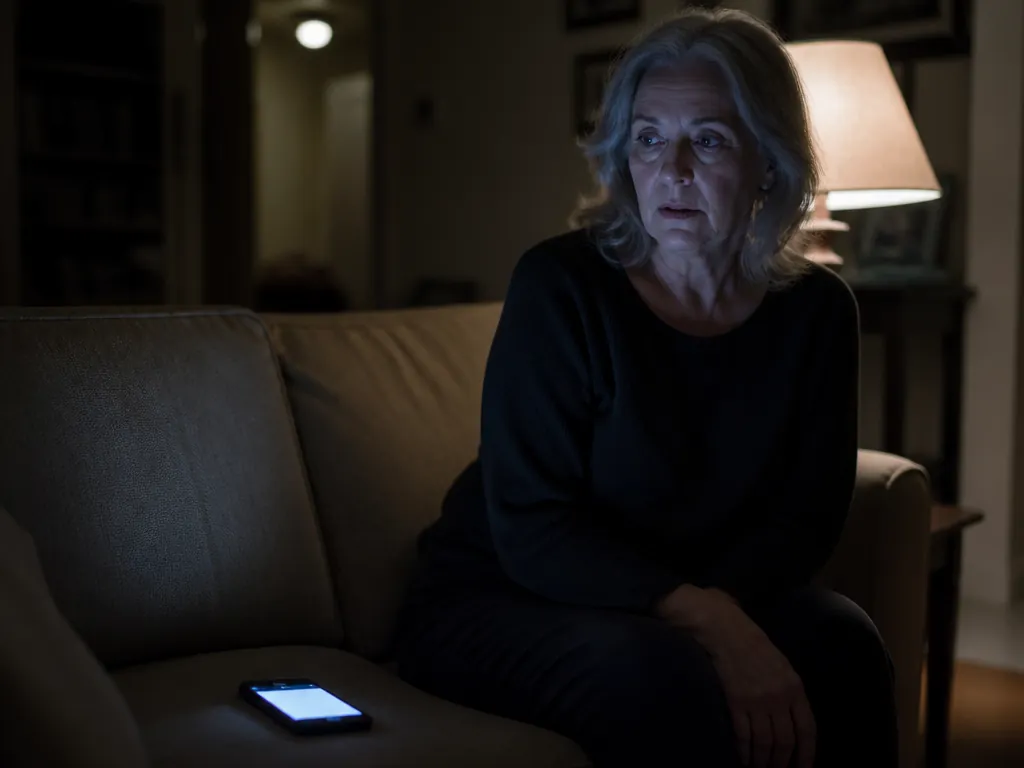
A few seconds of audio is enough. Not minutes — seconds. A voice note your mother sent to a WhatsApp group, a clip from a wedding video someone posted, a voicemail greeting that's been the same for eleven years. Feed that into one of the current voice-synthesis tools and you get back something that breathes like her, pauses like her, lands on the same vowels she does. AI voice cloning scams work because the human ear was never built to audit timbre under stress. Mine is trained to — I've spent a decade matching room tones and de-essing dialogue — and I'll tell you plainly that on a phone call, through a cellular codec, with adrenaline in your chest, I would not catch a good clone either.
So this isn't a piece about listening harder. You can't win that fight, and pretending you can is how people lose money. This is about the three things that actually work when the voice has already passed the test, and which one of them you should set up tonight with the relative you're worried about.
What the scam actually sounds like
Forget the voice for a second. The voice is the delivery mechanism, not the weapon. The weapon is a sequence, and it runs roughly the same way every time.
It opens calm. The caller — using a number you don't recognize, or sometimes a spoofed one you do — sounds like your son, your father, your sister. There's no panic at first. That's deliberate. A scammer who screams "send money now" in the first ten seconds triggers the part of your brain that gets suspicious. So instead you get a beat of warmth. "Hey, it's me, I'm using a friend's phone, mine died." A small, plausible reason the number is wrong. The first ask is for nothing but your attention.
Then comes the backstory. An accident. A detained colleague. A deposit that has to clear before a Monday cutoff. A locked phone and a bank that won't help without a transfer from a family member. The details are specific because the scammer has read your family's public footprint — a holiday photo, a job title on LinkedIn, a funeral notice, a graduation post. The specificity is what flips you from "this is odd" to "this is real." It feels like evidence. It is set dressing.
Only then, after the trust is built and the clock has been started, does the number arrive. An account to pay into. An amount. A reason it has to be in the next hour. The urgency isn't incidental — it exists to prevent the one thing that defeats the whole operation, which is you hanging up and checking.
Here's the gap the scammer is praying you won't notice: a real relative who has genuinely lost access to their accounts knows things this caller can't fake on demand, and can tolerate being asked to prove it. The synthetic voice is flawless and the synthetic story is paper-thin. Your defense lives in the story, not the sound.
Why "listen for glitches" is bad advice
People want a tell. A robotic edge, a flat affect, a weird breath. Early clones had those. As of writing, the good ones don't, and the bad ones are getting filtered out by the people running the scams because mushy renders don't convert.
What's left is real but unreliable. Sometimes a cloned voice over-articulates — every consonant equally weighted, no lazy slurring that real tired humans do. Sometimes emotional range is narrow: it can do "urgent," but the laugh sounds pasted in. Sometimes there's a faint sameness to the room, because the model isn't actually standing in a noisy hospital corridor. I notice these things in a quiet edit suite with headphones. You will not notice them when someone who sounds like your child is crying down a phone line at 11pm.
So treat audio tells as a tiebreaker, never a defense. The defense has to be a procedure that doesn't care how good the voice is.
Three ways to verify, measured against what matters
There are three procedures worth comparing. I'm going to judge them against three things that actually decide whether a defense survives contact with a real scam call:
- Speed under pressure — can a frightened person execute it in under a minute, while being rushed?
- Resistance to a prepared attacker — does it still work against someone who has studied your family's public life?
- Teachability — can you set it up with a 74-year-old relative once and trust it to hold without you in the room?
Method one: call back on a number you already have
The logic is simple. You don't trust the incoming call; you hang up and dial the number you already have saved for that person, or a second known family member who'd know where they are. If the "stranded" relative answers their own phone sounding fine, the call was fake.
Speed under pressure: Good, if the person can resist the social pressure to stay on the line. The scammer's entire script is built to stop you doing exactly this — "don't hang up, my phone's about to die, I can't call back." A determined caller can talk an anxious person out of the callback.
Resistance to a prepared attacker: Very high. This is the strongest method on pure security. The scammer cannot intercept your outbound call to a number they don't control. Even if they spoofed the incoming caller ID, your callback goes to the real device. The only way around it is if the real phone is genuinely lost — which is exactly the scenario the scammer claims, so they'll lean on it hard.
Teachability: Moderate. The action is easy to describe. The discipline is hard. You're asking a worried parent to do something that feels rude — to hang up on their distressed child. Many can't, in the moment. That's the failure point.
Method two: a family password or phrase
You agree, in advance and in person, on a word or short phrase that any genuine emergency call must include. Not a birthday, not a pet's name, not anything findable. A nonsense pairing. The caller has to produce it; if they can't, you end the call.
Speed under pressure: Excellent. It's one question and one answer. "What's our word?" There's nothing to dial, nothing to look up. It fits inside the ten seconds before the scammer builds momentum.
Resistance to a prepared attacker: High, with one condition — the phrase must never have been spoken or typed anywhere a scammer could harvest it. No texting it. No saying it on a recorded line. No writing it in a group chat. If it stays a spoken-only agreement made face to face, there's no public footprint to clone or steal. A cloned voice can say anything, but it can't know a secret it was never given.
Teachability: This is where it pulls ahead. An elderly relative doesn't need to fight an instinct or perform a multi-step procedure. They need to ask one question and listen for one answer. "If it's really your grandson, he'll know the word. If he doesn't, it isn't him — even if it sounds exactly like him." That sentence is the whole training. It also reframes the threat in a way that's easier to hold onto: it teaches that the voice is not proof, which is the single most important thing for a vulnerable person to internalize.
There's a real caveat. People forget the phrase, especially the ones most at risk. And a genuinely panicked real relative might blank on it too — which is why a forgotten phrase should trigger a callback, not a refusal to help. The phrase is a fast gate, not a wall.
Method three: a knowledge challenge
Instead of a pre-set phrase, you ask something only the real person would know and that isn't public. "What did we argue about at Chinese New Year?" "What's the name of the shop where we always get roti canai?" The idea is to use shared private memory as the credential.
Speed under pressure: Moderate. You have to invent a good question on the spot, and under stress most people reach for easy ones — birthdays, school names, mothers' maiden names — all of which are findable or guessable.
Resistance to a prepared attacker: Lower than it looks, and getting lower. A scammer who has scraped years of social media may answer more of these than you'd expect. Worse, the call format lets them fish: "I can't remember, my head's all over the place after the accident" buys them a pass on the exact question that should have stopped them. The emotional cover story doubles as an excuse for not knowing things.
Teachability: Poor for the elderly-relative case. It asks the defender to improvise security in real time, which is the opposite of what a frightened person can do. It works best between two sharp, calm adults — and those aren't usually the targets.
The verdict, and how the three fit together
If you read the comparison straight, no single method wins on all three counts. The callback is the most secure and the hardest to talk someone out of trusting, but it's the easiest to prevent in the moment, and it asks for a discipline that frightened people lack. The knowledge challenge is the weakest against a prepared attacker and the worst to teach. The family phrase loses a little on pure security — it depends entirely on the phrase staying private — but it wins decisively on the two criteria that matter most for the person you're actually trying to protect: it's fast enough to use before the scammer takes control, and it's simple enough that an elderly relative can run it alone, at midnight, with their heart pounding.

So the answer isn't to pick one. It's to layer them in the right order:
- The family phrase is the front door. Fast, teachable, runs without you. The relative asks for the word.
- The callback is the backstop. If the phrase is forgotten or the situation is genuinely confusing, hang up and call the known number. This catches the false negatives — the real emergency where someone blanked.
- The knowledge challenge is improvisation, not protocol. Useful only as a last resort between people sharp enough to use it well, and never the thing you teach a vulnerable relative to rely on.
The phrase carries the daily load because it's the only one a scared 70-year-old can execute correctly under pressure. The callback exists so that the phrase failing doesn't mean a real emergency goes unanswered. That ordering is the whole system.
Setting up a family phrase that actually holds
This takes one conversation, in person, and a few rules that make the difference between a phrase that works and a feel-good ritual that doesn't.
Choosing it - Make it two unrelated words. "Copper lantern." "Blue tractor." Concrete nouns are easier to recall under stress than abstract ones. - Nothing findable: not a name, address, birthday, school, pet, or anywhere it appears online or in old messages. - Avoid anything you've said on a recorded customer-service line or in a voice note. Treat any audio of yourself as potential cloning material — because it is.
Distributing it - Say it out loud, face to face. Do not text it, email it, or put it in a family chat. The moment it's typed somewhere, it can be screenshotted, leaked, or breached. - Confirm everyone can repeat it back the next day. If grandma can't recall it tomorrow, pick a stickier pair. - Agree on the rule out loud: "If anyone calls about money or an emergency and can't say the word, it isn't real — no matter whose voice it is."
Maintaining it - Quiz each other lightly every few months. Make it a normal thing, not a drill. - Change it if you ever suspect it's been overheard, written down, or shared. - Pair it with the backstop, spoken plainly: "If you forget it, don't panic and don't send anything. Hang up and call me on my normal number."
If a call comes that fails the test - End it. You don't owe a caller an explanation. "I'll call you back" and hang up is a complete sentence. - Then dial the known number for the real person. Resolve it on a channel you control.
What to listen for — as a tiebreaker only
This is not your defense. But if you're already suspicious and want secondary signals, these sometimes show in a synthetic call:
- Over-precise articulation with no natural slurring or filler ("um," "lah," the small messy sounds of real tired speech).
- Emotion that's loud but flat — urgent in volume, narrow in range, a laugh that doesn't quite connect.
- Resistance to going off-script: a real person can answer a random question instantly; a clone-operator stalls or deflects with the cover story.
- Audio that doesn't match the claimed setting — too clean for a roadside, too consistent for a crisis.
Notice every one of these is a hint, not a verdict. The phrase is the verdict.
Why this beats trying to out-tech the problem
There's a temptation to wait for a technical fix — detectors, watermarks, carrier-level screening. Some of that is coming and some of it helps. But the threat doesn't live in the audio file; it lives in the gap between hearing a familiar voice and believing the story attached to it. No detector closes that gap inside a sixty-second call to a worried parent. A shared secret does, because it moves the question from "does this sound real" — which you'll lose — to "does this person know our word" — which a clone can never answer.
That's the quiet strength of the whole approach. It doesn't ask the most vulnerable person in your family to become a forensic audio analyst. It asks them to remember two words and hold one rule: the voice is not proof.
In my own house, the phrase isn't shared across the whole family as a single word — my parents and I use one pair, and my brother and I use a different one, agreed separately, never written down. If a call ever comes claiming to be him needing money urgently, my parents can't confirm it with their word, because their word with me isn't his word with me. The split means a leak in one place doesn't open the others. We set it up over dinner in about four minutes, and the only person who's ever been quizzed and failed it so far is me, because I'd had two beers and blanked on "copper lantern."
Not sure which tool to use?
Compare the top AI music and sound tools side by side — honest reviews, real pricing, no sponsorships.