The German cut came back three decibels hotter than the English one, brighter in the top end, with half a second less air before the first word. Same script, same brand, same week. Played back to back in a review deck, they sounded like two different companies.
Nothing in that pipeline had failed. Every clip came out of the same AI voice cloning setup, from the same approved reference recording, on the same vendor account. The drift happened downstream, at the stages nobody had written a spec for — and it happens in the same order every time. Brand consistency in synthetic audio is a chain, and if you know which link goes first, you stop spending money reinforcing the wrong one.
First: the room becomes part of your brand
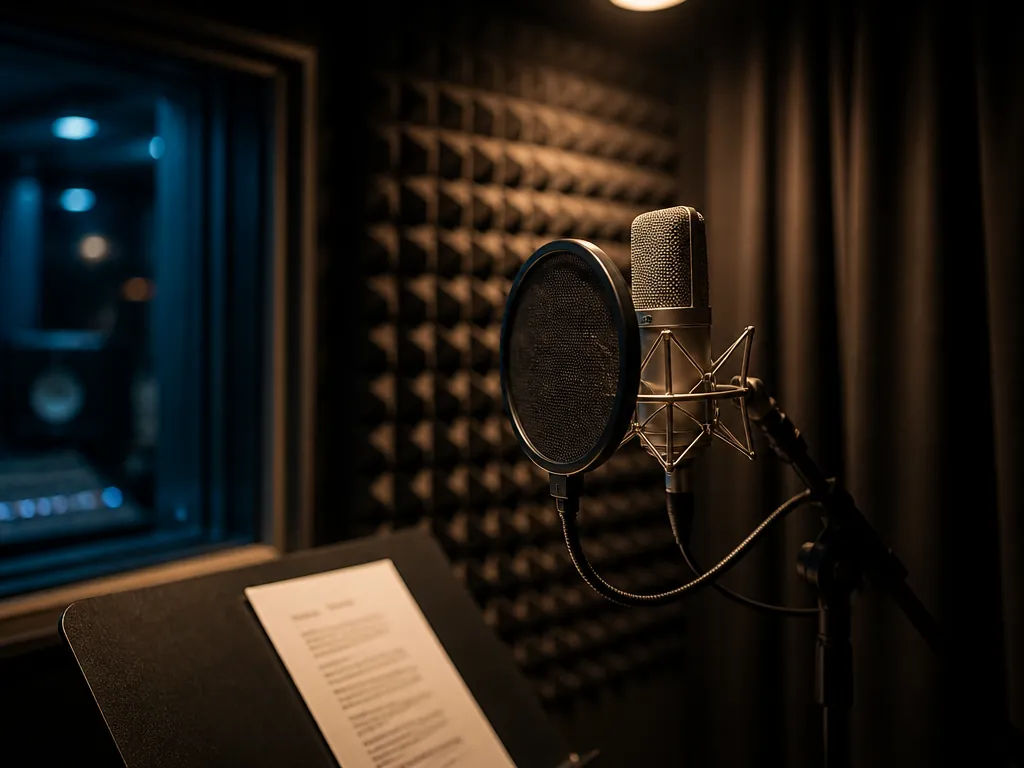
Whatever you record the reference in is what you are cloning. Not the voice — the voice plus the room plus the mic plus whatever the preamp was doing that afternoon. Record your talent in a glassy conference room on a laptop mic and you have permanently signed your brand voice with 200 Hz boxiness and HVAC rumble, and every localized asset for the next two years inherits it.
Treat the capture like a session, because it is one:
- 48 kHz, 24-bit WAV, mono, one microphone, one fixed distance
- A treated space, or the least reflective room you have access to
- No compression, EQ, or noise reduction on the way in — the model learns artifacts as personality
- Read material that covers your actual register: product names, numbers, a warm line, a flat instructional line
How much source audio a system needs varies by vendor and moves constantly, so don't plan around a number you read once. Plan around this instead: capture more than the minimum, in one sitting, and archive the raw file somewhere your agency can't lose it. Re-recording the reference later, in a different room, is the most expensive consistency mistake available to you, because it silently invalidates everything you have already shipped.
Next: the model learns habits, not intentions
A cloned voice reproduces timbre reliably. It reproduces performance much less reliably. Breath placement, the small upward lift your talent puts on the last word of a sentence, the way they under-pronounce a hard t — those come along, unevenly. What does not come along is judgment about when to use them.
That matters more than it sounds, because a brand voice is mostly performance. The identifiable thing in a good VO track is pacing and emphasis, not vocal cords. The model hands you the easiest part of consistency for free and leaves the rest to your process.
Then the script decides the performance
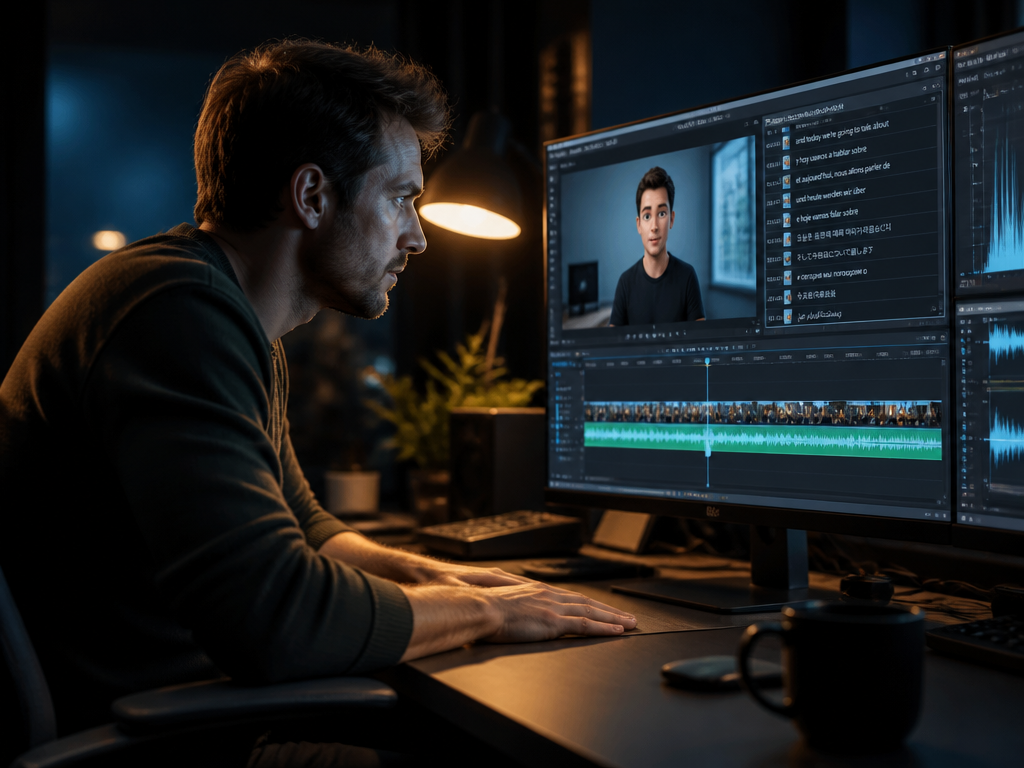
This is where multilingual programs quietly come apart. A faithful translation preserves meaning and destroys duration. German runs long against English. Spanish runs long. Japanese moves the sentence's center of gravity. If your picture is cut to the VO, the localized read either rushes the end of a shot or leaves it hanging.
Two artifacts fix most of it, and both are boring.
A pronunciation lexicon. Every product name, SKU, acronym, and founder surname, with a phonetic spelling per language, in one file every market pulls from. Without it, your brand name gets pronounced three ways across four markets, and nobody outside marketing ever mentions it.
A duration budget. Write the source script to a target length per shot, then brief translators to hit that length rather than translate literally. Transcreation, not translation. It costs one round of copy and saves an editing pass in every market.
Does a cloned voice sound the same in every language?
No, not without work. The timbre carries across languages convincingly; the performance does not. Cross-language renders typically shift in pace, stress placement, and perceived brightness, and some systems import a faint accent from the target-language model. Audiences rarely name this. They experience it as "the German video feels colder." You close that gap in the script and the mix, not by re-cloning the voice.
The render is a lottery, so buy several tickets
Prompt roulette is real in speech, not only in music. The same input can produce a take with a swallowed consonant, an odd pause before a number, or a flattened final syllable. Sibilance on cloned voices is often harsh in a way that passes in isolation and becomes fatiguing across a three-minute explainer.
Budget three to five renders per line and choose, the way you would with a person in the booth. That is a few extra minutes against a re-record cycle that used to mean scheduling talent across time zones — and that arithmetic, not the novelty, is why AI voice cloning ends up in enterprise workflows.
Last: the mix is where consistency is actually won
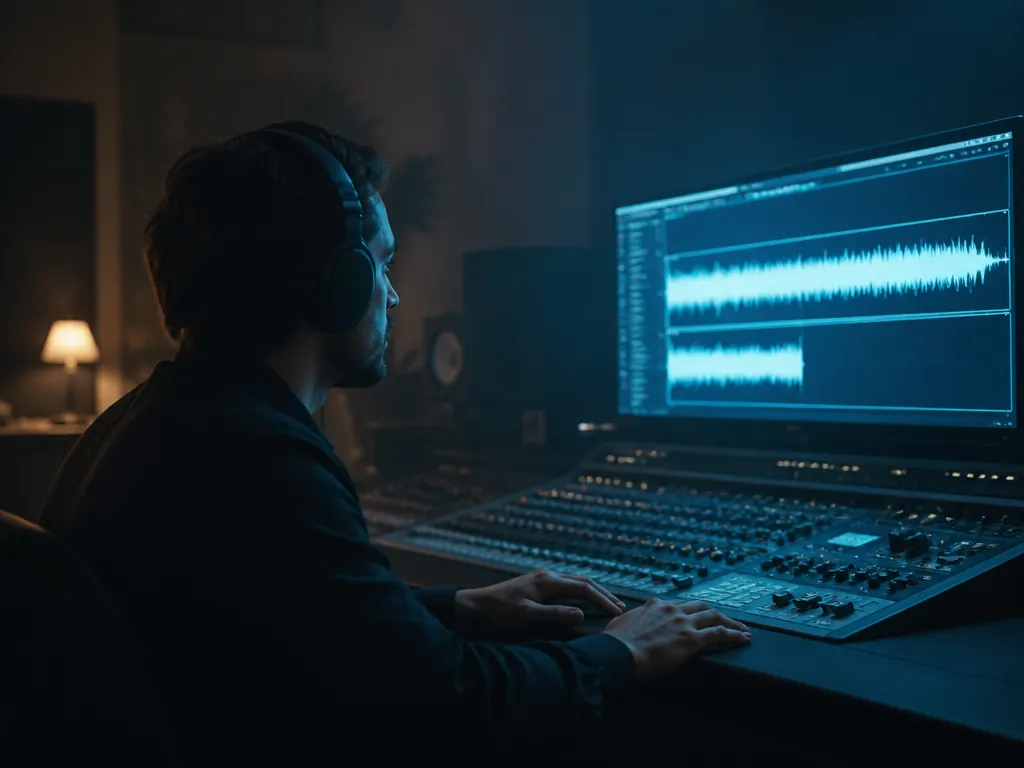
Nearly every brand-drift complaint I get handed turns out to be a mix problem wearing a model problem's clothes. Two clips at different loudness read as two different voices to a listener, even when the source is byte-identical.
Write a one-page audio spec and hold every market to it:
| Element | Lock it to | You know it worked when |
|---|---|---|
| Loudness | One integrated target per channel. Broadcast standards are published (EBU R128 at -23 LUFS, ATSC A/85 at -24 LKFS); social platforms normalize to their own values and revise them, so verify per platform rather than trusting a chart | Market cuts play back to back at one fader setting and you never reach for the knob |
| True peak | -1 dBTP, limiter on the master, no exceptions | Nothing clips after platform transcode |
| Sample rate | 48 kHz end to end, no resampling mid-chain | The top end stays open instead of dull and slightly phasey |
| VO chain | Identical EQ, de-esser, and compressor settings, saved as a preset | Sibilance sits in the same place in every language |
| Head and tail | A fixed amount of room tone before and after the read | No abrupt digital silence at the cut point |
| Music bed | One bed family, one key, one tempo per campaign | The cuts feel related even with the VO muted |
That last row is the one marketing teams skip. Whichever tool you generate beds with — and if you are still choosing, that argument is what our comparison pages are for — pick one key and one tempo per campaign and stay there. A voice survives translation. A bed that jumps from a 92 BPM minor-key pad in English to a 120 BPM major-key pluck in French makes one brand sound like two, and no amount of voice work rescues it.
Consent belongs in the spec, not the appendix
Get written permission from the talent whose voice you are cloning: what it may be used for, for how long, in which territories, what happens at renewal, and what happens when they leave the company. Rules on synthetic likeness are moving in several jurisdictions and platform policies vary, so read current terms rather than trusting any summary, this one included. Decide your disclosure posture before launch too — retrofitting it after a campaign ships is a much worse conversation.
What still needs a person in a booth
Routine, high-volume, low-stakes content is where AI voice cloning earns its keep: product explainers, training modules, release notes in nine markets, the material nobody had time to record anyway. Anything where the message is the relationship — an apology, a price rise, a founder telling the origin story — should be a human, recorded properly. Your audience may not be able to explain the difference, but they will feel that you chose to show up.
Tonight, play your English cut against your loudest localized cut at one fader setting: if you hear two different rooms, fix the mix before you touch the model.
Not sure which tool to use?
Compare the top AI music and sound tools side by side — honest reviews, real pricing, no sponsorships.