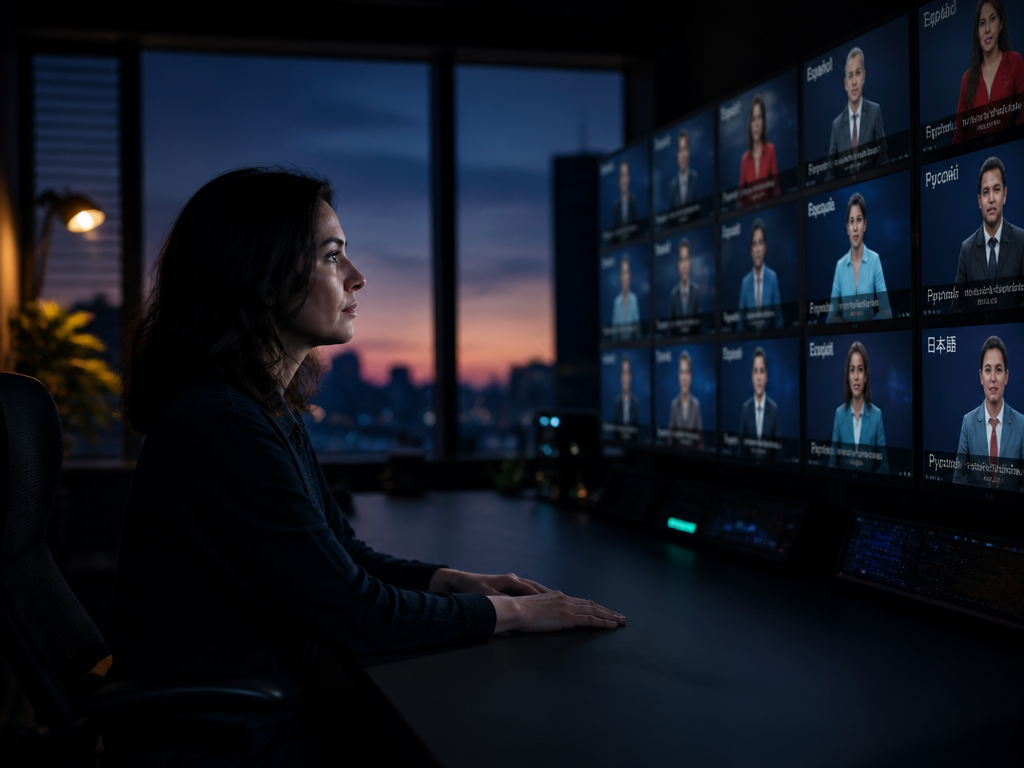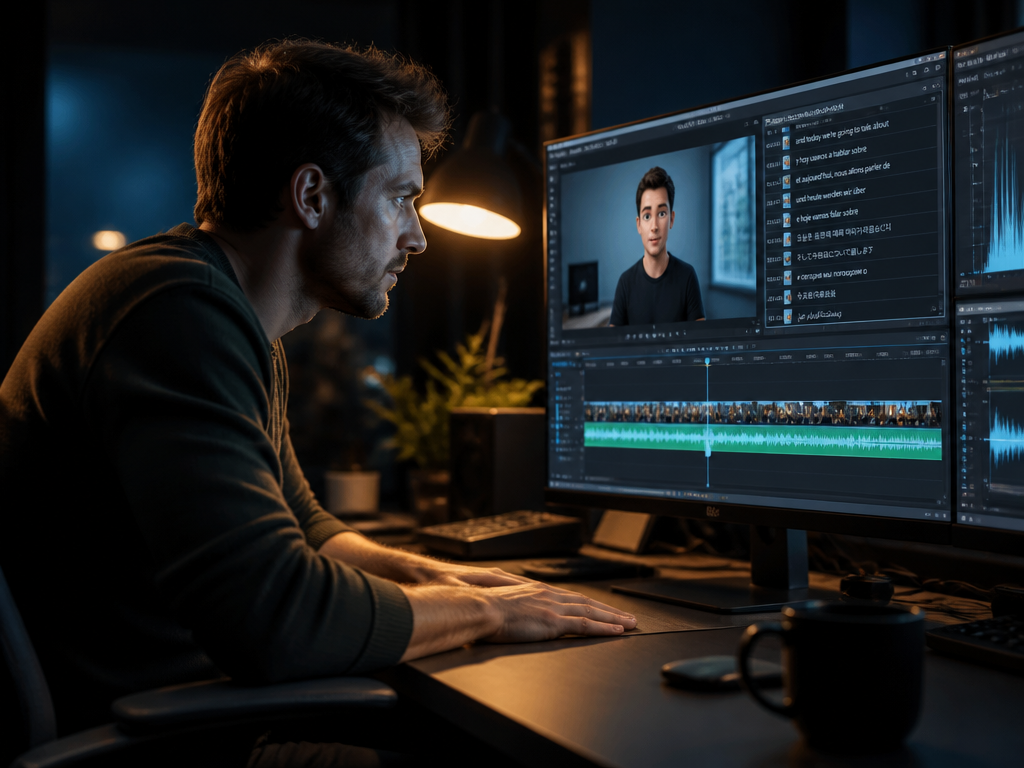
A 14-language product launch, one talking-head avatar, and an 80-millisecond lip-sync drift that nobody caught until the German cut hit final QA. The mouth landed a frame late on every hard consonant. Not enough to fail a casual viewer, enough to make the whole thing feel dubbed — which, in a sense, it was. That seam is the real story of enterprise AI video generation right now: not whether a machine can make a face talk, but whether the voice, the lips, and the license all line up across every market you ship to.
If you run a content team producing high-volume, multi-language campaigns, here is the verdict up front: unified voice-and-video platforms can genuinely collapse a five-tool localization stack into one, and the consolidation is worth real money — but the thing that will burn you is not output quality, it is avatar governance and the fine print on commercial use. Solve those two and the workflow math gets easy.
One disclosure before I go further, because this publication runs on you trusting it: City of Punk builds neural audio tools, including voice work that competes with pieces of what I am about to evaluate. I am not here to sell you ours. I am here to tell you where the whole category leaks, including where we leak.
What most teams do
Most enterprise teams assembled their pipeline one emergency at a time, and it shows.
The typical stack looks like this. A voice synthesis vendor generates the narration — call it 48kHz, decent prosody, a cloned brand voice you paid to train. A separate video platform builds the avatar and animates it. A localization agency or an in-house ops person stitches translated scripts into each. Sometimes a fourth tool handles captions and a fifth handles the brand-asset library. Each link is competent. The failures live in the joints between them.
Here is where it breaks, concretely:
- Timing drift. Your voice tool renders an English VO at one pace. The translated German line is 30 percent longer. The video avatar was lip-synced to the English timing. Now the mouth and the audio disagree, and somebody is hand-nudging keyframes at 11pm.
- License fragmentation. The voice has one commercial-use agreement, the avatar has another, the background music a third. When legal asks "are we cleared to run this paid avatar in a TV spot in three regions," nobody can answer in under a day.
- Voice-face mismatch. A warm mid-register synthetic voice gets married to an avatar whose face was tuned for a brighter, younger read. Viewers cannot name what is wrong. They just do not trust it.
- No single source of truth for identity. Marketing has the approved voice. Brand has the approved face. Nobody has the approved pairing, versioned, in one place.
The instinct, when this hurts enough, is to standardize on a single unified platform that does voice synthesis and lip-sync integration in one render. That instinct is correct. It is also where teams stop thinking, and that is the expensive part.
What the evidence suggests
Spend time with the current generation of unified tools and a clear pattern emerges: the consolidation is real, the quality is good-not-perfect, and the actual constraint has moved somewhere most buyers are not looking.
On output quality. When voice and lip-sync are generated together rather than bolted together, the timing problem largely disappears. The phoneme stream that drives the mouth is the same stream that produced the audio, so a longer translated line stretches the animation with it. That is a genuine engineering win, and it is the strongest reason to consolidate. The honest negative: emotional range is still thin. Synthetic voices handle measured, corporate, explainer-grade delivery well. Ask for a genuine laugh, a cracking voice, a sarcastic aside, and you hit a wall — the prosody flattens and the avatar's face follows it into the uncanny middle distance. For a product walkthrough, fine. For a brand film with real emotional beats, you will still want a human in the booth.
On localization at scale. This is where unified platforms earn their keep. Generating 14 language variants of one avatar from one approved identity, with timing that holds, is a real reduction in headcount-hours. But "scale" hides a quality tax: the more obscure the language, the mushier both the voice and the lip-sync get. European majors are solid. Tonal languages and right-to-left scripts are where I have seen the most artifacts — vowels smeared, mouth shapes that read as approximately-correct rather than correct. Spot-check every long-tail language with a native speaker. Do not assume parity.
On licensing — the part that actually decides this. The platforms differ most, and burn users worst, in commercial-use terms. Read for these specifics before you sign anything:
- Whether the synthetic voice is licensed for paid media or only organic.
- Whether territory is restricted, and whether per-region pricing applies.
- Whether you own the cloned brand voice and avatar or merely license them, and what happens to your assets if you cancel.
- Whether revocation and consent for any likeness used to train the avatar is documented in a way that survives an audit.
That last one is the governance frontier. Emerging avatar-governance standards — and the regulation behind them — increasingly demand provenance: who consented to this face and voice, when, for what use, and can it be withdrawn. A unified platform that logs that chain is worth more to you than one with marginally crisper renders, because it is the difference between a defensible asset and a liability sitting in your content library. As of writing, the vendors treat this unevenly. Some bake in consent records and watermarking. Some wave at it in a footnote.
On price over 12 months. Resist the per-render comparison. The number that matters is total cost of the workflow including the localization labor you remove and the legal review you no longer repeat per asset. A unified tool that costs more per minute can still be cheaper across a year if it cuts the QA and clearance overhead that nobody puts on the spreadsheet. Conversely, a cheap tool with murky paid-media rights is not cheap — it is a deferred legal bill.
The strategic read: the feature war over realism is mostly over, or close to it. The next two years of competition will be fought on automation depth and governance credibility. The vendor that can hand your legal team a clean provenance trail wins the enterprise deal even if its avatars are a hair less photoreal.
What I actually do
If I were running your content operation, here is how I would decide, and what I would refuse.
I would consolidate voice and lip-sync into one platform — but only after running a clearance-first evaluation, not a quality-first one. Most teams demo the prettiest render and sign. I would invert it. Send the vendor's contract to legal before the creative team falls in love. If the commercial-use, territory, and consent-provenance terms do not survive that review, the render quality is irrelevant.
For the bake-off itself, I would test on the work that actually breaks things:
- One long-form script in your hardest language (tonal or RTL if you ship there), checked by a native speaker for both audio and mouth shape.
- One paid-media scenario run past legal for explicit clearance, not a forum-post interpretation.
- One emotional beat the avatar will fail, so you know the ceiling before you promise it to a stakeholder.
- One cancellation question: if you leave, do your cloned voice and avatar leave with you, or do they evaporate?
And I would keep a human voice path open. Not for everything — synthetic narration is genuinely good enough for the bulk of explainer and training volume, and pretending otherwise wastes money. But for the hero film, the founder message, the moment that has to carry real feeling, I would book a session. AI here is a new instrument, and you do not play every song on the same one.
Who this is for: high-volume teams shipping training, product, and explainer content across many markets, where consistency and clearance matter more than emotional nuance. Who should skip it: teams whose output is a handful of high-craft brand films a year. The consolidation savings are not there for you, and the quality ceiling will frustrate your director.
Buy the provenance, not the face.
Not sure which tool to use?
Compare the top AI music and sound tools side by side — honest reviews, real pricing, no sponsorships.