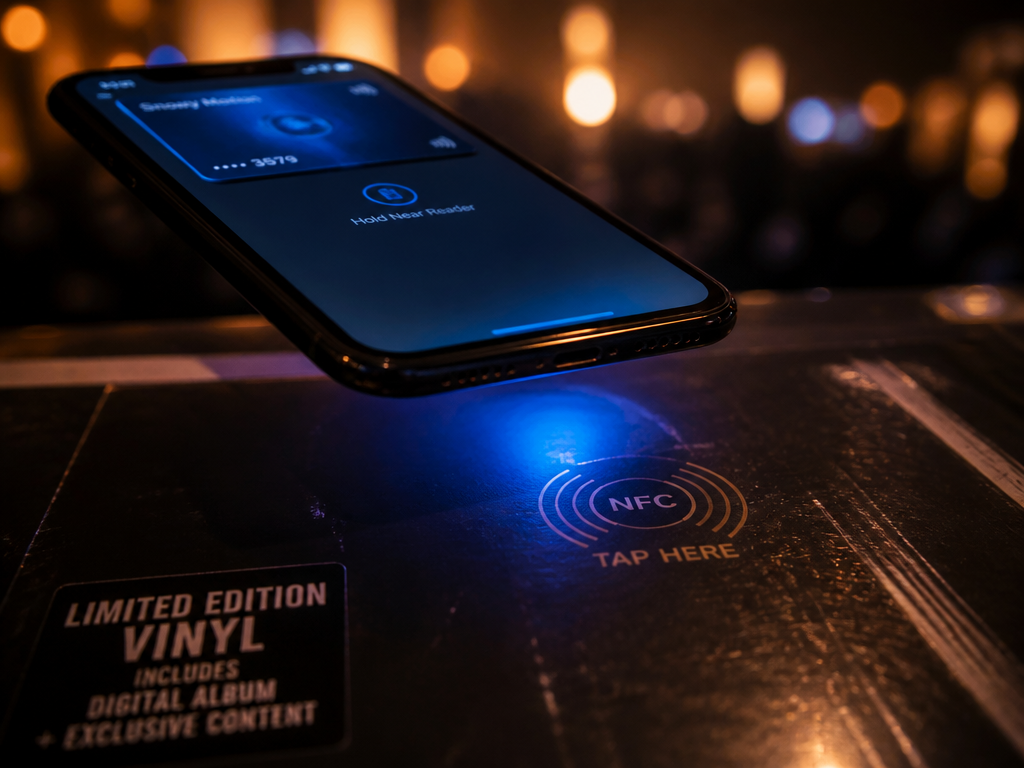
A fan at a merch table taps their phone against a vinyl sleeve. Half a second later, a pass drops into their digital wallet, a download code resolves in the background, and — if every condition lines up — that single tap registers as one chart-eligible bundle sale. One tap, one sale. That is the number the whole pitch hangs on, and NFC technology is what makes the tap possible.
If you run an artist team and you have sat through a deck promising that physical merch can quietly feed the charts, you have already met this number. It is worth slowing down on, because the gap between "one tap can count" and "one tap will move your artist" is where a lot of mid-tier campaigns lose the plot.
What the one-tap number actually claims
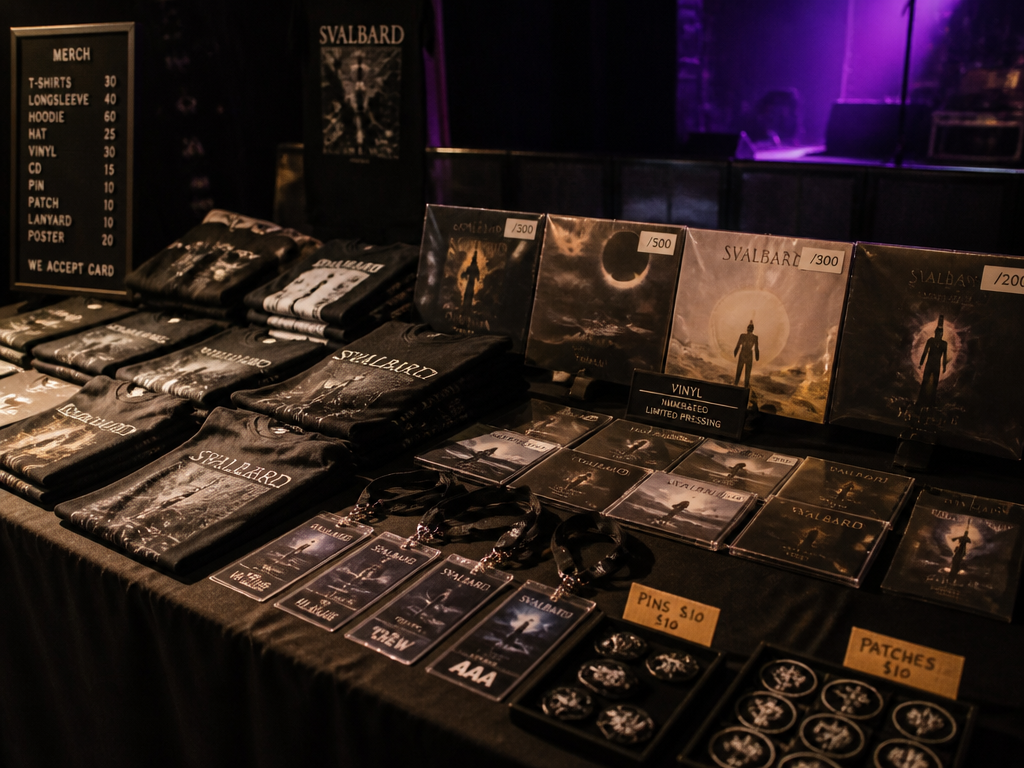
Near-field communication is the same short-range chip in your contactless card and your transit pass. Embedded into a record sleeve, a T-shirt label, a wristband, or a laminate, it turns a physical object into a tappable trigger. The fan brings a phone close, a link fires, and a few things can happen at once: a branded pass lands in Apple Wallet or Google Wallet, the buyer gets a download or a redeem-for-stream code, and the transaction is logged.
The claim from the platforms building this — Serenade most visibly, with Planet circling the same space — is that the logged transaction can satisfy chart-bundling rules. So a tour-only tee or a numbered pressing becomes, on paper, a sales unit that the official charts will count alongside streams and traditional purchases.
That is the headline. It is also genuinely new in a way the last wave of music tech was not.
What it measured — and the pivot that got here
Worth remembering where these companies came from. Several of the firms now selling NFC-backed merch passes spent 2021 and 2022 selling collectibles on the blockchain. The collectible market thinned out. The smarter operators kept the underlying idea — a verified digital object tied to an artist — and dropped the speculative wrapper. What survived is more useful: a chip in a real thing a fan already wanted, plus a record of who tapped it.
So what the one-tap number measures is a completed, attributable merch transaction that meets chart-bundling criteria. That is not nothing. Three things make it work:
- Attribution. The tap ties a specific human to a specific item at a specific moment. You know it happened at the Manchester show, not in a returns warehouse.
- The wallet pass as a standing channel. Once a pass sits in someone's wallet, you can update it — a tour date, a presale, a new release — without fighting an algorithm for placement.
- Bundling eligibility. When the merch sale is structured to include a recording at or above the qualifying price, and the buyer can access that recording, the unit can count.
The roster names get used as proof here rather than data — the Take That, James Blake, Zayn, girli tier of client — and that is the right read on it. Adoption by serious teams is the evidence on offer. Independent numbers on lift are not.
What the number does not measure
Here is the part the deck tends to skip.
A tap is not a listen. The chart unit can be created the moment money changes hands and a code is issued. Whether the buyer ever redeems the stream, plays the record, or remembers the pass exists is a separate event the tap does not capture. You are counting intent-plus-purchase, not engagement.
Wallet adoption is not reach. The genuine appeal of a wallet pass is that it sits somewhere you can reach a fan directly. But a pass nobody opens is a contact you are not using. The platform can tell you how many passes were issued. It cannot tell you the pass changed anyone's behaviour, and nobody serious has shown that a wallet update outperforms a well-run mailing list or a fan's own feed for actually driving plays.
Chart eligibility is a moving target. The rules that let a bundle count differ by territory and get revised by the chart bodies on their own schedule, partly in response to exactly these tactics. A structure that qualifies in one market or one quarter may not in the next. Treat any "chart-eligible" promise as conditional on rules you do not control and should re-check before every campaign.
The conversion chain is long and lossy. Manufacture the item, embed and test the chip, get the fan to tap, get the pass installed, get the code redeemed, hope the listen registers in the tracking week. Every link drops some percentage. The one-tap number describes the top of that funnel. Your release-week movement depends on the bottom.
None of this makes NFC merch a bad bet. It makes it a tool with a specific job, oversold if you read the top-line figure as a streaming strategy.
What these formats can and can't do for your team
| What you want | NFC wallet merch can | NFC wallet merch can't |
|---|---|---|
| Attributable physical sales | Yes — verified, time-and-place stamped | n/a |
| Chart bundle units | Yes, if structured to current rules | Guarantee the rules stay the same |
| A direct line to buyers | Yes — an updatable pass | Force the fan to open or act on it |
| Proven streaming lift | No clear evidence either way | Substitute for actual promotion |
| Reach beyond existing fans | Mostly no — it converts people already in the room | Replace top-of-funnel discovery |
A few conditions a sale generally has to meet before it counts toward a chart, all of which vary and all of which you should confirm against current guidelines:
- The merch item includes a recording at or above the qualifying price point.
- The buyer can actually access that recording (a live, redeemable code or download).
- The sale falls inside the chart tracking week you are targeting.
- The item and bundle are registered correctly with the relevant chart body.
Get one of those wrong and the tap still feels great at the merch table while counting for nothing.
Where this fits
Think of NFC merch the way you would think of a strong D2C drop, not the way you thought about NFTs. Its real strength is converting people who are already committed — at a show, on a presale, in the front half of a fanbase — into both a sale and a contact you can reach later. That is a sound use of money for a mid-to-major artist with a tour and a release in the same window. It is a poor use of money if you are buying it to manufacture a chart position out of an audience you do not yet have.
The companies selling it have earned a hearing by surviving their last idea and shipping something that works mechanically. The mechanism is real. The lift is unproven. Both of those can be true, and an A&R team that holds both in its head at once will spend the budget better than one chasing the one-tap number.
Rule of thumb for tonight: count an NFC tap as a fan you already had, not a fan you just won — and price the campaign accordingly.
Not sure which tool to use?
Compare the top AI music and sound tools side by side — honest reviews, real pricing, no sponsorships.