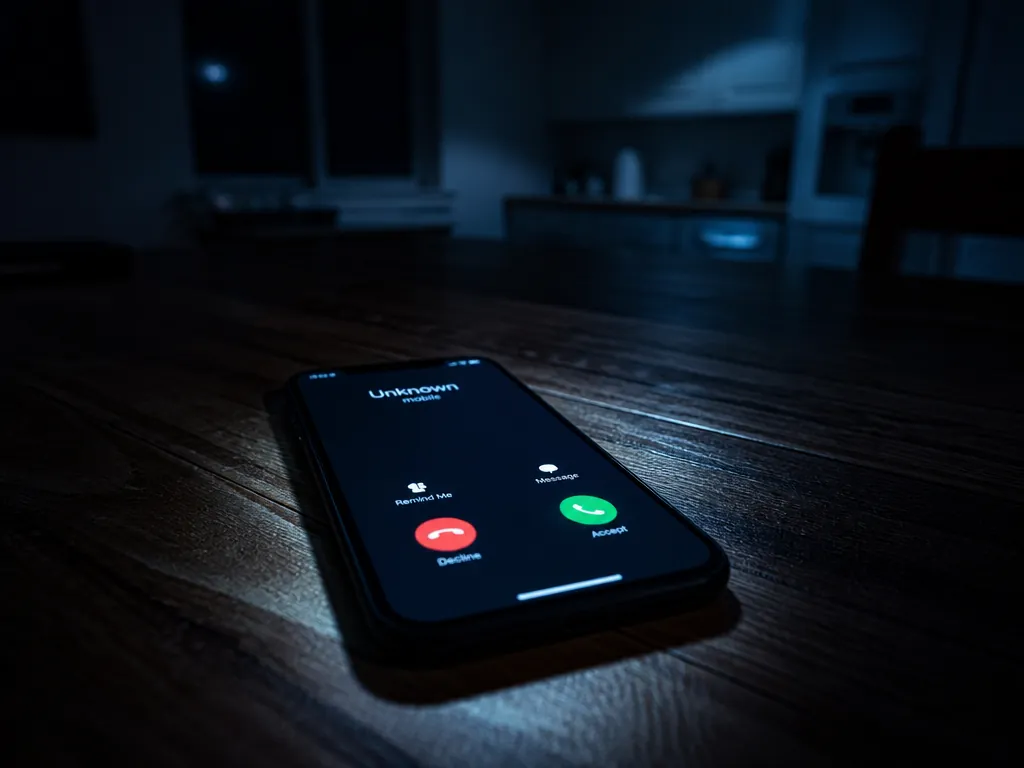
It is 4:40 on a Friday. Your accounts payable person picks up, and it is the owner — same cadence, same slightly clipped way he says her name, same background hum of a car. He needs a wire out before the bank cutoff. New vendor, deposit on a job, he is in the parking lot at a client site and his email is acting up. Send it now, he'll forward the invoice Monday.
Everything about that call is engineered, including the voice. This is where AI fraud prevention stops being an IT department's problem and becomes an operations problem — yours. The good news, and I'll get to it, is that the defenses that actually work do not live in a security appliance. They live in your process, and most of them cost nothing.
The myth: "I'd know my own boss's voice"
Here is the belief I hear from smart, careful business owners across the Hudson Valley and down into the tristate. A scammer can't fool me. I talk to these people every day. I'd hear something off.
It is a reasonable assumption built on a lifetime of evidence. For your entire life, a familiar voice has been reliable proof of a familiar person. The problem is that the evidence expired and nobody sent a memo.
The evidence
Voice cloning models no longer need a studio session of your CEO. They need a sample — and the sample is already public. A clip from a webinar, a conference panel posted to YouTube, a local news segment, a podcast guest spot, the outgoing message on a cell phone. A few seconds of clean speech is enough for current tools to produce a synthetic version convincing over a phone line, where bandwidth is already poor and your ear is already forgiving.
Business email compromise has been one of the costliest categories of fraud reported to the FBI for years running, measured in billions of dollars annually across reported cases. Voice is the new front end on the same old scheme. The con was never really about the email or the call — it was about manufacturing urgency and borrowing authority. The clone adds a second channel that sounds like confirmation.
Small and mid-sized firms are not collateral damage here. They are the target profile. A regional contractor, a medical practice, a property management group — enough money moving through accounts payable to be worth the effort, and rarely a written rule that says how a payment instruction gets verified. Attackers read your team page, your press releases, your LinkedIn. They know who signs off and who pushes the button. They time the call for end of week, end of quarter, mid-vacation, whenever the person who could say "let me check" is hardest to reach.
How the attack is actually built
It helps to see the assembly line, because each stage has a seam you can exploit.
Reconnaissance. They map the org chart and the money flow from public sources. Who can authorize a wire? Who executes it? When is the boss visibly out of pocket?
Audio harvesting. They pull the voice from wherever it lives online and generate the clone. No break-in required. The raw material is marketing you published on purpose.
Pretext and pressure. The call or email arrives wrapped in a story that explains away every red flag before you can raise it. The email is glitchy, so he's calling. He's at a site, so he can't talk long. The vendor is threatening to walk, so it has to be today. Urgency is not a side effect of the scam. It is the mechanism.
The override. The whole thing is designed to make verification feel rude or paranoid. You are being asked to choose between trusting your boss and slowing down a deal. Most people pick trust, which is exactly the bet.
Notice what is missing: any step where your ability to recognize a voice helps you. By the time you are listening, the attacker has already decided what you'll hear. Your ear is being used as a sensor for something it was never built to detect.
The honest takeaway: the fix is a rule, not a gadget
The defense that breaks this chain is almost insultingly low-tech. You verify payment and credential requests through a second, separate channel that you control — not the one the request came in on.
A voice on the phone says wire the money. Before anything moves, you hang up and call back on the number already saved in your system — not a number the caller gave you, not a reply to the email. If the request is real, the thirty-second callback costs you nothing. If it is fake, the attacker has no way to be on the other end of a line they didn't choose.
This is the single highest-value control, and it is free. A few others reinforce it:
- A standing rule that no payment instruction is ever executed from a single channel, regardless of who it appears to come from. Make it policy so nobody has to be the one who decides to be suspicious.
- A code word or verification phrase for executives that never appears in writing, used to confirm out-of-band requests.
- Slowing the clock on purpose. Urgent payment demands trigger more verification, not less. Name this so urgency becomes a flag instead of a fast pass.
- For email specifically, basic authentication on your domain (SPF, DKIM, DMARC) raises the cost of spoofing your own addresses. That one is technical, and worth asking your IT provider about.
Where do these fail? When they live in someone's head instead of on paper. A verbal "we should double-check big wires" evaporates at 4:40 on a Friday. A written rule with no exceptions survives the moment of pressure, which is the only moment that matters.
A verification script you can hand to your team
Caller requests a payment, a payment change, or login help.

1. Do NOT act on the request during this call.
2. End the call politely. ("I'll confirm and get right back to you.")
3. Call the person back on the number already in our records.
4. If urgency is the reason given for skipping this, that is itself
   the reason to do it. No exceptions, including the owner.
Tape it to the monitor of everyone who can move money. That sentence — no exceptions, including the owner — is the whole defense, because the owner is exactly who the attacker is pretending to be.
The myth says you would recognize the voice of someone you talk to every day, so a fake could never get past you. The more accurate version is that the voice was never the proof — the second channel is, and it is the one thing a cloned voice can't fake.
Not sure which tool to use?
Compare the top AI music and sound tools side by side — honest reviews, real pricing, no sponsorships.