A four-band bill at a 120-capacity room. Doors at eight, three support slots and a headliner, each act getting a cut of the door split and roughly thirty-five minutes on a stage that a lot of people spent years trying to reach. One of those slots goes to an act that turns out to be, on closer inspection, a producer, a laptop, and two generated "members" who exist as avatars and a voice model. Nobody on the booking side flagged it. The human bands who didn't make the bill found out the way everyone finds out now — scrolling.
That is where AI music generation ethics actually lives. Not in the seminar-room question of whether a machine can be creative, but in a finite lineup, a door split, and a submission form that never asked the one question that mattered. The verdict of this piece is simple: the AI-versus-human argument is mostly a distraction, and the real fight is procedural — who discloses what, who curates, and who gets the thirty-five minutes.
I want to walk through this the way it actually unfolds, in order, because the order is the whole point. A booking is a process. AI doesn't break the process at the moment of moral outrage. It breaks it earlier, quietly, at a step nobody was watching.
What happens first: the submission
Before anyone argues about art, an act has to get into the room. That step is boring and it is where everything goes wrong.
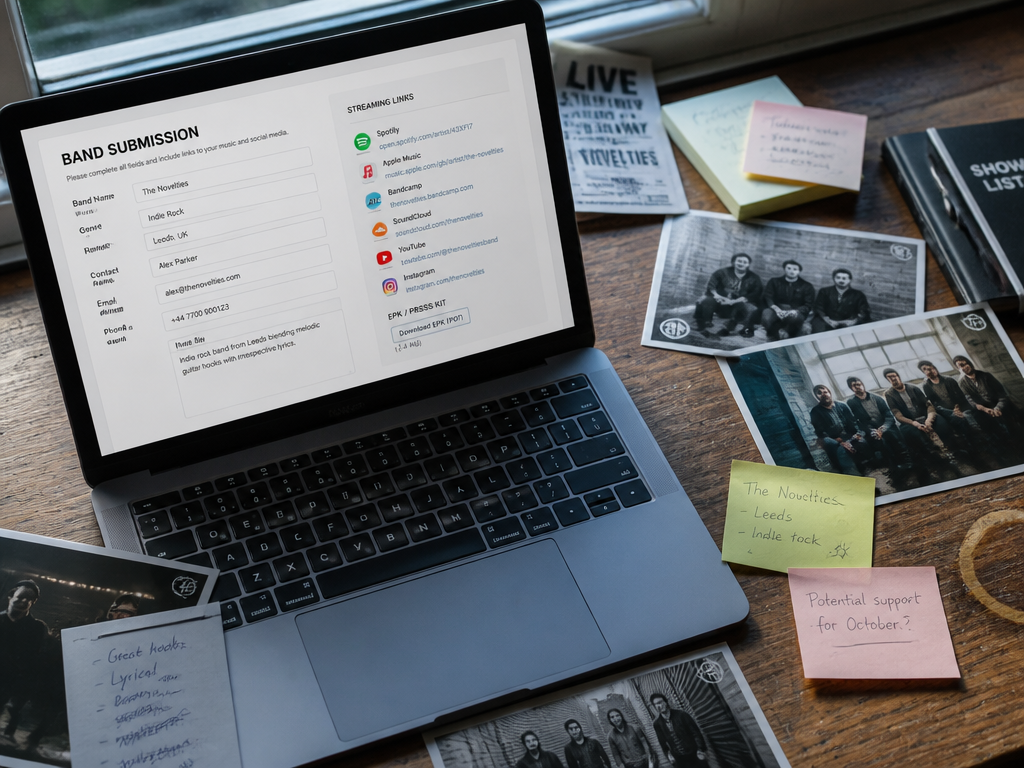
Most small and mid-size venues take submissions through some combination of an email inbox, a form, a promoter's roster, and a friend-of-a-friend text. The materials are predictable: a short bio, two or three streaming links, a press photo, maybe a live clip. A booker with a day job and forty submissions a week is not forensically auditing any of it. They are checking three things — does this sound like it fits the room, does it look like it can pull forty paying people, and is it available on the date.
Notice what is not in that checklist. Nobody asks whether the recording was performed. Nobody asks whether the voice on the track belongs to a person who will be standing on the stage. Nobody asks how the music was made, because for the entire history of the form that question had an obvious answer and asking it would have been insulting.
That assumption is the crack. A well-produced AI track clears the "does it sound right for the room" bar easily — arguably more easily than a promising human band with a rough live-to-two-track demo, because the generated version arrives loudness-matched, tidy, and free of the honest mess that real rooms make. The streaming links resolve. The press photo renders. If the act has bought a modest amount of playlist placement and follower count, the "can it pull people" signal looks fine too.
The scan that would catch it — a real look at the socials, the live history, the actual human trail — is exactly the labor that a stretched booker skips. So the first thing that happens is not a debate. It is an omission. The submission passes because the form was built for a world where every submission was made by people.
If you run a room, this is the least glamorous and most important sentence in this article: your booking process already has an AI policy — it's just an accidental one, written by everything you forgot to ask.
What happens next: the slot is finite, and that's the injury
Here is where the emerging-artist anxiety stops being abstract.
A lineup is a zero-sum object. There are four slots on that bill and there will only ever be four. Every act that plays displaces an act that didn't. When a generated project takes a support slot, the harm isn't that a machine made sound. The harm is that a specific human band — one that would have driven forty-five minutes, loaded in through a fire door, and split a few hundred dollars four ways — did not get the slot, the stage time, the door money, or the twenty new followers who would have discovered them that night.
Stack that up. For a developing act, live slots are not just income, though the income is real and it is thin. Slots are the mechanism by which a band becomes a band: the reps, the local reputation, the support-slot-that-becomes-a-headline arc, the relationships with the sound engineer and the door person and the other three acts. That progression is the actual career infrastructure of independent music, and it runs on scarcity. There are only so many stages and only so many nights.

This is why "it's just one slot" misreads the stakes. One slot is a rounding error to a venue and a month of momentum to a four-piece that has been grinding for three years. The asymmetry is the point. A person losing that slot loses something structural to their livelihood; the party that took it loses nothing comparable, because a generated act has no rent, no van, no tinnitus, and no exhaustion.
I score tools for a living and I'll say plainly: I use generative audio in my own work, mostly for scoring beds and texture where a client needs forty seconds of tension in a key by Friday. I am not here to tell you AI has no place. I'm telling you that a live human bill is one of the few remaining formats built entirely around presence, and presence is the one thing the technology cannot supply. When you fill a presence-based slot with something that has no presence, you haven't made a fair substitution. You've quietly changed what the ticket buys.
The counterweight: the producer's case deserves a real hearing
It would be easy to stop there and let the emerging artist win by default. That's not honest, and the strongest version of this argument survives the counterargument.
The producer who booked that slot is not obviously a villain. Their case, and it's a serious one, goes like this: every new music tool has been called theft or cheating by the people it threatened. The drum machine was going to end drummers. The sampler was going to end musicianship — until hip-hop turned it into one of the most fertile idioms of the last forty years. The DAW meant a bedroom producer could compete with a studio. Auto-Tune was a scandal and then it was a genre. Each time, the craft absorbed the tool and the tool became an instrument.
By that logic, a prompt is a compositional gesture. Curating outputs, retaking, editing, arranging generated stems into something coherent — that is taste, and taste is labor, and the person doing it is an artist working in a new medium. Plenty of people making music with these tools genuinely love music, know their references cold, and are doing something more considered than prompt-roulette. Dismissing all of them as frauds is the same lazy gatekeeping that got aimed at every previous generation of new tools.
I find most of that convincing. Here is where it stops being convincing.
The sampler and the DAW did not build their capabilities by ingesting the recorded output of working musicians without consent or compensation, then competing against those same musicians in the same market. That's the difference the "it's just the next drum machine" story papers over. A generative model's fluency is downstream of a training corpus, and a large share of that corpus is human recordings that were not licensed for the purpose. The comparison to sampling actually cuts the other way: sampling built a whole legal and economic apparatus — clearances, splits, credits — precisely because taking someone's recorded sound and reusing it commercially has costs that have to be settled. Generative models mostly haven't settled them yet. The register looks similar; the consent and compensation underneath it is not.
So the producer's defense holds at the level of craft and collapses at the level of supply chain. Both things are true at once. That tension is the actual subject, and any venue policy that pretends one side is simply right will fail in practice.
What happens last: the policy, and the friction points
After the omission and the injury and the argument comes the part that actually determines whether this happens again — the response. The clean version is procedural, cheap, and unglamorous.
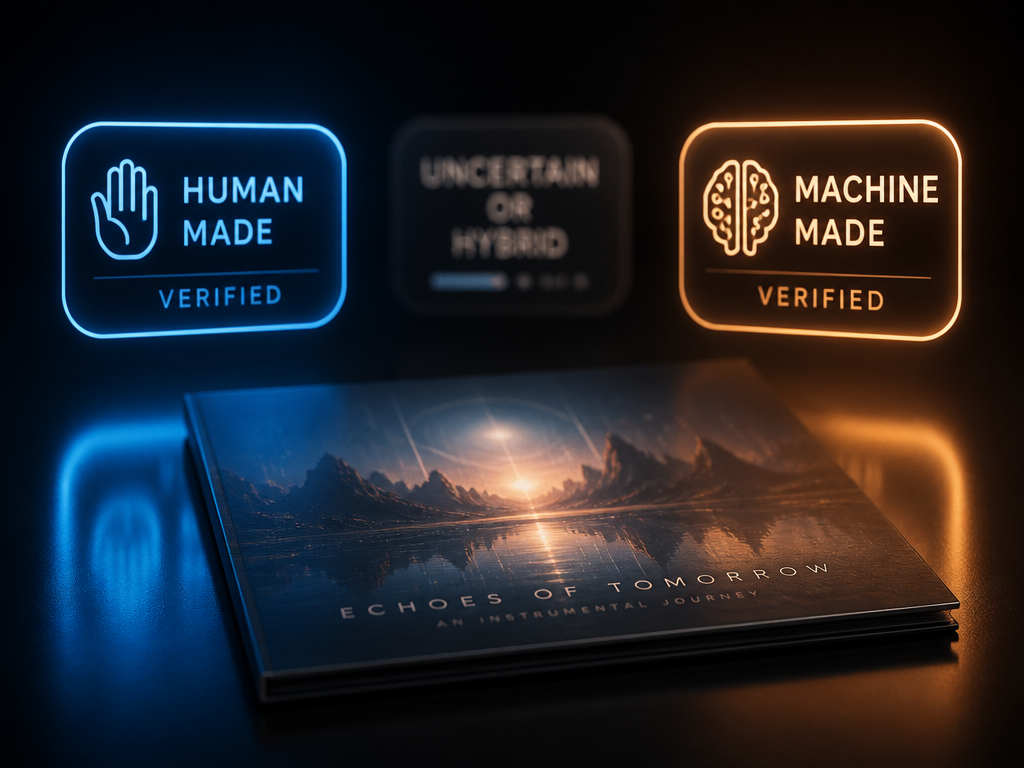
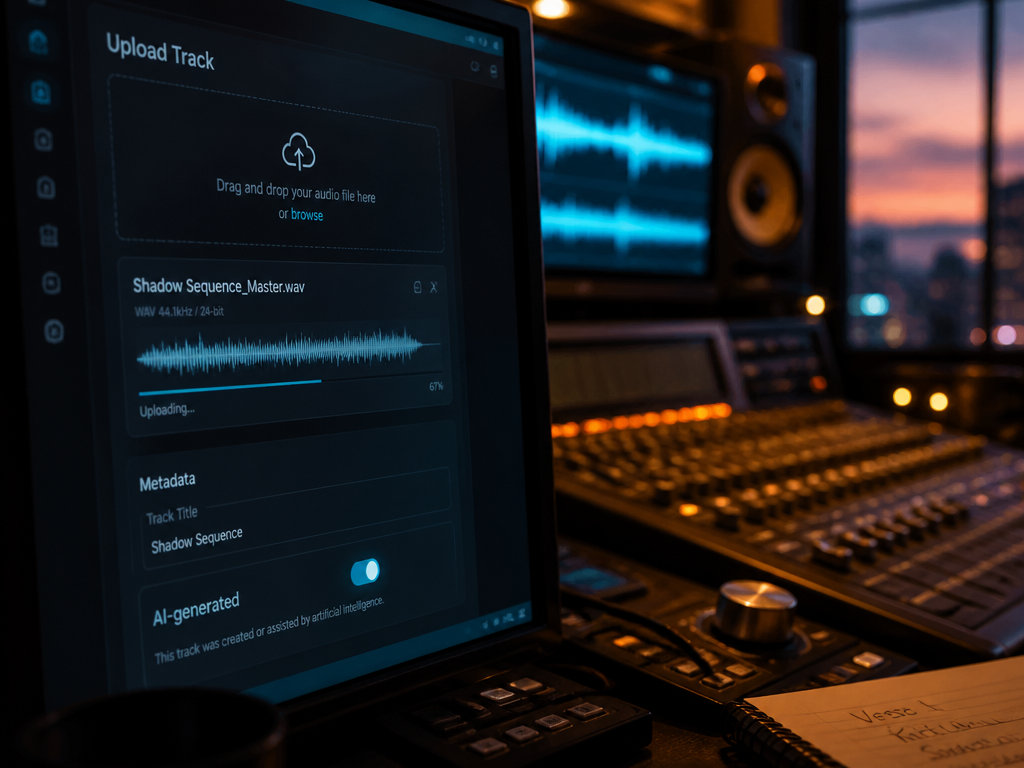
A disclosure field on the booking form. One question, plainly worded: is any part of this act's performance or recorded material generated by AI, and if so, which parts. Not to ban anything — to make the invisible step visible before the slot is assigned. A venue that asks this and books the act anyway has made a choice. A venue that never asks has made an accident.

A curation posture, stated out loud. Some rooms will decide they book human performers only, and that is a legitimate identity, not a moral crusade. Others will run mixed bills and label them honestly on the listing, so a ticket buyer knows what they're buying. The failure mode isn't AI on the stage. The failure mode is the audience and the other acts not knowing.
A tie-break in favor of scarcity. When a generated project and a developing human act are comparable on paper, some operators are choosing to weight the slot toward the human band, on the reasoning that the band has more to gain and the format exists for presence. Others have paired an AI booking with a payment or door contribution routed to a local musicians' fund. Neither is a law. Both are ways of acknowledging, materially, that a finite slot has an opportunity cost and that cost lands on people.
Now the friction points, because the clean version has sharp edges.
- Disclosure relies on honesty. A form question doesn't stop a bad-faith submitter from lying. It does establish a standard you can enforce after the fact, and it puts the venue on record as having asked.
- The line is genuinely blurry. A human singer over a generated backing track, a live band running AI-assisted arrangement tools, a producer triggering generated stems in real time — these are not the same thing, and a yes/no field flattens them. The disclosure has to allow "which parts," or it becomes theater.
- Nobody should become the taste police. A venue's job is to be transparent about what's on the bill, not to adjudicate whether prompt-driven composition is Real Art. Those are different questions and conflating them is how policies become unenforceable and mean-spirited.
How I'd decide
Different reader, different decision. Here are the criteria I'd actually use, named plainly.
If you're an emerging artist
- Presence is your moat. The thing you can do that a model cannot is be in a room, sweat, make mistakes, and read a crowd. Book the rooms. Build the live history that no submission-scan can fake. That trail is now the thing that distinguishes you, and it's more valuable than it was five years ago, not less.
- Watch the format, not the technology. Recorded, sync, and background-music work is where generative audio competes hardest, because those contexts don't reward presence. Live, community, and any context where the story of who made it matters — those are more defensible. Weight your effort accordingly.
- Ask venues what they ask submitters. A room that has a disclosure field and a stated posture is a room that respects the scarcity of its slots. That's a room worth building a relationship with.
If you're a venue operator
- Fix the form before you fix your opinion. You do not need a philosophy of machine creativity. You need one honest question on the intake and a decision about what your room is for. Output quality of the act matters less here than the transparency of the process.
- Decide your identity and publish it. Human-only, mixed-and-labeled, or open — any of these is defensible. Silence is the only indefensible option, because silence is what let the slot get assigned by accident.
- Price the opportunity cost in. If you book generated acts, consider what a scarce slot costs the local scene that feeds your room all year, and whether a fund contribution or a weighted tie-break keeps that ecosystem alive. Your future lineups depend on those bands existing.
Who should worry, and who shouldn't
If you make music that lives mainly on streaming playlists and in sync libraries, the competitive pressure from generative audio is real and it is already here; your energy is better spent on the contexts machines serve poorly than on litigating whether they should exist. If your work is fundamentally about being present with an audience — a band, a live electronic act, a performer whose whole value is the room — the panic is oversold. The technology is not coming for the thing you do. It is coming for the slots, and slots are governed by booking policy, which is a thing humans control and can change this week.
And if you run a room, the worry is entirely proportional to how much you've thought about your intake process. The venues that get burned are not the ones that welcomed AI. They're the ones that never decided, and let a form built for a vanished world make the decision for them.
The debate about whether machines can be creative will run forever and settle nothing. The booking form settles something tonight.
Not sure which tool to use?
Compare the top AI music and sound tools side by side — honest reviews, real pricing, no sponsorships.