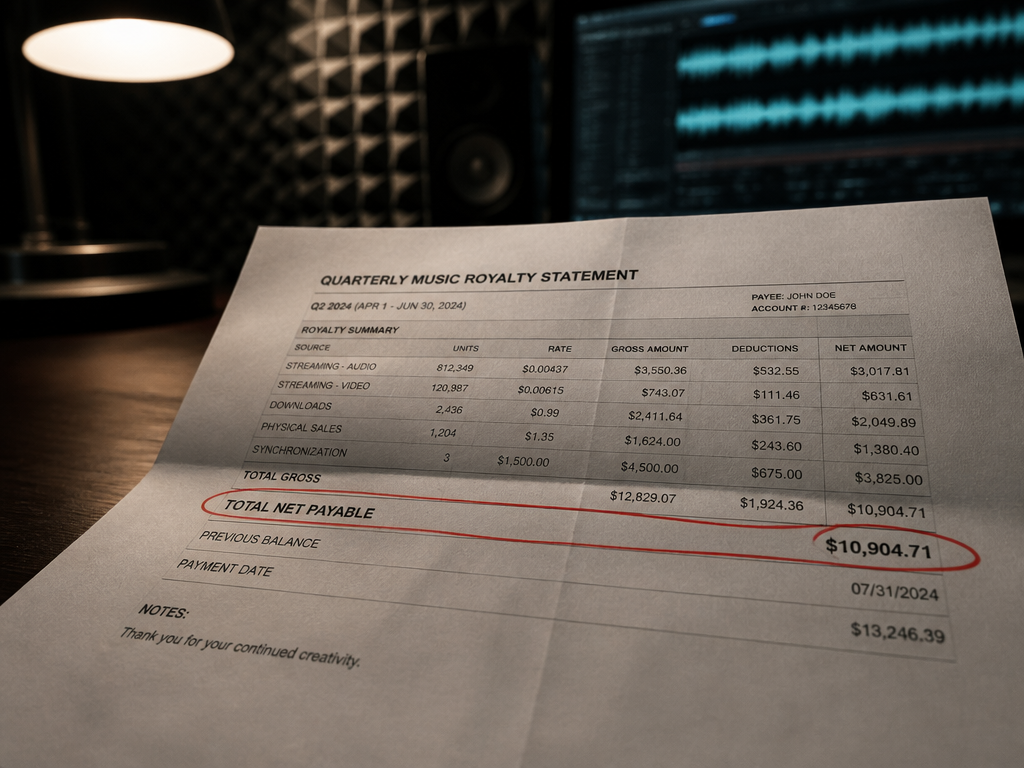
A producer I work with sent me her quarterly streaming statement last spring with one line circled in red: the per-stream rate on a catalog of forty tracks had slipped again, and she couldn't tell why. Same release schedule, same playlist placements, fewer cents. The likeliest culprit isn't glamorous. It's volume. AI music generation has made it trivial to flood the pool with tracks, and a royalty pool divided among more swimmers leaves less water for everyone who was already in it.
That's the backdrop against which streaming platforms are now picking sides. Some are integrating generative audio as fast as the legal team allows. At least one — TIDAL — has said machine-generated streams won't draw from the royalty pool the way human recordings do. The question worth your time isn't which platform sounds more virtuous in a press release. It's which approach actually protects the money landing in your account.
Full disclosure before we go further: City of Punk builds an AI music tool. We have a horse in the generative-audio race. That's exactly why this comparison stays on the numbers and the mechanics, not the mood music.
The three approaches on the table
Strip away the language and platforms are choosing among three postures toward AI-made audio.
The exclusion posture (TIDAL's stated direction): identify machine-generated tracks and keep them from siphoning royalties allocated to human recordings. Human catalogs keep their share of the pool.
The open-floodgates posture: treat AI tracks like any other upload. They distribute, they stream, they collect. The pool is the pool, and whoever drives plays gets paid.
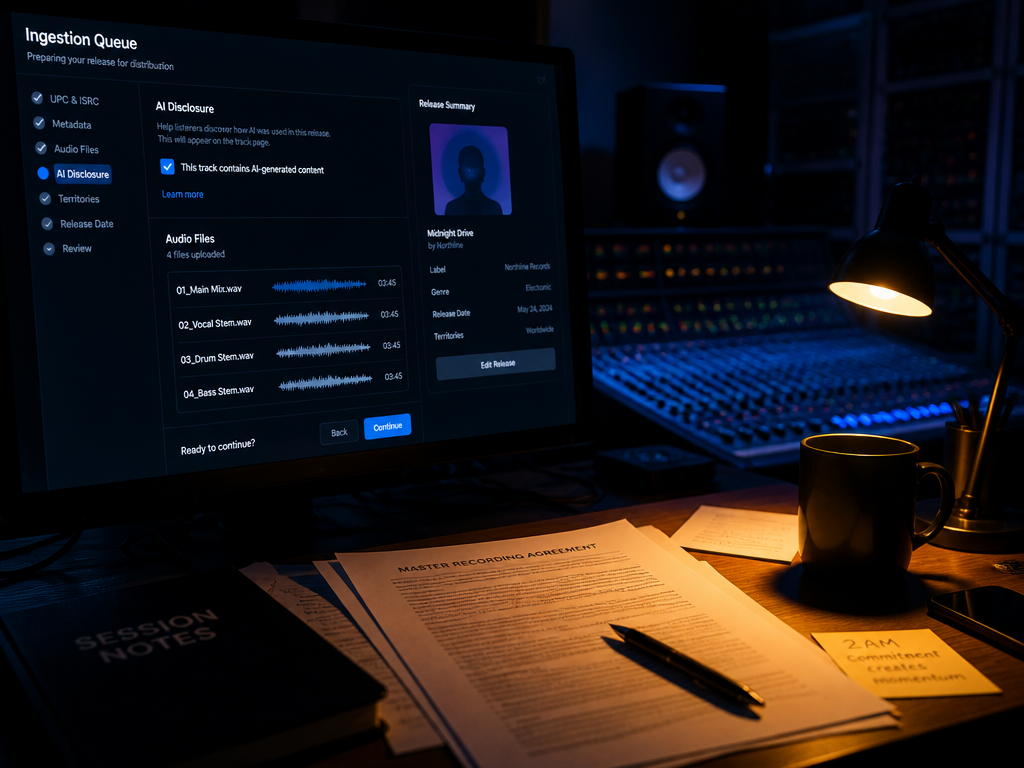
The labeling-only middle path: tag AI content for listeners and maybe down-rank it in recommendations, but still pay it from the same pool. Transparency without economic separation.
I'm not going to pretend these map cleanly onto named competitors — platforms shift policy quarterly and what's true at writing may not hold by the time you read this. Judge the postures, not the logos.
How I'd weigh them
Five criteria decide whether a policy is real protection or a banner ad.
Who actually gets paid
This is the whole game. The open-floodgates posture is honest about its consequence: a finite royalty pool, more claimants, smaller slices for the humans already releasing. The labeling path doesn't fix that math — a tagged track still earns from the same pot. Only the exclusion posture changes the arithmetic in a working artist's favor, because it removes claimants rather than merely flagging them.
Edge: exclusion, and it isn't close on this metric alone.
Detection rigor
Here's where the exclusion posture has to prove itself, and where I get skeptical. Catching a fully synthetic track is the easy case. The hard case is the hybrid: a human songwriter who used a generative tool for a pad, a drum fill, a vocal double. Where's the line? A policy that pays nothing on hybrids will punish exactly the producers it claims to defend, because most of us are already reaching for these tools mid-session. A policy that pays everything on hybrids has a loophole you can drive a content farm through. TIDAL's direction is the right instinct, but the credibility lives entirely in the classifier — and no platform has shown me a detector that nails the messy middle reliably. Assume false positives. Plan for an appeals process you may have to use.
Edge: nobody has earned this yet. The exclusion posture has the most to prove.
Transparency to listeners
The labeling-only path wins this one outright. Tagging AI content tells your audience what they're hearing, which matters if you care about how your work sits next to synthetic neighbors. Exclusion can do labeling too, but its center of gravity is the payout, not the listener-facing tag. Floodgates offers the least here — undisclosed AI tracks sitting beside yours with no marker at all.
Edge: labeling-only.
Durability of the policy
A stance is only worth what it survives. The open-floodgates posture is the most durable precisely because it requires the least enforcement — there's nothing to maintain. Exclusion is the most fragile: it demands an ongoing detection budget, a dispute system, and the spine to hold the line when a large rights-holder pushes back. Policies that cost money to enforce are the first ones quietly softened. Watch for the walk-back.
Edge: floodgates for sheer inertia. Exclusion carries real maintenance risk.
What it signals about the platform's bet
Exclusion is a wager that human catalogs are the asset worth protecting. Floodgates is a wager that total volume and engagement are the asset. Neither is morally automatic — but if you're a working artist, the platform betting on your catalog's value is the one whose incentives point the same direction as your rent.
The verdict that emerges
Tally it honestly and the exclusion posture doesn't sweep — it loses on durability and hasn't proven its detection. But it's the only approach that touches the one number that decides whether you keep releasing: your slice of the pool. Transparency is nice. Getting paid is the job. On the criterion that funds your next session, TIDAL's direction is the only one of the three pointed at the artist rather than past them, and that's enough to make it the posture I'd want my own catalog sitting under — provided the detection grows teeth.
Who this matters to, who can skip it
If you're a working artist or a label with a back catalog earning per-stream income, platform AI policy is now a line item in your business, not a culture-war sideshow — track it like you track rates. If you're a producer leaning on generative tools mid-session, watch the hybrid-track rules specifically, because that's where a well-meaning policy could clip you by mistake. If you release nothing and only listen, you can let this one pass.
Tonight's rule of thumb: judge a platform's AI stance by one question — does it shrink your royalty pool or guard it — and treat every promise without a working detector behind it as marketing until proven otherwise.
Not sure which tool to use?
Compare the top AI music and sound tools side by side — honest reviews, real pricing, no sponsorships.