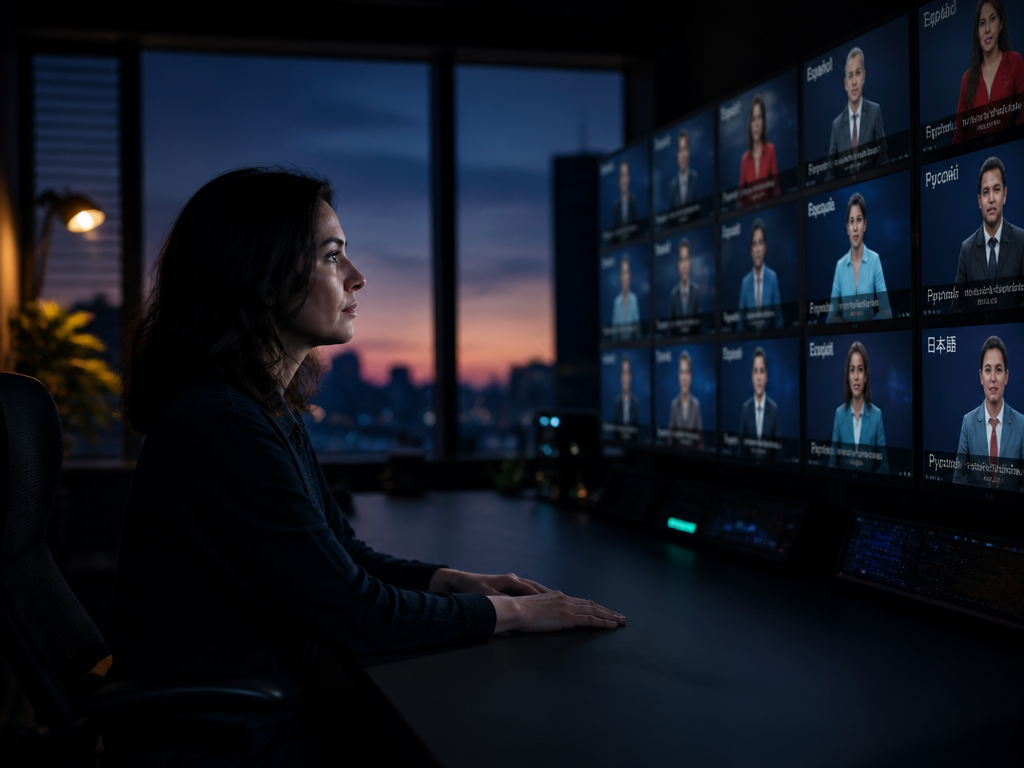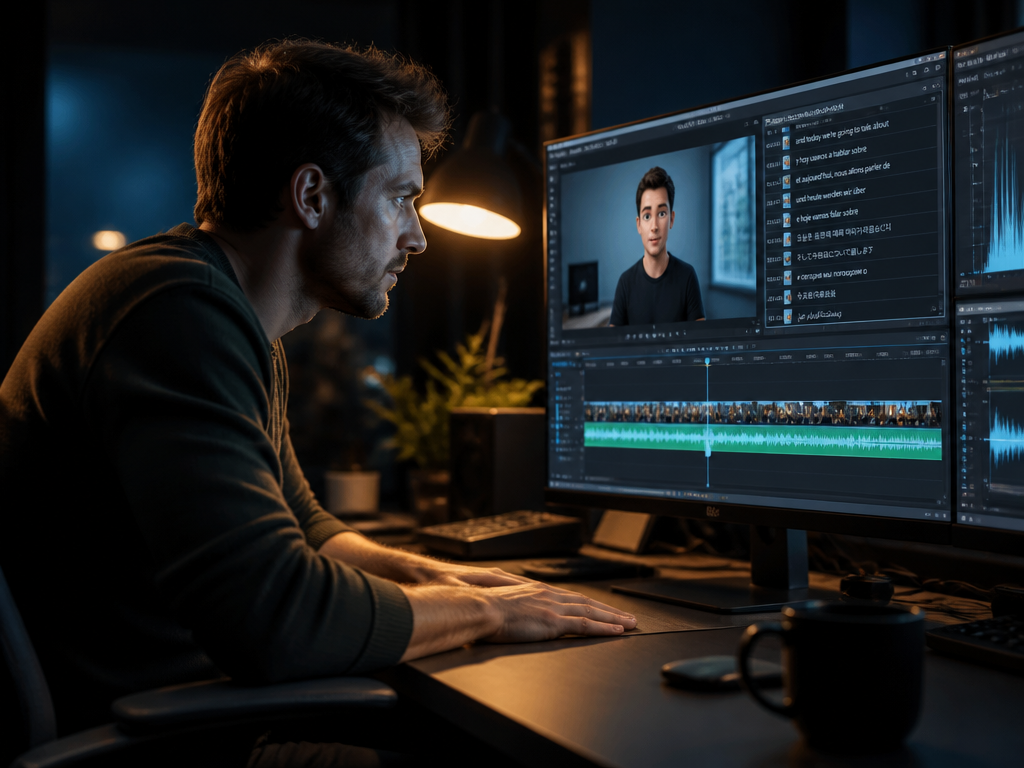
Last month I fed a 90-second Polish voiceover into a cloning pipeline to see whether I could ship an English dub of a short film without booking a session. One trial, one measurement: I wanted the English read to land inside a quarter-second of the original timing, with the actor's grain intact — that low, smoke-cured warmth a generic TTS voice flattens into customer-service neutral.
The tool I reached for was ElevenLabs, and AI voice generation is the reason a Warsaw-founded company is now sitting at the center of a national strategy. The dub came back at roughly the right cadence. The actor's weight survived. The timing drifted on two lines and I fixed them by hand. Good enough to cut against picture, which is not a sentence I could write two years ago.
That small win is worth holding onto, because the bigger story around this company is easy to misread.
The myth, and the reframe
The convenient story is that Poland got lucky — that ElevenLabs is a single breakout, an outlier that happened to be born in Warsaw and could just as easily have come from anywhere. As of writing, the Polish government has moved to retire that reading. It put public money into ElevenLabs (reported at around $11 million) and stood up AI Lab Poland, an initiative aimed at producing more companies in the same mold rather than admiring the one it has.
That distinction matters to anyone tracking where European AI capacity actually accumulates. Backing a winner is a press release. Building the institutional plumbing to manufacture the next several is a policy. The interesting question is not whether ElevenLabs succeeded — its numbers answer that — but whether a national program can convert one founder story into a repeatable pipeline.
A dubbing problem that scaled
The origin is almost too on-the-nose for a synthesis company. The founders, Piotr Dąbkowski and Mateusz Staniszewski, grew up watching foreign films in Poland flattened by lektor — a single monotone narrator reading every character over the original audio. The texture I was chasing in my own dub, the thing that makes a voice belong to a person, was exactly what their childhood media stripped out.
A local annoyance turned out to be a global one. Every market that imports film, games, audiobooks, and news has the same friction: voice does not localize cheaply, and human dubbing does not scale to thirty languages on a deadline. The company built models for cloning, multilingual reads, and long-form narration, and the product crossed a threshold where the output stopped announcing itself as machine-made on every line.
The proof point that gets cited most is broadcast: dubbing live or near-live news into dozens of languages, work that no human roster delivers at that speed or cost. Audiobook narration, game dialogue, and accessibility tools sit in the same bucket — high-volume voice work where the alternative is not "a better human take" but "no take at all because the budget never existed."
What the market says
The numbers are why investors stopped treating this as a novelty. ElevenLabs has posted steep revenue growth — its annual recurring revenue climbed into the hundreds of millions over a short window, the kind of trajectory that pulls in funds and, evidently, governments. Its backers read like a list of firms that do not chase trends for sport.
Zoom out and the category is expanding fast. Estimates for the AI voice and speech-synthesis market vary by analyst, but the consistent shape is a double-digit compound annual growth rate over the rest of the decade, driven by media localization, conversational agents, and accessibility. The competitive field is real — established players and well-funded startups are all building synthetic-speech and voice-cloning stacks — which is itself a signal. Outliers do not attract competitors; markets do.
For a working producer, the practical translation is that synthetic voice has moved from "demo that falls apart in production" to "tool you can sometimes ship from," with the caveat that "sometimes" is doing real work in that sentence.
The ecosystem bet
Here is where the Polish play gets interesting, and where the caution belongs. A single export champion does not make a sector. The thesis behind AI Lab Poland is that the country already has the raw inputs — strong technical universities, a deep pool of engineers, and sovereign compute capacity, with public AI hubs being stood up to keep training and inference on home soil rather than renting it from American clouds.
| Input | What Poland brings | The open question |
|---|---|---|
| Talent | Strong engineering universities, large developer base | Can it retain founders past the first exit? |
| Compute | Sovereign AI compute capacity coming online | Enough scale to train frontier-class models? |
| Capital | Government co-investment plus the ElevenLabs proof | Will private VC follow at the needed volume? |
| Demand | A real localization pain point, EU-wide | Does the next product travel as well? |
Talent and silicon are necessary, not sufficient. The thing a program like this cannot manufacture is the second and third founder who turns a narrow, lived frustration into a product the world needs. ElevenLabs worked partly because its founders shipped from a specific irritation, not from a mandate to build "an AI company." Success for the lab looks like several teams arriving at their own version of that — and the honest position is that this remains to be demonstrated.
Back at the desk
I kept testing after the dub shipped. The limits are still real and worth naming. Long emotional ranges — a line that has to break mid-sentence, real grief — come back smoothed in a way a director would reject. Overlapping dialogue confuses the timing. And cloning a voice you do not have explicit rights to is a legal and ethical trap, not a feature; consent and usage terms are the part you cannot prompt your way around, and they vary by jurisdiction and by the provider's own policy.
What the tool earns, today, is a seat in the workflow. It handles the high-volume, lower-stakes voice work that used to eat budgets and never got made well. It does not retire the actor whose grain I was trying to preserve in the first place. That actor is the reason the result sounded human at all — the model had something worth cloning.
The myth is that Poland produced one lucky AI voice company and got to wave the flag once. The more accurate version is that Poland is now testing whether a country can build the conditions for the next one on purpose — and that experiment, unlike my dub, has no quick way to measure whether it worked.
Not sure which tool to use?
Compare the top AI music and sound tools side by side — honest reviews, real pricing, no sponsorships.