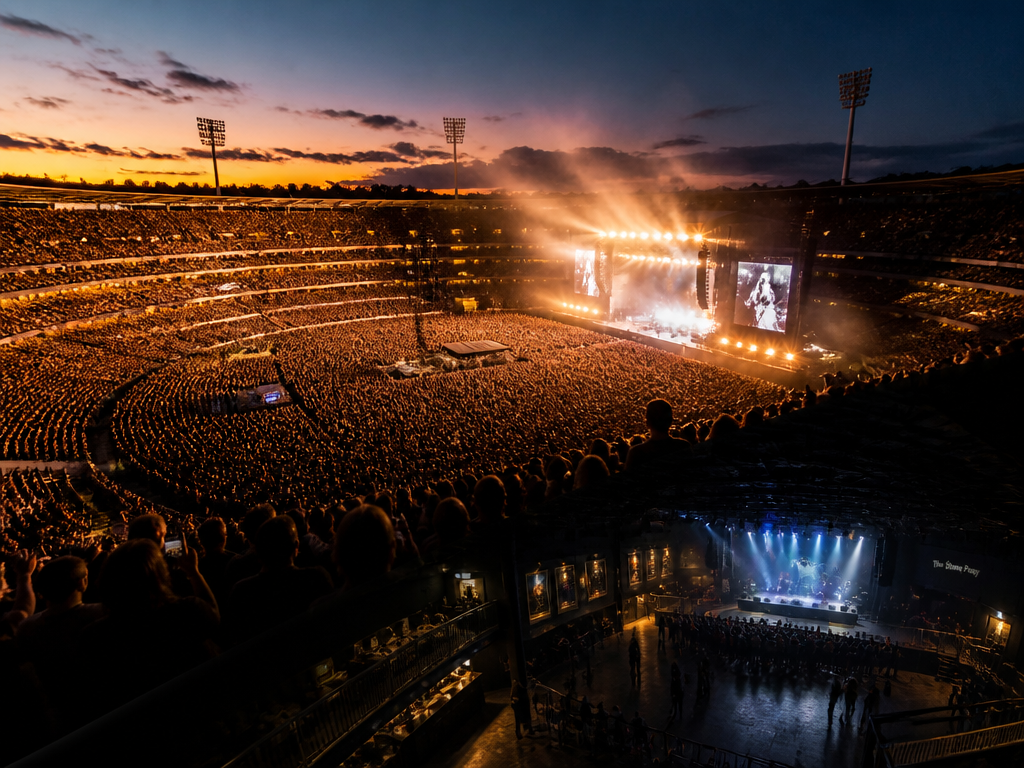
The damage was never a wall. A wall you can see, cost, and campaign against. What landed on touring musicians after Brexit is harder to photograph: not one barrier but a few dozen small ones, stacked across every border crossing, each one cheap to ignore in isolation and ruinous in aggregate. That is the shape of the Brexit impact on the music industry that advocacy keeps struggling to put on a single slide — because there is no single number, only a long tail of friction that empties a tour budget by a thousand paper cuts.
This matters for how you argue the case. A wall gets one fix. Forty small frictions need forty small fixes, or one negotiated framework that addresses the category instead of the headline. Spend a few minutes on the mechanics and the counterintuitive claim earns itself.
What actually changed for a band crossing into the EU
Before 2021, a UK act loading a van for a string of European dates was, for logistical purposes, moving within a single market. People, gear, and merch crossed borders with the friction of an internal motorway toll. After the Trade and Cooperation Agreement took effect, the same tour became an export operation, a labour-mobility question, and a haulage compliance problem at once — three separate regulatory regimes, none of them coordinated, each administered country by country.
It helps to break the problem into the three pillars that industry bodies have settled on, because that taxonomy is how the fixes get sorted too.
Pillar one: people and permits
The headline rule most acts know is the Schengen 90/180 limit — UK nationals can spend 90 days in any rolling 180-day window across the Schengen area without a long-stay visa. For a band doing a fortnight in spring and another in autumn, that ceiling is rarely the binding constraint.
The binding constraint is underneath it: work authorisation, which Schengen does not govern. Whether a musician needs a permit, a visa, or nothing at all to perform for a fee depends on the individual member state and the type of engagement. Some countries wave performers through for short paid work; others require paperwork, sometimes lodged weeks ahead, sometimes with a local promoter as sponsor. The crew travelling with the act — sound engineer, tour manager, lighting tech — can fall under different rules again, because they are workers, not performers.
The result is not a closed door. It is a research tax. Someone has to sit down and map every country on the routing, because the answer genuinely differs at each line on the map, and getting it wrong at the border is not a paperwork problem — it is a cancelled show.
Pillar two: the gear and the merch
Instruments and stage equipment travelling temporarily out of the customs union may need an ATA Carnet — a document that lets professional kit cross borders and return without import duty, on the understanding it all comes back. It works. It also costs money to obtain, requires a security deposit pegged to the value of the gear, and must be presented and stamped at each crossing. Miss a stamp and the customs guarantee can be called in.
Merchandise is its own animal, because merch is sold, not returned. T-shirts and vinyl carried in to sell across the EU are commercial imports, with the VAT, customs declarations, and thresholds that implies — and those rules vary by country and by value. For a major act, this is a line item handled by a freight partner. For a four-piece selling shirts off the front of the stage to cover the diesel, it is the difference between the tour washing its face and the tour losing money.
Pillar three: the vehicle itself
The least visible pillar, and arguably the most structurally damaging, is transport. Cabotage and cross-trade rules limit how many stops a non-EU haulier can make inside the EU before the operation breaches the terms of the haulage agreement. A specialist tour-bus or splitter-van operation built around a long multi-country run can hit that limit mid-tour, which forces awkward workarounds: splitting cargo, basing vehicles inside the EU, or routing around the rules in ways that add cost and cut dates.
This one rarely makes the press because it reads as logistics minutiae. It is the pillar most likely to quietly reshape which tours are economically possible at all.
Why emerging acts pay the most
Put the three pillars together and notice who absorbs them. An established act tours with a budget that can carry a freight partner, an immigration advisor, and a compliant haulage contract. The frictions become fees, and fees become a fixed cost spread across arena receipts.
An emerging act tours on margins that were always thin and are now negative at the first unexpected charge. The carnet deposit, the per-country permit research, the merch VAT, the rerouted van — none of these scale down for a band playing 200-capacity rooms. They are close to flat costs, which means they fall hardest on the acts least able to carry them, at exactly the career stage where European touring is how reputations and audiences get built. The pipeline that turns a regional act into an international one runs straight through these borders, and the friction sits heaviest on the people earliest in it.
That is the durable argument for advocacy. This is not a complaint about inconvenience. It is a structural cost loaded onto the development stage of careers — the stage that produces the headliners of the next decade.
What the evidence can actually ask for
The recommendations that recur across industry submissions and parliamentary work are, sensibly, category fixes rather than country-by-country firefighting. The realistic asks tend to cluster around a few areas:
- A negotiated arrangement on short-term work mobility for performers and crew, addressing the permit patchwork rather than the Schengen day count.
- Relief or simplification on the carnet and temporary-admission regime for professional gear.
- A specific carve-out or higher threshold on the cabotage limits for cultural and event transport.
None of these is guaranteed, and all of them sit downstream of a willingness on both sides to reopen technical annexes of an existing agreement. The honest position is that the pathway exists — these are negotiable, member-state-cooperative, technically scoped problems — without pretending the political will is settled.
For an advocate, the strategic value of the three-pillar frame is that it lets you stop arguing about Brexit in the abstract and start naming the specific instrument that needs amending. "Touring is harder" loses the room. "The temporary-admission rules treat a guitar amp like a permanent export" wins a meeting, because it can be fixed without relitigating anything.
So if you are building the case tonight, here is the rule of thumb: count the borders, not the headlines — every line on the routing is its own regulation, and the policy that helps is the one that shrinks the count.
Not sure which tool to use?
Compare the top AI music and sound tools side by side — honest reviews, real pricing, no sponsorships.