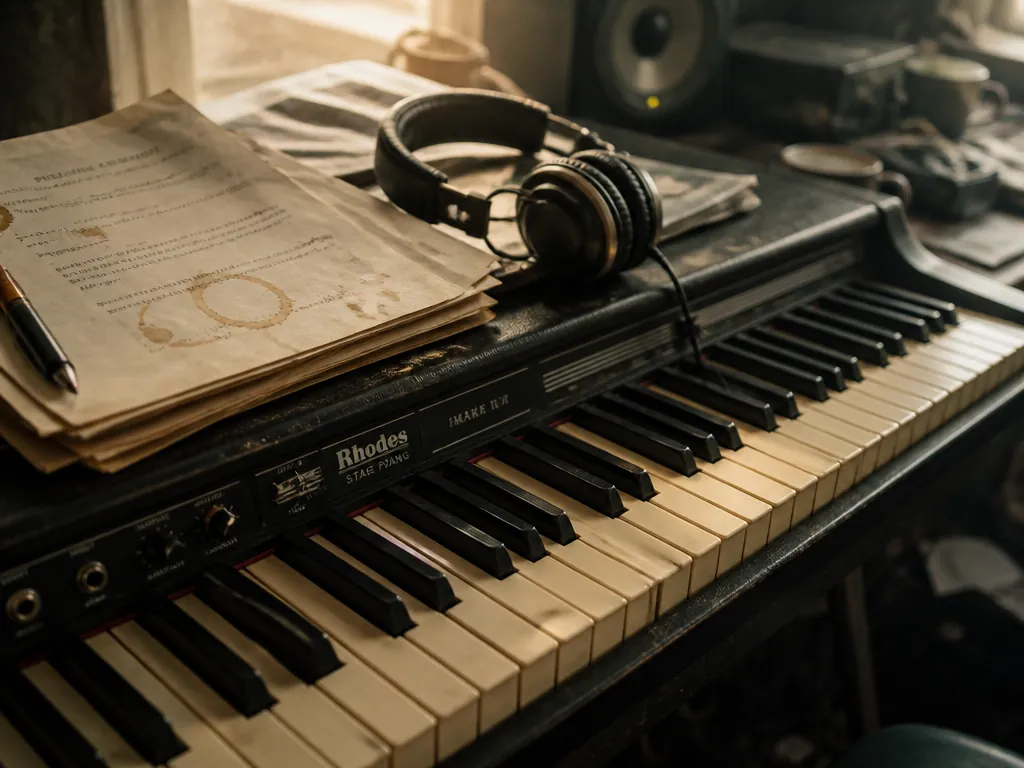
Here is a question anyone who has ever sat in a chair with the power to say yes or no to a song has asked themselves at two in the morning: what was Clive Davis actually hearing that the rest of the room wasn't?
It is not a rhetorical question. Davis, who shaped American popular music across more than half a century before his death at 94, built a reputation on a single claimed faculty — that he could hear a hit, or a career, in a demo that everyone else had passed on. The evidence usually offered is the roster. Janis Joplin. Aretha Franklin's commercial second act. Whitney Houston. Bruce Springsteen, signed at Columbia. Santana, Billy Joel, Barry Manilow, later Alicia Keys. You list the names and the names are supposed to settle the argument.
Except they don't, not really. Not for anyone who does this work. Because the honest follow-up question is: was that an ear, or was it a method, an apparatus, a position of leverage, and a great deal of timing wearing the costume of an ear? I have spent a decade saying yes and no to sounds, and I want to take the question seriously rather than just genuflect at the catalog.
What "having ears" in A&R actually means
The short version, for anyone scanning: "good ears" in A&R is rarely the ability to detect a hidden melody nobody else can perceive. It is the ability to hear a recording the way a future audience will hear it, before that audience exists, and to know which part of the record is doing the work and which part is in the way.
That is a different skill from being a musician. Davis famously was not one — no instrument, no formal training, a Harvard law degree instead. What he reportedly had was an instinct for the song as a finished consumer object: the chorus that arrives too late, the verse that needs cutting, the singer who is great but is singing the wrong material. The legend remembers the discoveries. The craft was in the editing.
Whitney Houston is the cleanest case. The voice was self-evident — nobody needed a genius to notice that. The actual A&R work was repertoire: finding and pairing songs to a young singer with no writing catalog of her own, building an identity out of other people's compositions and arrangement decisions. That is taste, yes, but it is taste operating as logistics. It is matching, sequencing, vetoing. It is closer to what a film editor does than to what a clairvoyant does.
So the first part of the answer to our question: what he was hearing was often not the artist at all. It was the record the artist could make if certain choices got made. That is a learnable discipline more than a gift, which is uncomfortable for the myth but liberating for everyone else.
The places the answer is "it depends"
Now the honest part. The roster-as-proof argument has a hole in it, and the hole is survivorship.
Every executive with a long enough run accumulates a highlight reel that looks like destiny. What gets quietly filed away are the acts that didn't break, the signings that went nowhere, the passes that turned out to be mistakes. This is not a knock on Davis specifically — it is true of every legendary A&R figure, every label chief, every tastemaker whose Wikipedia page is a list of wins. The misses don't get tribute pieces. So when we ask "what did he hear," part of the answer has to be: we are grading the shots that went in and ignoring the ones that didn't, because that is how reputation in this business compounds.
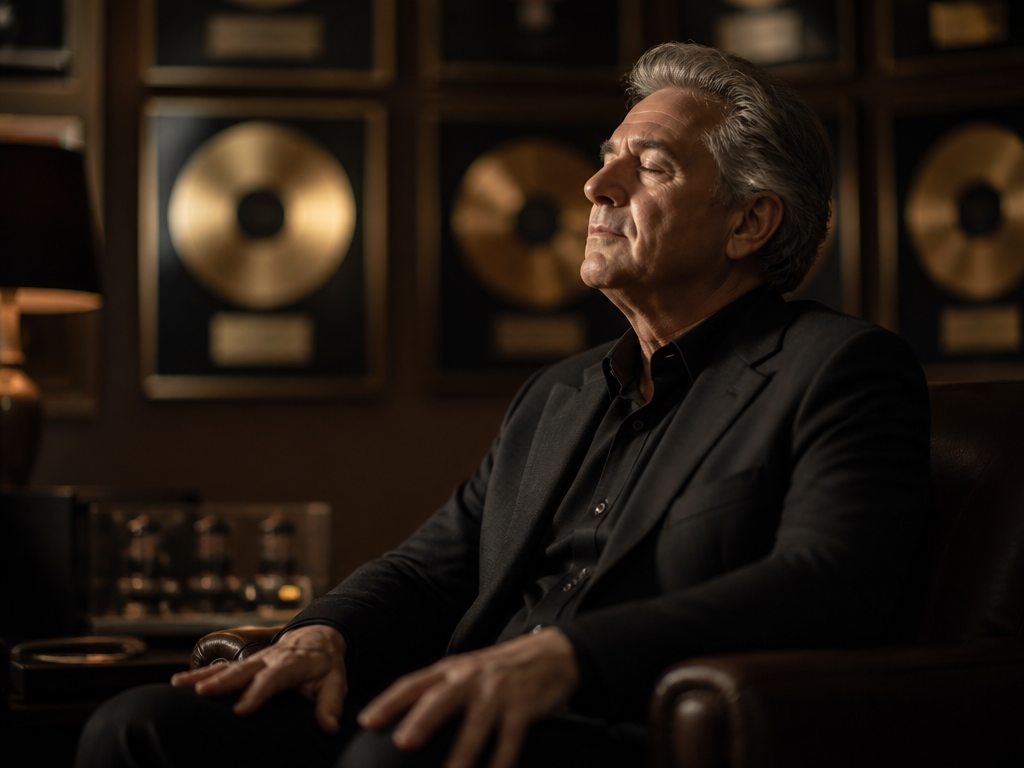
It depends, too, on the era. Davis operated inside an industry with radio gatekeeping, physical distribution, and promotional budgets that could manufacture ubiquity. A song he believed in could be made inevitable by the machine behind it — pressed, shipped, played, charted. The ear identified the candidate; the apparatus delivered the verdict and then everyone credited the ear. Disentangling instinct from infrastructure is genuinely hard, and anyone who tells you the signings prove pure clairvoyance is skipping that step.
And it depends on what you count. He had a documented willingness to push artists toward commercial material they sometimes resisted — the song-doctor instinct. Depending on who's telling the story, that's either visionary stewardship or commercial overreach that flattened idiosyncratic acts into radio shapes. Both readings are defensible. The truth is that the same instinct produced both outcomes, and which one you emphasize says more about your values than about his ears.
What the legend hides — and why it matters now
The most useful thing to take from a career like this is the part the tributes leave out: he was an institution as much as an individual. The signings happened because there was a label, a staff, a promotion department, a distribution network, and decades of accumulated relationships routing demos to his desk in the first place. The famous ear was the last filter in a long pipeline, not the whole pipeline.
I raise this because the romance of the solitary tastemaker is being sold hard again right now, in a different costume. The pitch around AI music tools — including the kind we build here — often implies that taste is the only scarce thing left, that if you can recognize good output you can be your own Davis. That's half true and half a trap.
Here's the half that's true. The discipline that mattered — hearing a near-finished record and knowing what to cut, what to swap, what's in the way — maps almost exactly onto working with generative tools. You will sit in front of a render that's 80 percent there: a warm detuned Rhodes over a slightly mushy beat, a good topline buried under a bad arrangement. The skill that separates people is identical to the skill the legend was praised for. Not "can I make sound," but "can I hear what this wants to become and make the three edits that get it there." Prompt-roulette gives you candidates. Taste is the veto.
Here's the half that's a trap. Davis's ear was load-bearing because it sat inside an apparatus that could act on his yes. Recognition without a path to an audience is a hobby. The tools have collapsed the cost of making the candidate to nearly zero, which means the scarce thing has moved downstream — to attention, to placement, to the unglamorous logistics of getting the right sound in front of the right project. That's the part of the legacy worth studying, and it's the part nobody puts in the obituary.
Back to the roster
So return to where we started — the wall of names that's supposed to end the argument. Aretha, Janis, Whitney, Springsteen, Santana, Alicia Keys. Ninety-four years, more than fifty of them with a phone that the whole business answered.
The names are real and the ear was real. But what the names actually prove is subtler than "he heard what nobody else could." They prove that a particular kind of editorial judgment — hearing the finished thing inside the unfinished thing — is worth more than almost any technical skill, and that judgment is only as powerful as the machine standing ready to act on it. Clive Davis had both. Most of us, working with better tools than he ever had, are still missing the second one. That, more than any single signing, is the thing to sit with.
Not sure which tool to use?
Compare the top AI music and sound tools side by side — honest reviews, real pricing, no sponsorships.