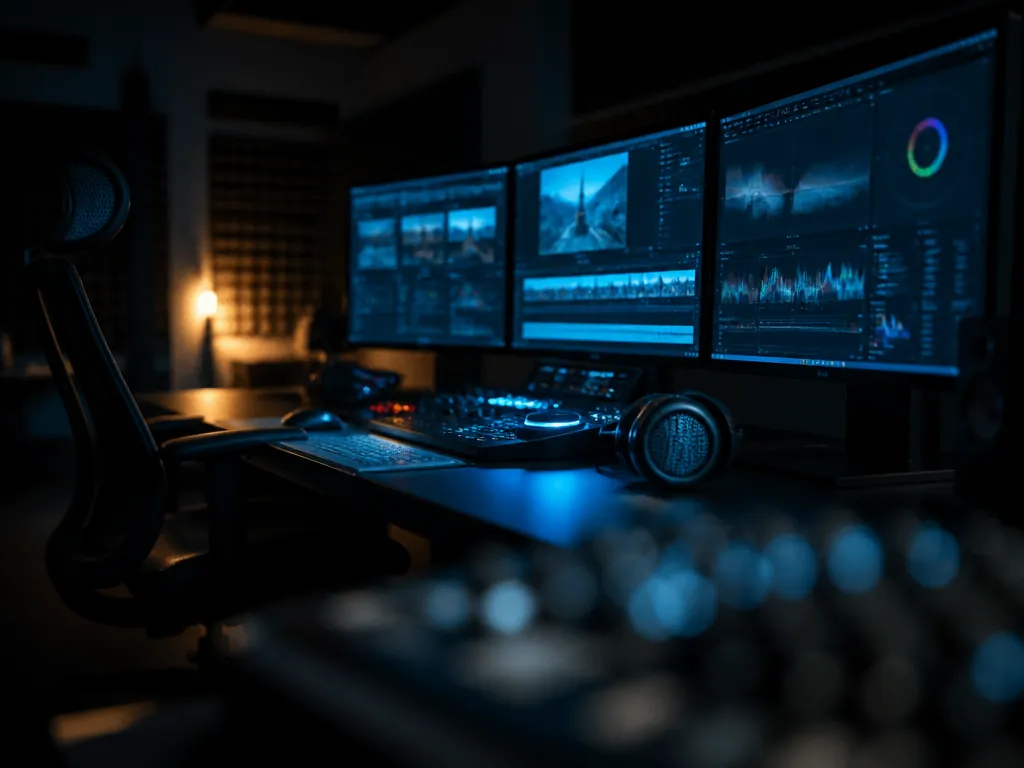
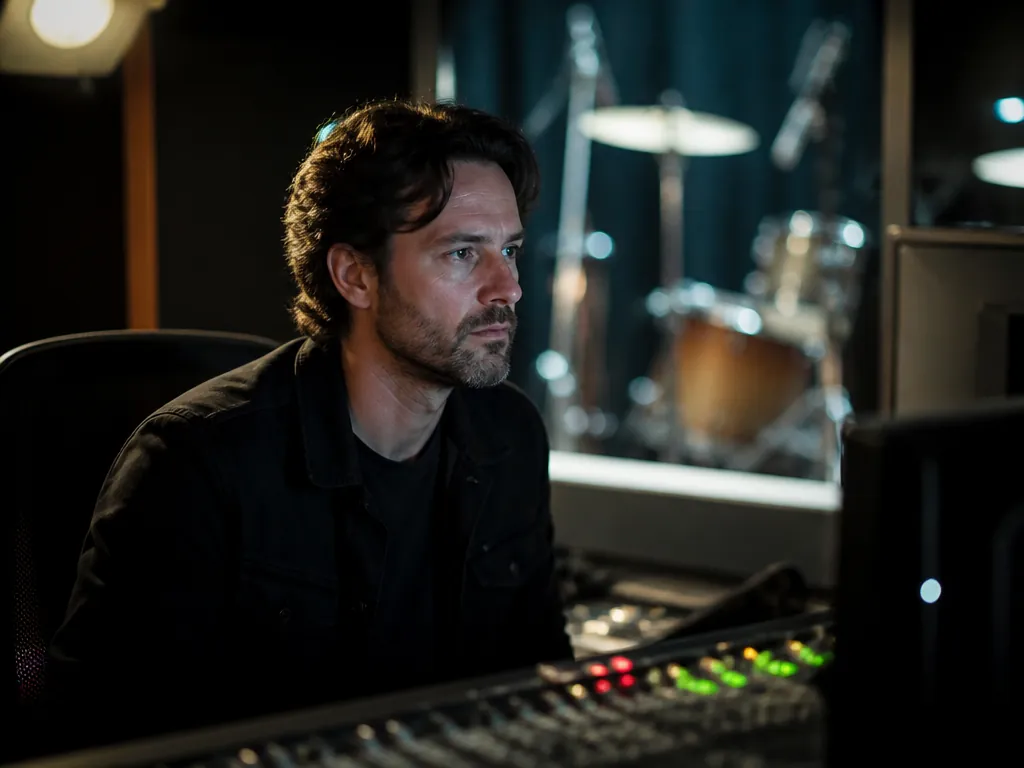
There is a moment about eleven seconds into a lot of reality-TV montages where the drum fill lands in exactly the same place it landed eleven seconds earlier. Same snare, same crash, same little rise underneath it. Nobody in the room ever decided that should happen. It happened because the cue is a loop wearing a coat.
The standard advice in production offices right now goes like this: use AI music generation for the material nobody listens to. Montage beds, transition stings, the wash under a voiceover. Keep the licensing budget for the one needle-drop that carries an episode. Nobody notices the score.
That advice is roughly right. It is also the reason a growing number of shows have comment sections full of people saying the music feels off and being unable to explain why.
Where the advice is genuinely right
A television bed has a job, and the job is not to be interesting. It is to hold tension across a cut, keep a room from sounding dead, and get out of the way of dialogue. In a dialogue-led mix the music sits far enough under the voice that most of its detail is gone before it reaches your living room. Add a phone in your hand and a dishwasher running, and the difference between a session player and a generated stem shrinks to almost nothing.
So for a forty-second walk-and-talk under narration, generated cues clear the bar. Producers who say most viewers cannot pick the difference in that context are not lying. They are describing a real thing about attention.
The advice breaks the moment the music is asked to do anything.
Can you actually hear the difference between AI music and a real score?
Usually not from the timbre — from the timing. Modern generated cues sound convincing tone by tone; what gives them away is that they have no idea where the edit is. A composer writing to picture puts the downbeat on the door opening and lets the strings fall away when someone starts crying. A generated cue arrives with its own internal clock, gets dropped onto the timeline, and hits those moments by accident or not at all. That mismatch is what people are registering when they say the episode felt cheap without being able to name a single wrong note.
The other tells are structural. Here is what tends to surface, and why:
| What you hear | What is usually causing it |
|---|---|
| The same fill lands every 8 or 16 bars | It is a loop, not an arrangement with a middle |
| Cymbals and room smear into grey hiss | High-frequency transients are the hardest thing for these models to render cleanly |
| Music builds and then plateaus, never resolves | Generated cues rarely write a cadence; the editor fades instead |
| A voice that is almost saying words | Vocal layers producing non-lexical syllables that the ear tries to parse |
| Every cue in the hour shares the same "room" | One prompt style, one session, one model's tendencies across the whole episode |
None of these are fatal on their own. Stacked across forty-four minutes, they read as a house style nobody chose.
The part the advice never accounts for
Here is where the rule falls apart, and it has almost nothing to do with audio quality.
Viewers are not only judging what they hear. They are judging what it means that the show did this. Once one person in a comment thread names it, everyone else hears it for the rest of the season — and the objections that follow are rarely about frequency response. They are about who did not get paid. They are about a production with a visible budget choosing the cheaper input. They are about the environmental cost of the compute, which has become a standard beat in these conversations whether or not the numbers get cited accurately.
That is a different argument than "the music sounds bad," and it cannot be won by making the music sound better. A flawless render does not answer it.
There is also a memory problem. Long-running shows accumulate sonic furniture — a theme, a set of stings, the two or three licensed tracks that got used in a finale everyone remembers. Swap the underscore wholesale and the show stops sounding like itself. People experience that as something is wrong long before they diagnose it. The score was load-bearing and nobody put it on the schedule.
Give the producers their due
The defense that gets offered — it is another instrument, the audience cares about the story — is evasive in the way press statements are evasive. But underneath it there is a real problem that critics tend to wave away.
Sample and master clearance is slow, expensive, and territory-dependent. A track cleared for domestic broadcast may not be cleared for the streaming window, and shows have had episodes reissued with the music swapped out for exactly that reason. Production music libraries solved part of this decades ago, which is why so much television already sounds like a library — the generated-cue debate is a new chapter of an old compromise, not a fall from grace. Add the reality that unscripted shows lock picture late and change cuts after the composer has delivered, and the appeal of a cue you can regenerate at 2am in a new key becomes obvious.
That is the honest case. It is a workflow argument, not an artistic one, and it deserves to be made as a workflow argument rather than dressed up as creative expansion. The moment a producer claims generated cues make the storytelling richer, viewers can smell it, because nobody chooses this for richness. They choose it for Tuesday.
What to listen for this week
If you want to test any of this yourself, the fastest method takes one scene:
- Find a moment with a hard emotional cut — a reveal, a door, someone's face changing.
- Watch it once normally, then again with your eyes closed.
- Ask whether the music knew the cut was coming, or arrived at it late.
- Then check whether the same rhythmic figure returns on a fixed interval regardless of what is on screen.
Music written to picture anticipates. Music dropped onto picture reacts, or does not react at all. Once you can hear the difference between those two, you cannot unhear it, which is either a gift or a curse depending on how much television you watch.
The honest version of the rule
The advice as given — put it where nobody is listening — assumes attention is a fixed quantity and that background means unnoticed. Neither holds. Attention is not spent evenly across an episode; it spikes exactly at the moments a bed has to carry weight, and those are the moments generated cues are worst at. And background stops being background the second the audience is told what it is.
So the rule needs rewriting. Something closer to:
Generated music is safe only where nothing is being asked of it — and every place something is asked, the audience hears the answer, including the ones who could not tell you what a transient is.
That is a narrower permission than most productions are currently operating under. It still leaves plenty of room: texture beds, ambience, transitional wallpaper, the material that was already anonymous. It rules out the moments people remember, which is the material worth paying for anyway.
AI music tools are not going back in the box, and pretending otherwise is not useful to anyone with an episode to deliver. But the shows getting this wrong are not getting it wrong because the technology is bad. They are getting it wrong because they mistook "the audience will not notice" for "the audience will not care," and those have never been the same sentence.
Nobody notices the score until it stops sounding like it was made for them.
Not sure which tool to use?
Compare the top AI music and sound tools side by side — honest reviews, real pricing, no sponsorships.