A label strategist told me last spring that her whole Gen-Z plan was a spreadsheet of playlist editors. Pitch the editor, land the placement, ride the skip-rate. That was the plan. It is not a bad plan. It is also aimed at a room that a large chunk of her target audience has already walked out of, headphones still on, to go somewhere the pitch deck never mentions.
Here is the myth worth killing first: that Gen-Z audience demographics are a streaming problem, and that if you win the algorithm on the big DSPs you have "reached" them. You have reached some of them, some of the time. But the attention you are actually competing for is often sitting inside a game client, a Twitch chat, or a Discord server with a soundtrack running underneath it that nobody cleared through a traditional sync desk.
The myth: Gen-Z lives on the streaming platforms
The clean version of the belief goes like this. Young listeners discover music on TikTok, save it to a streaming service, and the funnel is done. Discovery, storage, consumption, all in apps built for music. So you optimize for those apps and let the demographics take care of themselves.
The problem is not that this is false. It is that it is partial in a way that hides the biggest concentration of attention in the category. Esports and gaming communities count their Gen-Z fanbase in the hundreds of millions globally — a figure that has been climbing through recent market reports rather than plateauing. That audience is not a niche of teenage boys anymore. The gender split has been evening out year over year, and the age band skews exactly where a label wants it. When those fans get asked what they care about outside of gaming itself, music tends to land at or near the top of the list.
So the honest correction is not "streaming is dead." It is: a serious slice of the demographic you are chasing spends its high-attention hours in spaces where music is present but under-monetized by the industry that made it.
The evidence: attention has a second address
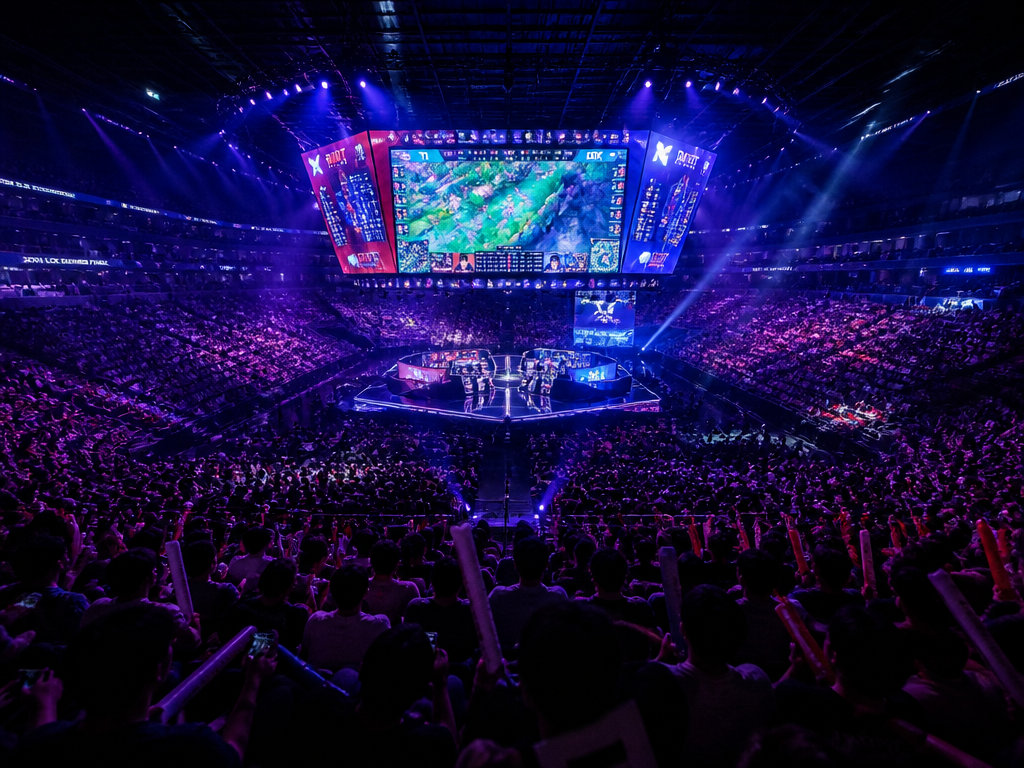
Watch a League or Valorant broadcast during a major and you are looking at a stadium's worth of concurrent viewers with a production budget to match — walk-on tracks, drop moments, a themed anthem, a musical act at the opening ceremony. Those are not incidental. They are structural. The broadcast is built like a festival main stage, and it runs several times a year across multiple titles and regions.
Then there is the ambient layer. Streamers run background music for hours. Games ship with adaptive scores that Gen-Z players hear more often than most radio singles. In-game concerts have pulled audiences that dwarf physical venue capacity. None of this shows up in a DSP dashboard, which is precisely why it stays invisible to a team that only reads DSP dashboards.
The mechanism: why music actually sticks here
This is the part the market reports skip, so let me be concrete from the production side.
Music works in these communities because it is doing a job, not decorating a feed.
- Pacing. A ranked match has dead air between rounds. A streamer needs energy that does not fight their voice — typically instrumental, mid-tempo, mixed low, something in the 90–110 BPM range with no vocal transient stealing the top end.
- Identity. Teams, orgs, and creators build sonic signatures the way clubs build kits. A detuned synth motif under a caster's intro becomes a fan's Pavlovian trigger.
- Moment marking. The clutch play, the ace, the tournament win — these need a musical drop the way a film needs a cue. That is a sync opportunity that looks and behaves like film scoring, not like playlist placement.

The reason your streaming-only plan underperforms here is that discovery in these spaces is contextual, not editorial. A track gets attached to a feeling in a match, and the fan goes looking for it after. The song is remembered because of where it lived, not where it charted.
The map: where the money actually connects
If you are mapping opportunities rather than admiring the trend, three pathways are open right now, and they behave differently.
| Pathway | What you're selling | Who signs the deal | Watch-out |
|---|---|---|---|
| Sponsorship / brand tie-in | Artist as face of a team, org, or tournament | Endemic brands, publishers, org marketing leads | Short shelf life; tied to team performance and season cycle |
| Festival / live crossover | Artist booking for opening ceremonies, in-game events, co-branded stages | Tournament operators, publisher events teams | Production specs are broadcast-grade; expect stems, click, timecode |
| Licensing / sync | Track use in broadcast, VOD, official highlight reels, game builds | Publisher music supervisors, broadcast producers, in-house audio | Clearance for streamer/UGC use is a separate, messier right — read it |
The one that A&R teams underweight is that last row. Sync into esports broadcasting is closer to TV licensing than to catalog exploitation, with the added wrinkle that fans will re-clip the moment across UGC platforms. Whether your license covers that downstream use varies deal to deal, and it is the term most likely to bite you later. Get it in writing before the highlight goes viral, not after.
A note on catalog, since it comes up: instrumental, loop-friendly, stem-delivered material moves easiest into these spaces because it clears clean and drops into a live production without a vocal-rights headache. If you are commissioning original beds for this specifically — the streamer-safe, 48kHz WAV, no-uncleared-sample kind — that is squarely where AI generation tools, City of Punk's included, earn their keep as a bed factory. Named artist tracks are the sponsorship play; the ambient underlayer is a licensing pipeline.
The honest takeaway
Do not blow up the streaming plan. Add a second map on top of it, because the demographic you keep calling hard to reach is highly reachable in a room your competitors are not standing in. The catch is that this room runs on relationships with publishers and org marketing teams, not on pitch emails to editors, and the deal structures look more like sponsorship and sync than like distribution.
What this piece did not answer
I gave you the shape, not the receipts. This piece did not price a single deal, did not name conversion rates from broadcast exposure to streaming lift, and did not stress-test whether these fans actually convert to paying subscribers at rates a label finance team would sign off on. Those numbers exist in publisher sales decks and org media kits that do not circulate freely. If you want the real math, start there — request the tournament media kit, ask a music supervisor at a publisher what a broadcast sync actually clears, and talk to one mid-tier org's marketing lead before you talk to any A&R report. The map is public. The prices are not, and that gap is exactly where the advantage still lives.
Not sure which tool to use?
Compare the top AI music and sound tools side by side — honest reviews, real pricing, no sponsorships.