The generator is the least valuable part of an AI music platform. The catalog underneath it is the part you will still be using in three years.
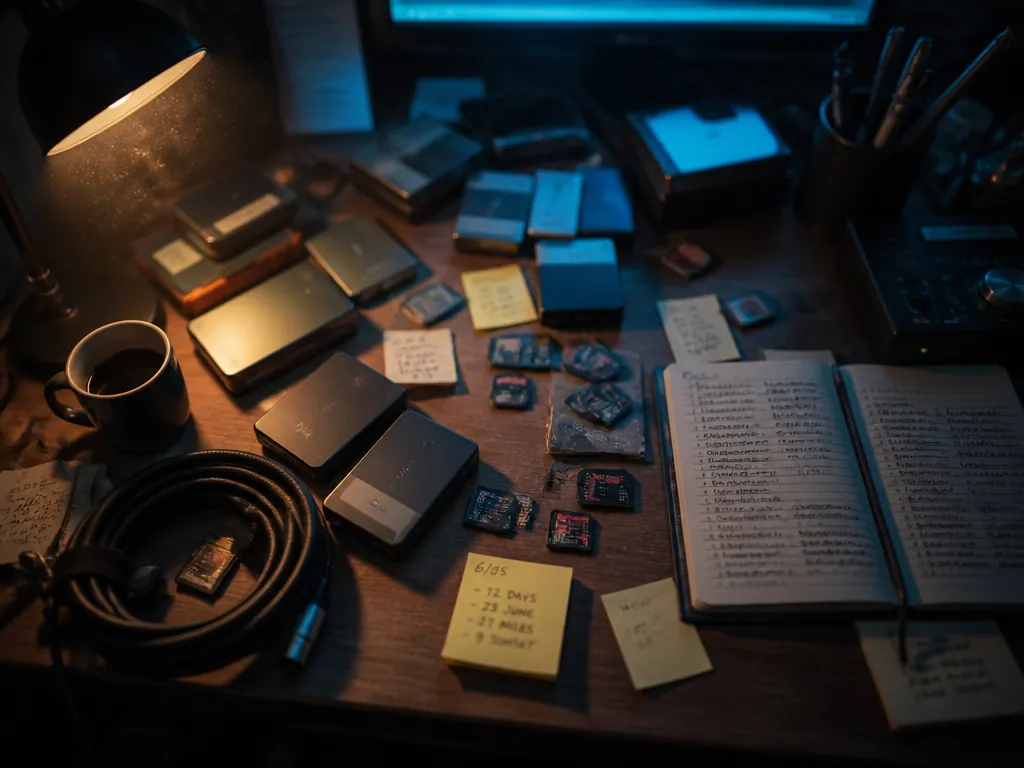
That is a strange thing to say about a technology sold entirely on its output. But watch what happens on a real project. Last winter I scored a stealth level for a four-person studio and used AI music generation to rough in forty-one variations of one 128 BPM loop in F minor — different tension layers, different drum weights, one with taiko, one with a detuned analog bass sitting under a broken 808. Making them took an afternoon. Then the level designer wrote back asking for "the dry taiko one, not the reverb-y one," and I lost a day and a half. Not to writing. To auditioning a folder called chase_v2_new_FINAL in which every file was named output_38291.wav.
That day and a half is the actual cost structure of production now. Making music got cheap and fast. Knowing what you made, where it came from, which license covers it, and which version shipped stayed exactly as expensive as it always was. Repertoire management is the name for fixing that, and it is the strongest argument for staying inside one platform instead of stitching together a DAW, a stem splitter, a remix tool, and four export folders.
What is a repertoire management system in music?
A repertoire management system is a catalog of your works plus the facts attached to each one: every track and version, its technical metadata (BPM, key, duration, sample rate, format), its origin (prompt, seed, source material, session), its rights status (license tier, permitted uses, the date you captured those terms), and its delivery history. Publishers and collecting societies have run these for decades to track who wrote what and who gets paid. The indie version is smaller and does the same job: it makes your own back catalog searchable, reusable, and defensible when a client asks where a cue came from.
The difference generative tools make is volume. A songwriter working by hand produces a catalog that fits in their head — you remember the twelve songs. A producer running AI-assisted sessions produces four hundred renders a quarter, and no one remembers four hundred of anything. The catalog stops being a formality and becomes the thing standing between you and re-generating work you already own.
The five facts that turn renders into a repertoire
Every usable render needs these attached to it. Miss any one and the file degrades into audio you're afraid to reuse.
| Fact | What it holds | Why it matters later |
|---|---|---|
| Identity | Stable ID or filename that never changes | The client says "take three" and you know which file that is |
| Lineage | Prompt text, seed, model, source stem, parent version | You can regenerate a near-match instead of starting over |
| Sonic | BPM, key, duration, LUFS, 48 kHz WAV vs. MP3, stems present | Your search becomes "128 BPM, F minor, has drum stem" |
| Rights | License tier at time of render, permitted uses, date captured | A client asks in 2028 what covered a cue you made in 2026 |
| Delivery | Which project, which cut, which date it shipped | You never re-license or re-clear something you already delivered |
None of that is exotic. It is a cue sheet, the thing film and TV music has run on forever, adapted to a workflow where the composer and the archivist are the same tired person.
Why one workspace beats five good tools
The usual case for consolidation is convenience: fewer tabs, less context-switching, faster iteration. That is true and it is the weaker argument. The stronger one is that every export boundary is a place where metadata dies.
Watch a track cross tools. It is generated with a prompt and a seed — those live in the generator's history. You bounce a WAV and the prompt does not come with it. You drop the WAV into a stem splitter and get back a folder of four files whose only relationship to the original is that you remember putting them there. You pull two of those into a remix tool, render, and now you have a file whose parentage exists nowhere except your short-term memory, which is being overwritten by the next render as we speak.
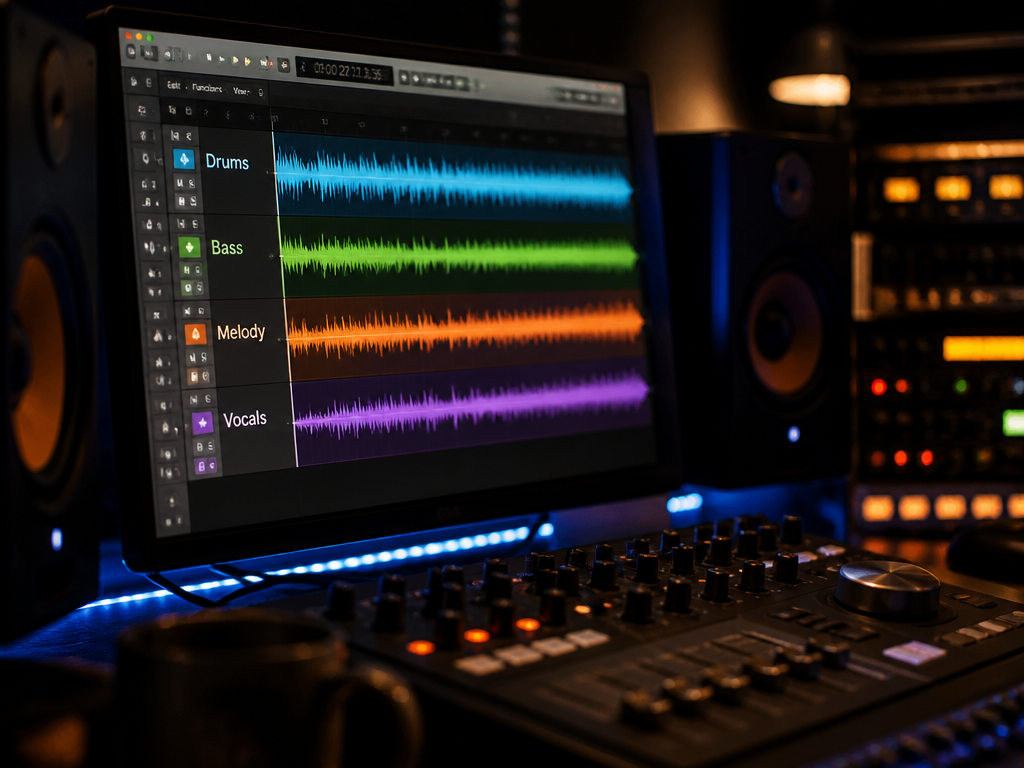
A single workspace that holds generation, separation, editing, and export keeps the chain intact by default: this version came from that prompt, these stems came from that version, this export came from those stems. That lineage is what lets you answer a revision request in ten minutes instead of rebuilding from scratch. City of Punk's workspace keeps that chain attached, and so do several of its competitors — the point is not which one you pick, it's that something has to hold the thread, because a folder full of WAVs cannot.
If you are staying multi-tool for good reasons — you have a DAW template you love, or a separation engine that outperforms everything else on your material — that is a legitimate choice. It means you own the bookkeeping manually. Which is workable, as long as you actually do it.
What consolidation does not fix
Being honest about this is the only way the rest of the advice is worth anything.
Stem separation still depends on the source. A sparse arrangement — bass, drums, one pad, one lead — separates cleanly enough to remix. A loud, limited master with heavy bus compression does not. Reverb tails smear into the residual bus, hi-hats leave ghosts in the vocal stem, and a twelve-stem split can hand you four stems you'd use and eight you would not. Splitting your own multitrack is always better than splitting your own master.
Prompt roulette is real, and a catalog is how you survive it. Some renders come out mushy — the low mids congeal, the transients round off, and there is no prompt phrasing that reliably prevents it. The response is not a better prompt formula; it's generating in batches, logging what worked, and building a personal library of prompts that have earned their keep on your material.
Lock-in is the cost of the thread. A platform that holds your lineage holds it in its own database. Before you commit a year of work, find the export path: can you get your catalog out as CSV or JSON, with prompts and version relationships intact, not just a zip of audio? If the answer is unclear, keep a parallel sidecar file yourself.
Licensing terms are a snapshot, not a constant. Tiers change, ownership language gets revised, and platforms are acquired. Whatever your plan grants you today, save a dated PDF of the terms page alongside the project. This is not legal advice and it is no substitute for reading the actual license against your actual use — but a dated copy of what you agreed to is the difference between a five-minute answer and an unanswerable question.
Build a working repertoire in one afternoon
You do not need software for this. You need a convention you will keep.
- Pick a filename grammar and freeze it. Date, project, cue, tempo, key, version, variant:
2026-03-14_dockyard-chase_128bpm_Fmin_v07_take3.wav
2026-03-14_dockyard-chase_128bpm_Fmin_v07_take3_STEMS/
When this works, you can find any cue by typing a tempo into your file search and getting a short, correct list.
- Add a sidecar catalog. One CSV per project, one row per render. Columns matching the five facts above:
file,prompt,seed,model,bpm,key,format,license_tier,terms_captured,delivered_to
When this works, you can sort by key and hear every F minor cue you own without opening a DAW.
-
Paste the prompt in at render time, not later. Later does not happen. The prompt is the single highest-value field in the row, because it is the only one that regenerates lost work.
-
Bounce stems on anything you might revise. Even if the platform can re-split later, a stem set you rendered from the source beats one recovered from a master. You should hear a clean drum bus with no pad bleed on the tail.
-
Snapshot the license the day you start the project. PDF, dated filename, in the project folder next to the audio.
-
Close the loop on delivery. When a cue ships, fill in
delivered_to. That column is what stops you from re-clearing, re-rendering, or accidentally reselling something exclusive.
Six steps, maybe forty minutes of setup, and the habit costs about fifteen seconds per render after that.
The part that compounds
Here is what a maintained catalog does that no generator does: it turns your past work into raw material. A year in, a client asks for something "like the dockyard thing but slower and warmer," and instead of writing from nothing you search 120–130 BPM, minor key, has stems, and pull three real candidates in under a minute. Stem them, pitch them, rebuild them. That is a compounding asset, and it exists only if the bookkeeping happened.
The tools that generate the audio will keep changing. Models get replaced, interfaces get redesigned, and the thing you swear by this quarter will look quaint by next. Your catalog does not care. It outlives every version of every tool that made it, which is precisely why it deserves more of your attention than the render button does.
Your next track takes an afternoon. Finding it again should take ten seconds.
Not sure which tool to use?
Compare the top AI music and sound tools side by side — honest reviews, real pricing, no sponsorships.