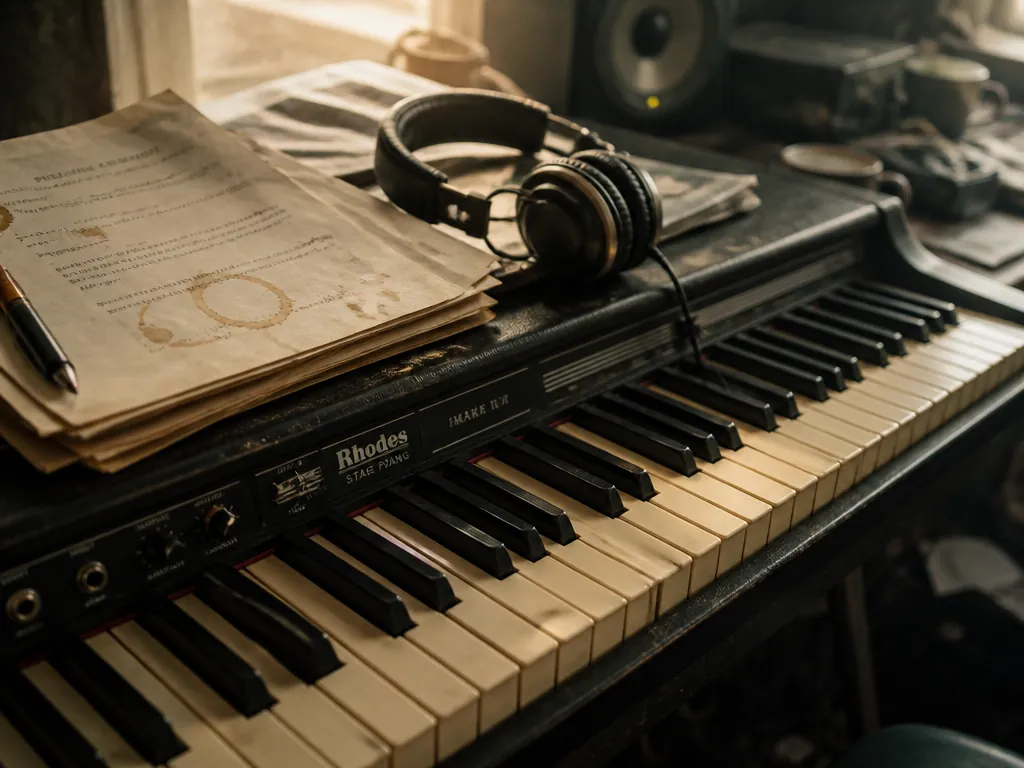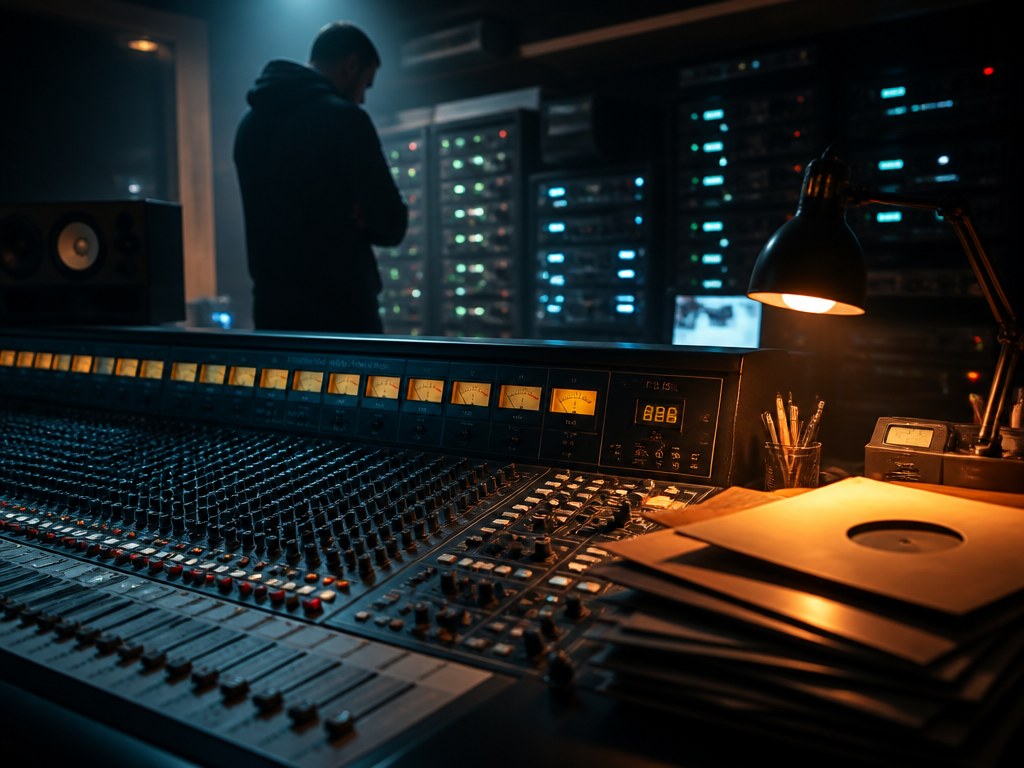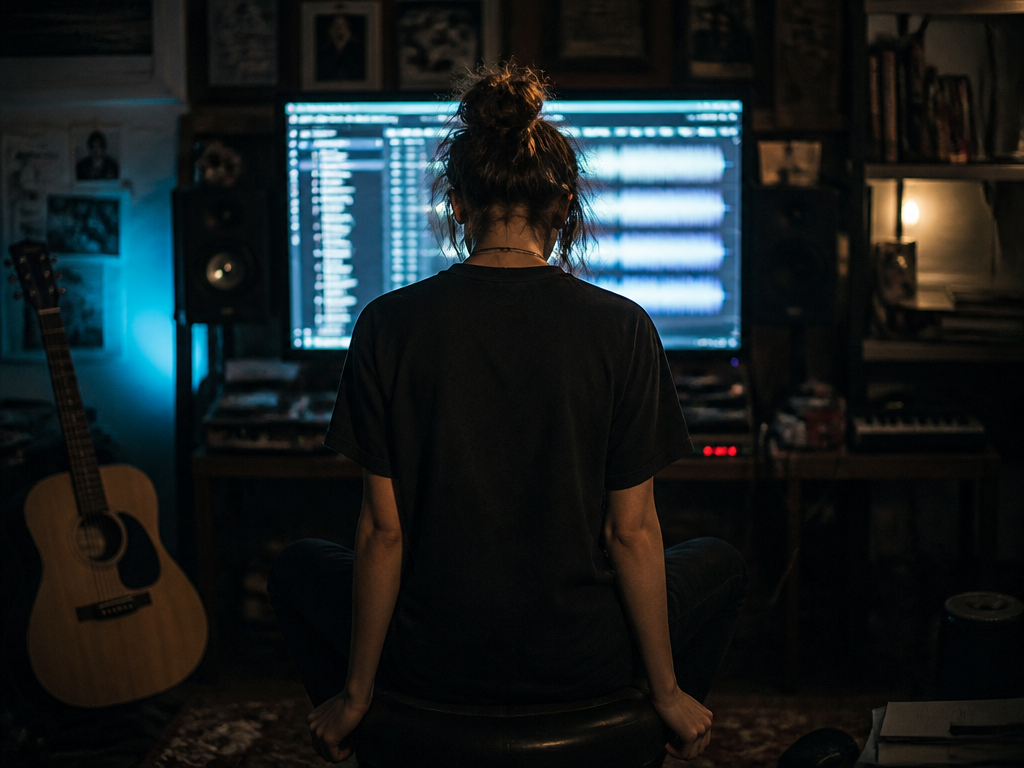
It is 2 a.m. on a campus somewhere in Jiangsu, and a second-year student is on her fourth render of the night. The first three came back wrong — a chorus that drifted flat, a verse where the AI mispronounced a city's name, a companion image of a marching crowd in which one figure had an extra arm. She is not writing a hit. She is making a two-minute tribute for a Youth Day showcase, one of more than a thousand submissions her university's creators' alliance expects, and the thing standing between her and a finished track is not talent. It is data processing — the unglamorous work of feeding the machine the right material and cleaning up what comes back.
AI music generation has made it plausible for a student with no formal training to score a commemorative event in an evening. That plausibility is real, and it is also widely misunderstood. Most people who try it once think the tool does the work. The people who get usable results know the tool is the last step in a longer chain. This is a piece about that chain — what most creators do, what actually moves the needle, and how I'd run it if the showcase were Friday.
What most people do
They treat the generator like a slot machine. Type a sentence — "uplifting patriotic anthem, choir, emotional" — pull the lever, listen, and if the third output is passable, post it. Prompt-roulette is the entire method.
For a single bedroom experiment, that's fine. For a campaign where a thousand students are submitting at once, it produces a predictable mush: every track in the same triumphant major key, the same swelling string pad, the same generic choir riding on top. The outputs are technically clean and emotionally interchangeable. You hear ten of them and you've heard all of them.
The visual side fails louder. Creators who pair their songs with AI-generated imagery for a video showcase quickly meet the distorted face, the warped flag, the crowd scene where the geometry of bodies dissolves. The reflex is to either ship it rough or give up. Neither serves a room of people who came to feel something specific about a specific history.
The deeper problem is that the slot-machine approach treats the prompt as the whole input. It isn't. The prompt is a small fraction of the data the system is reasoning over, and it's the only part most people bother to shape.
What the evidence suggests
Across the campaigns where mass participation actually held up — hundreds of finished songs, not hundreds of abandoned drafts — the difference was upstream. The creators who shipped good work spent most of their time on data preparation and post-render cleanup, and comparatively little on the generation itself.
Think of it as three stages, only one of which is "press generate."
Reference curation. Before any text prompt, you decide what the track should sound like — not as a vibe word but as concrete reference. A detuned analog bassline under a steady kick at 92 BPM in A minor reads very differently from a wall-of-choir anthem at 128 BPM in C major. The students whose work stood out chose a narrow sonic lane and gathered reference points for it. The generator follows confident inputs and flounders on vague ones.
Structured input. A useful prompt carries metadata, not adjectives. Tempo, key, instrumentation, section structure (intro, verse, pre-chorus, drop), the emotional register per section rather than for the whole song. When lyrics matter — and for commemorative work they almost always do — phonetic spelling of names and places is the single highest-leverage fix. AI music generation still mangles proper nouns and tonal pronunciation; you correct for it at the input, not by re-rolling and hoping.
Stem-level cleanup. The render is raw material. Pulling stems — exporting vocals, bass, drums, and harmony as separate 48kHz WAV files — lets you fix what the model got wrong: mute a muddy pad, ride the vocal level, replace a weak low end. This is where a mushy first pass becomes something you'd put in front of a hall.
What this changes, structurally, is cost. The reason a thousand students can participate is that the price of a first draft has collapsed — from a studio, a session musician, and a week, to an evening and a laptop. That's a genuine shift in who gets to make this kind of music. But the collapse is in the draft, not the finished piece. The finishing labor didn't vanish. It moved from instruments to data — and it's still labor, which is exactly why the all-nighter is still real.
The honest limits are worth stating plainly. Vocals remain the hard part; sustained, emotional lead vocals in Mandarin still come back uneven, and dense lyrics tend to smear. Long-form coherence is shaky — a track can lose the thread past two or three minutes. And the model has no idea which historical details are sacred and which are decorative. It will confidently get both wrong. That judgment stays with you.
What I actually do
If I had a Youth Day showcase on Friday and a track to deliver, here's the run.
-
Write the lyrics first, by hand. The words carry the meaning; the music serves them. Mark the emotional turn — usually one line where the song should open up. You'll hear it work when the structure has a destination instead of a flat plateau.
-
Spell the hard words phonetically in the lyric input. Names, places, dates. Generate one short test clip and listen only for pronunciation. It worked when the proper nouns come back intact.
-
Lock the sound before the meaning. Choose tempo and key as numbers, not moods. I'd reach for something like 84 BPM in D minor for a reflective tribute — restrained, room to grow — rather than defaulting to a major-key anthem everyone else is generating.
-
Prompt with structure, then generate three times, not thirty. If three confident inputs all come back weak, the input is the problem, not your luck. Fix the prompt, don't pull the lever again.
-
Export stems and clean. Mute what's muddy, balance the vocal, shore up the low end. You'll know it landed when the track sounds intentional rather than generated.
A prompt I'd actually use, and why:
84 BPM, D minor, reflective tribute.
Intro: solo piano, sparse, 8 bars.
Verse: add upright bass and brushed drums, restrained.
Pre-chorus: strings enter, building tension.
Chorus: full but warm — choir low in the mix, not on top.
Vocal: single lead, clear, unprocessed.
Mood per section: intro=quiet resolve, chorus=open hope.
The reasoning: it specifies per-section dynamics so the song has an arc, keeps the choir as texture instead of a blanket, and asks for an exposed lead vocal so I can hear flaws early and fix them at stem stage.
Here's what the upstream work buys you:
| First-pass slot-machine | Curated + cleaned | |
|---|---|---|
| Key/tempo | Model's default | Chosen on purpose |
| Proper nouns | Often garbled | Corrected at input |
| Stems | None | 48kHz WAV, mixable |
| Sounds like | Every other entry | Your specific intent |
One practical caution that outlasts any model version: read the license on whatever tool you use before you put the track in front of an audience or attach it to anything official. Terms for commercial and public use vary by platform and change often, and "I generated it myself" is not the same as "I'm cleared to use it publicly." Check it for your tool, at the moment you're shipping. (City of Punk renders are built to be commercially clear out of the box, which removes one variable from a fast turnaround — but verify whatever you're working with.)
The pipeline works. A student can move from blank page to finished tribute in a night, and a thousand of them can do it at once, and that is a different cultural fact than existed five years ago.
What I keep turning over is harder. When the data does the heavy lifting — when the feeling in the room is real but the labor was curation and cleanup rather than playing — whose song is it, and does the audience's emotion know or care about the difference? I don't think we've answered that yet.
Not sure which tool to use?
Compare the top AI music and sound tools side by side — honest reviews, real pricing, no sponsorships.