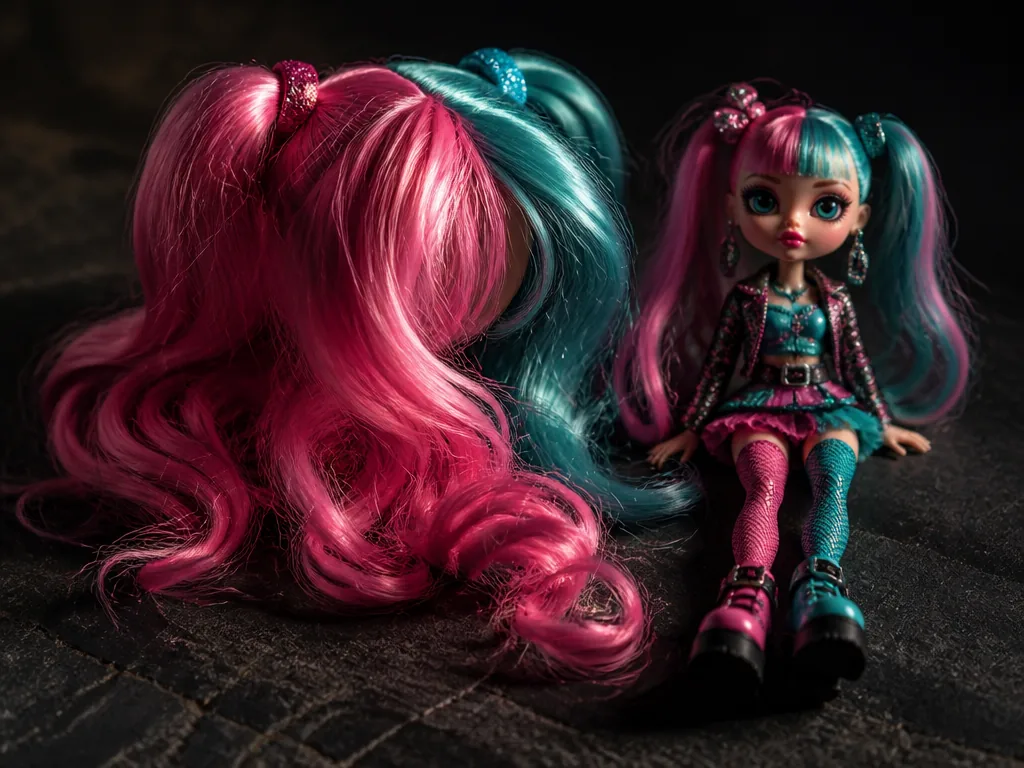
The arithmetic tells the whole story before the law does. A jury in September 2024 put the number at $71.5 million. A judge knocked it to $1 on a technicality of damages calculation. A later proceeding rebuilt it to roughly $17.9 million. Then, as of a July 2025 ruling, the same plaintiffs — Tameka "Tiny" Harris, Clifford "T.I." Harris, and their OMG Girlz music group — were told they would not collect the additional punitive amount they sought on top of it. Six years, four trials, one dollar figure sanded down at every stage. If you manage artists or advise a label, that curve is the actual lesson of this trade dress infringement fight, not the headline.
The verdict in one line: the OMG Girlz proved that MGA's L.O.L. Surprise! O.M.G. dolls borrowed protectable trade dress from their act, but the recovery landed near $17.9 million after punitive damages were denied — a win on principle that cost more in time than most brands can carry.
A disclosure up front, because it matters here: City of Punk builds a competing product in the AI-music space, so we have skin in the broader "who owns a created aesthetic" question. This piece is not about our tools. It is about what the docket shows and what it should change in how you enforce an artist-owned brand.
What most people do
Most rights holders treat a celebrity-attached brand as if the celebrity is the protection. The reasoning goes: the OMG Girlz (short for "Outrageous Millennial Girls") had a distinctive look — the hair colors, the styling, the name architecture — and a toy line arrived with visible overlap, so the case should be a formality and the damages should be enormous. Punitive-damages theory gets bolted on as a matter of course, on the assumption that a jury shown a big-company defendant will punish it.
Three assumptions live inside that instinct, and all three are shakier than they look.
- That aesthetic resemblance equals legal infringement. It does not. Trade dress protects the specific, non-functional look of a product or brand once it has acquired distinctiveness in the market. "It looks like us" is a starting point, not a verdict.
- That the first jury number is the number. In protracted IP litigation it rarely survives post-trial motions, remittitur, retrials, and appeal.
- That punitive damages are there for the taking. They require a separate evidentiary showing about the defendant's conduct and intent, and courts guard the ratio between compensatory and punitive awards closely.
The practical result of these assumptions is a lawsuit priced as a sprint and run as a marathon.
What the evidence suggests
The record from this case argues for humility about all three.
Start with the timeline, because path-dependency is the point. The dispute traces back to filings around December 2020. It reached trial repeatedly, with earlier proceedings ending in mistrial or unfavorable rulings before the September 2024 jury finally sided with the OMG Girlz on liability. That verdict — the one that produced the $71.5 million figure — was itself the fourth time the matter went before a court. The compensatory award was later reset and, after further proceedings, settled in the neighborhood of $17.9 million. The push for additional punitive money on top of that was rejected in 2025. Read the arc plainly: liability was hard to win, and the damages were harder to keep.
MGA is not an accidental defendant here. This is the company behind Bratz, which itself survived a landmark, decade-spanning ownership war with Mattel — a company that knows how to absorb litigation and outlast a plaintiff's appetite for it. L.O.L. Surprise! and its O.M.G. doll line have been enormous commercial properties, with industry recognition and sales volume that make the litigation economics asymmetric. A defendant with that balance sheet can treat six years of trials as a cost of doing business. A music act and its representatives cannot, not without a very deliberate decision to.
That asymmetry is the cost-benefit core. The OMG Girlz established that their protectable look was appropriated — a genuine precedent that a creator's aesthetic identity can carry trade dress rights into an adjacent product category. But the compensatory recovery, spread across six years of legal spend, is a different number than $17.9 million once you subtract carrying cost, contingency splits, and the opportunity cost of the litigation swallowing a chunk of a career. The evidence does not say "don't enforce." It says the value of the win compounds downward while the cost compounds upward, and punitive damages — the part most plaintiffs bank on to make the math work — are the least reliable line item.
What I actually do
If I am advising a manager, a label executive, or a brand attorney on an artist-owned property, this case rewrites the playbook in a few concrete ways.
- Register the look before the dispute exists. Trade dress rights are strongest when distinctiveness is documented early: consistent styling, dated marketing, sales tied to the specific visual signature. The OMG Girlz had to prove their look was protectable years after the fact. Build that file while the brand is live, not when a competitor's product hits shelves.
- Model the case as multi-year attrition, not a payout event. Assume mistrials, retrials, remittitur, and appeal. Price the representation, and the client's tolerance, against a three-to-six-year horizon. If the client can't fund the marathon, a smaller certain settlement often beats a larger uncertain judgment.
- Treat punitive damages as upside, never as the plan. The compensatory theory has to stand alone and be worth fighting for on its own terms.
- Weigh precedent value separately from cash. Sometimes the win worth having is the ruling itself — a defensible marker that borrowing an artist's aesthetic carries legal exposure. That has strategic value for the next negotiation even when the check disappoints.
For a large licensor eyeing a creator's distinctive look, the reciprocal lesson is blunt: the resemblance can be litigated for years and still cost you eight figures, so clear the aesthetic or license it.
Who this is for: managers and attorneys building or defending an artist-owned visual brand, and anyone deciding whether to spend real money enforcing one. Who should skip it: anyone hoping this case supplies a clean formula for what an appropriated look is worth. It doesn't.
Because that is the part still unsettled. When a product borrows the look of a music act — an identity built from performance, styling, and audience memory rather than a registered logo — how should a court actually price what was taken?
Not sure which tool to use?
Compare the top AI music and sound tools side by side — honest reviews, real pricing, no sponsorships.