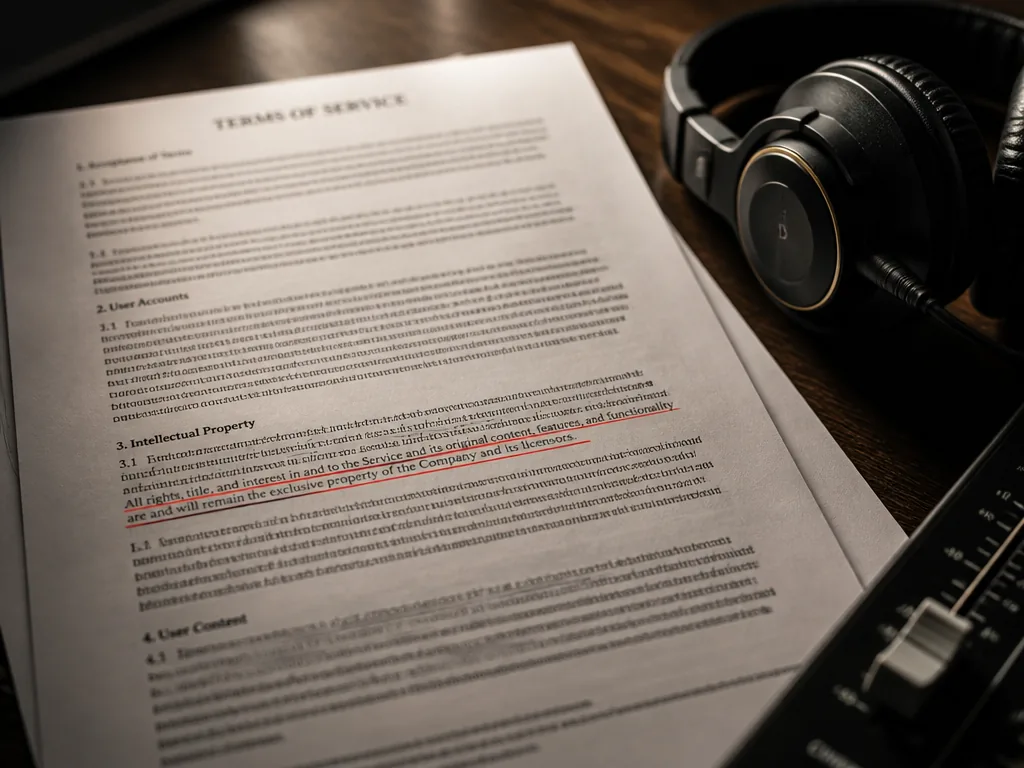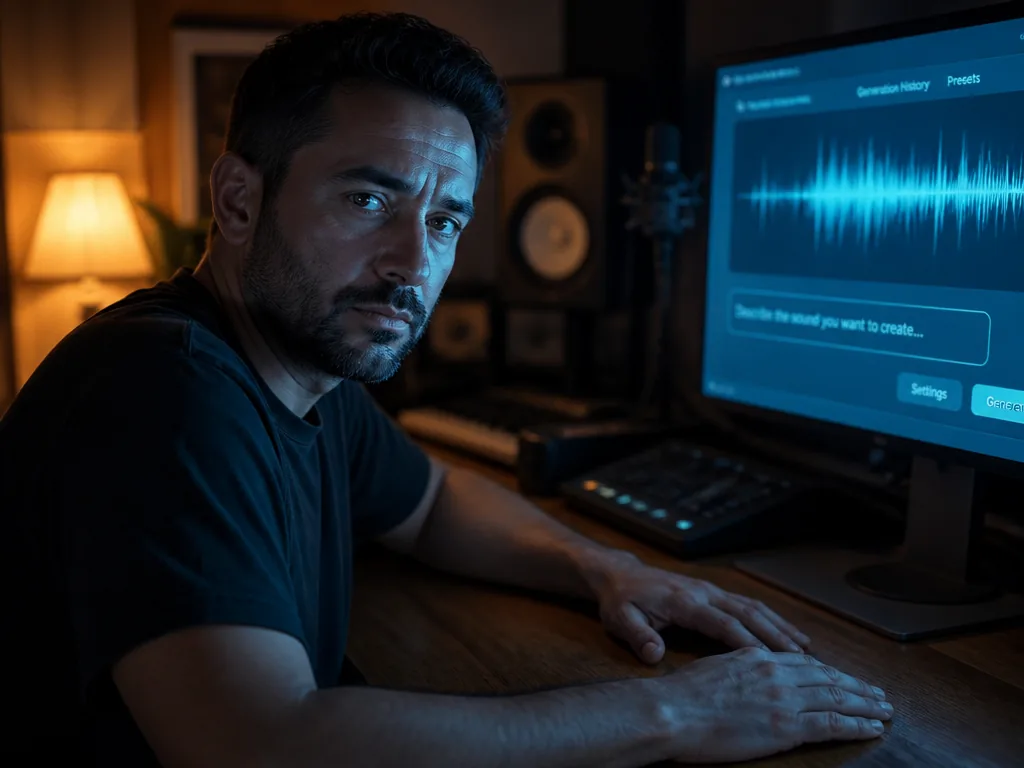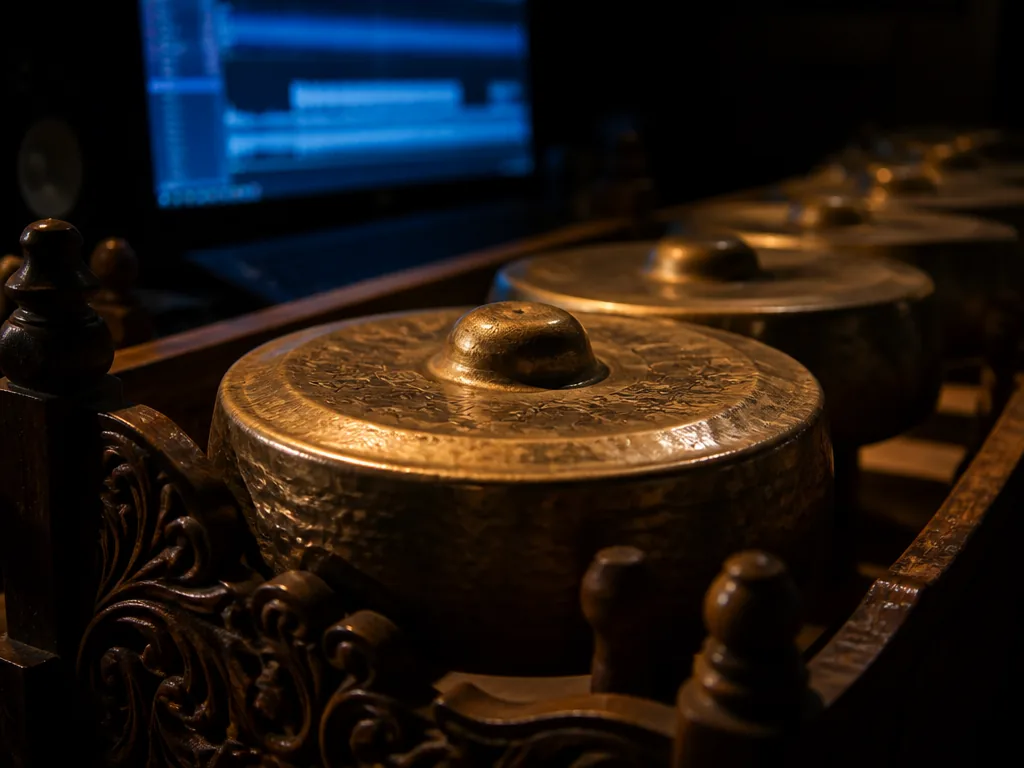
Last month I fed a generator a four-bar phrase built around an interlocking kulintang-style pattern — bronze gongs, a lilting call-and-response I'd transcribed years ago from a field recording. Ninety seconds later I had a 48kHz WAV that shimmered convincingly. Bright mallet tone, a believable swing between the two voices. Then I opened the terms of service and sat there for twenty minutes, because I could not answer a simple question: if I put this in a student showreel or a paid film cue, who owns the master?
That question — not the sound quality — is where AI music generation gets genuinely hard for anyone working in Singapore, Malaysia, or the wider region. The short verdict: today's tools can hand you a technically usable master recording, but whether you own the master rights outright, and whether a culturally-loaded output should belong to any single person at all, is unsettled — and the license fine print differs so much between platforms that "commercial use" tells you almost nothing on its own.
Full disclosure before we go further: City of Punk builds a music-generation tool, so we compete with some of what I'm about to describe. I'd rather you understand the rights question than pick us, so here's the straight version.
Two rights, and why AI blurs them
In normal music law there are two separate things. There's the composition — the notes, the melody, the underlying work, controlled by the songwriter or publisher. And there's the master — the specific sound recording, the actual audio file, usually owned by whoever paid for or created the recording. When you license a stock track, you're typically licensing use of a master someone else owns. You never own it.
AI generation scrambles this. When a model renders that gamelan-flavoured phrase, there's no session musician, no studio, no obvious "author" of the recording. So platforms handle it three ways, and you have to know which one you're dealing with:
- They assign you the output. Some tools grant you full ownership or a broad exclusive license to what you generate, master included. This is the cleanest for a composer building a catalogue.
- They license it to you. You can use it commercially, but the platform retains underlying rights, and terms can change. You're a tenant, not an owner.
- They keep it non-exclusive. The same or similar render can be handed to another user. Fine for background texture, poison for a signature theme.
None of these is universally "the good one." An educator making classroom examples has different needs than a composer scoring a feature. But if you can't tell which bucket a tool falls into from its terms, treat that as the answer.
The Southeast Asian wrinkle
Here's where it stops being a licensing footnote and becomes a real problem. Copyright assumes an author and a fixed moment of creation. A lot of the region's traditional music assumes neither. A gamelan repertoire, a dikir barat form, a kulintang pattern — these are held communally, passed down, varied in performance. There's often no single "owner" to assign rights, and no author to credit.
So when a model trained on who-knows-what outputs something that reads as Balinese or Malay or Peranakan, two things are true at once. Legally, the platform may cheerfully assign you the master. Ethically, you may be holding a recording that borrows the grammar of a tradition that no contract on earth had the standing to sign away. The law being quiet here is not the same as the question being settled.
I'm not telling you never to use these outputs. I'm telling you the ownership certificate a platform issues does not resolve the custodianship question, and pretending it does is how people get burned — reputationally more than legally, in this region.
How I'd decide before committing a tool to real work
These are the criteria I actually check, in order:
- Master ownership clarity. Does the license say, in plain language, that you own or hold an exclusive license to the output master? "Full commercial use" is not the same as ownership.
- Exclusivity. Can the same render go to another user? For a theme you'll build a brand around, non-exclusive is disqualifying.
- Terms-change risk. If your rights depend on an active subscription, what happens to work you already released when you cancel? Read the survival clause.
- Export formats. 48kHz WAV and stems, or a lossy mixdown only? Without stems you can't re-balance a cue for picture, and you're stuck with the model's mix decisions.
- Provenance disclosure. Does the platform say anything about training data? Silence is common and tells you to be cautious with culturally specific outputs.
The red flags, side by side
| What the terms say | What it usually means | When it burns you |
|---|---|---|
| "Royalty-free for commercial use" | A license, not ownership | You never fully own your signature theme |
| "You own your generations" | Assignment of the master to you | Rare; read whether it survives cancellation |
| "Non-exclusive license" | Others can get the same output | Branding, sync exclusivity deals |
| Nothing about training data | Provenance unknown | Culturally sensitive or contested material |
| Rights tied to active plan | Rent, not ownership | You cancel, released work goes dark |
Who this is for, who should skip it
If you're a composer building a catalogue you'll license onward, you need a tool that assigns you the master exclusively — most don't, so vet hard. If you're an educator generating quick examples to teach arrangement or texture, licensing terms matter less and non-exclusive is fine; the ethical framing matters more, because your students copy your posture toward these tools.
Skip AI generation entirely for anything meant to represent a living tradition to an audience as that tradition. Not because the render is bad — mine was lovely — but because a master you legally own is not the same as a story you have the right to tell.
That kulintang render is still on my drive. Unreleased. Legally I could probably use it tomorrow. I keep not doing it, and I've stopped pretending that hesitation is superstition.
Which leaves the question I can't answer, and neither can the terms of service: when a machine convincingly speaks a tradition that no single person owns, whose permission were we ever supposed to ask?
Not sure which tool to use?
Compare the top AI music and sound tools side by side — honest reviews, real pricing, no sponsorships.