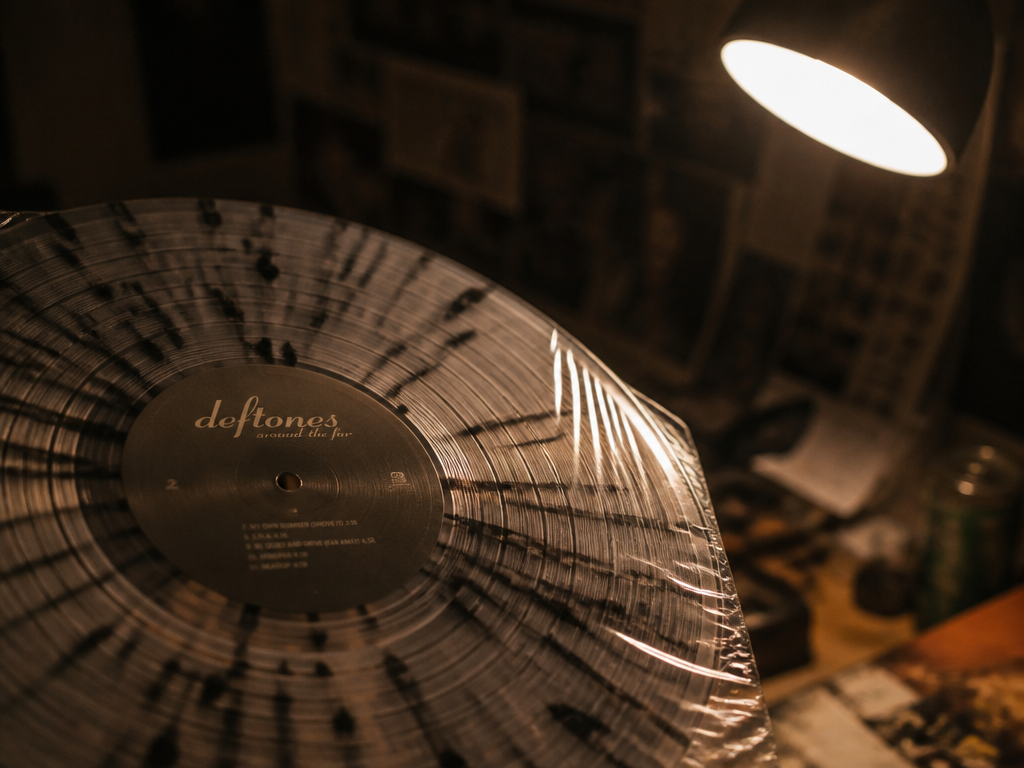
Last spring a friend who runs a 200-capacity post-punk label sent me a 40-second clip: a fan, somewhere in Leeds, peeling the shrink off a clear-with-black-splatter LP, tilting it under a desk lamp, narrating in a half-whisper like she was defusing something. That clip did more numbers than the lead single. The record itself — eleven tracks, mixed beautifully, 48kHz throughout — sat quietly on streaming while the opening of the box went around twice.
That gap is what this piece is about. Physical music packaging has become the thing every distro panel, every label deck, every merch consultant agrees on: make the object special and the fans will pay, stay, and evangelize. I believe a version of that. But I've watched the belief harden into doctrine, and the doctrine is repeated with far more confidence than the evidence underneath it actually earns. So before you spend half your pressing budget on a foil-stamped slipcase, it's worth asking where this conviction came from — and how much of it holds.
Where the gospel comes from
Rewind to the vinyl revival's awkward adolescence, roughly the mid-2010s. Pressing plants were backlogged, an LP cost a fan three times what an album once did, and the industry needed a story to justify the price. The story it found was the object. Not a delivery format for songs — songs were free now, more or less — but a thing you held, shelved, displayed.
From there the logic compounded fast. Record Store Day trained a generation of collectors to chase variants. Color pressings became standard, then numbered editions, then the deluxe box with the art book and the litho print. Then came the superfan bundle: artist signature, exclusive track, a tote, a zine, shipped direct so the label kept the margin instead of handing it to a platform. Each step got cited as proof the last one worked.
And the proof is real, in places. There are documented releases where direct-to-fan bundles drove a meaningful chunk of first-week physical sales — enough that chart bodies started writing rules about how bundles count. Labels saw the line on the spreadsheet go up and drew the obvious conclusion.
Here's the thinness. A handful of those wins — a few breakout artists with rabid, organized fanbases and a moment of cultural heat — became the general principle recited to everyone. The case studies were specific: this band, this audience, this timing. The lesson extracted was universal: packaging drives loyalty and revenue, full stop. That leap is where I get nervous. A strategy that printed money for an artist with a Discord of 30,000 devotees does not automatically scale down to your synthwave project with 1,800 monthly listeners. The mechanism might transfer. The numbers absolutely do not.
Does packaging actually increase music sales?
Sometimes, for specific reasons, and not in the way the pitch decks imply. Packaging doesn't create demand — it converts and deepens demand that already exists. A beautiful gatefold won't make a stranger care about your record. But for someone already on the fence, a distinctive, scarce, well-made object can be the thing that turns a stream into a purchase, and a purchase into a person who shows up next time. The effect is strongest where the fanbase is already emotionally invested and the edition is genuinely limited. It's weakest when packaging is treated as a magic trick performed on an audience that isn't there yet.
So the honest framing isn't "packaging sells records." It's "packaging is a lever you can pull on the fans you already have." That's a smaller claim. It's also a true one, and it changes how you spend.
The three mechanisms that actually hold up
Strip away the cargo-cult stuff and three things survive scrutiny.
The object as identity marker. People don't buy vinyl to listen — most own a record before they own a turntable. They buy it to signal. The LP on the shelf says something about who they are, the same way a band tee does. This is the most durable mechanism, because it's about the buyer's identity, not the music's convenience. Packaging that makes a strong, specific visual statement — a recognizable palette, a tactile cover, a spine you can read across a room — is packaging that does identity work.
Scarcity that's real. Numbered editions, one-time color runs, "when it's gone it's gone" — these work because they're honest constraints, not marketing theater. The moment fans sense manufactured scarcity (the "limited" edition that gets repressed twice), the spell breaks and it curdles into resentment. A run of 300 hand-numbered records is scarcity. A "limited deluxe" you can reorder any time is a sticker.
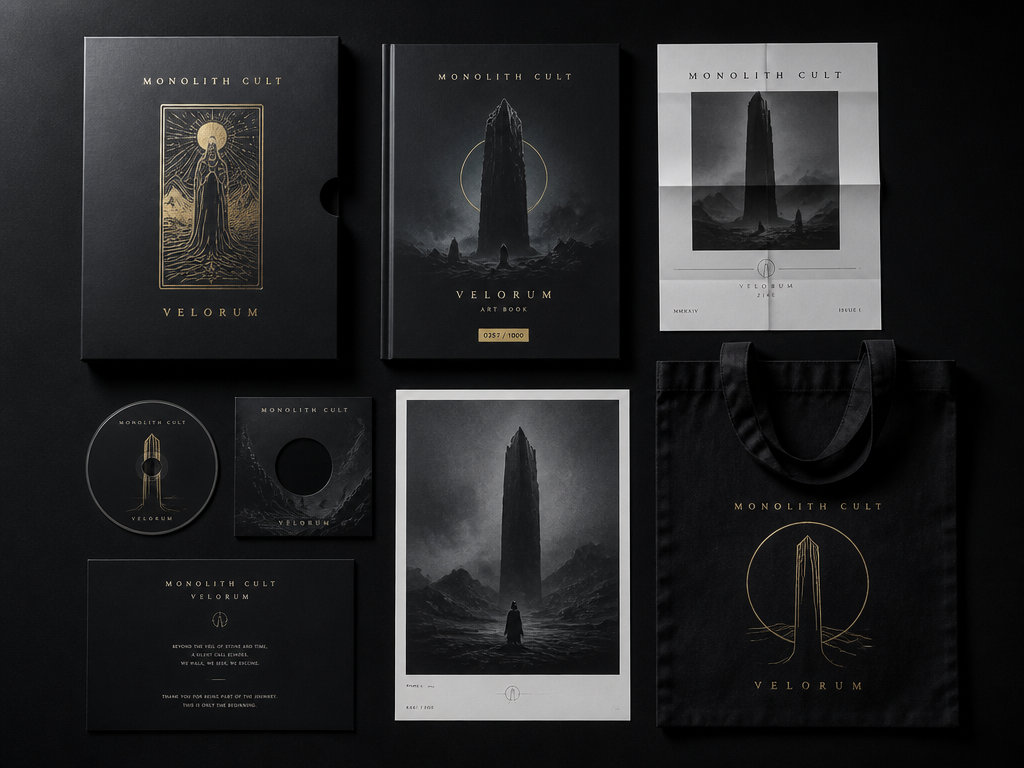
Packaging as part of the listening ritual. This is the one I'd defend hardest as a sound person. The act of sliding a record out, dropping the needle, reading the sleeve while side A plays — that's not nostalgia, it's attention architecture. The packaging slows the listener down and asks them to commit. A download can't do that. A well-designed physical release engineers a more attentive first listen, and attentive first listens are how records become favorites.
What to spend on, what's theater
If you're a label manager or self-releasing artist with a finite budget, here's how I'd triage it. This isn't gospel either — it's where the mechanisms above point.
| Spend here | Skip or minimize | Why |
|---|---|---|
| One striking visual decision (color, format, die-cut) | Five mediocre "premium" touches | One bold choice reads across a feed; five small ones read as nothing |
| Genuine, honest scarcity (numbered runs) | Vague "limited edition" with no number | Fans can smell manufactured scarcity |
| A reason to open it on camera | Generic inserts no one films | The unboxing is your free distribution |
| Audio that only lives in the package | A QR code to the same Spotify everyone has | Exclusivity has to be exclusive |
| Accurate weight/shipping math up front | Surprise postage that kills the cart | A €9 shipping shock undoes the whole emotional sell |
The pattern: spend on the one thing a fan will photograph, the scarcity they can verify, and the content they can't get elsewhere. Everything else is texture, and texture is cheap to overdo.
The part where sound comes back in
Notice that the strongest move in that table — audio that only lives in the package — is the one most artists waste. The "exclusive track" usually turns out to be a rough demo or a live take, which is fine, but it's not designed for the format.
Treat the package as a place to put a piece of sound that exists nowhere else and was built for this specific moment. A locked groove at the end of side B. A 90-second ambient piece keyed to the album's art — the same detuned pads, the same room tone — that plays while the buyer reads the sleeve. A hidden download for a beatless, slowed reworking of the single at, say, 60 BPM, the kind of thing that lives on a fan's late-night playlist and nowhere on streaming.
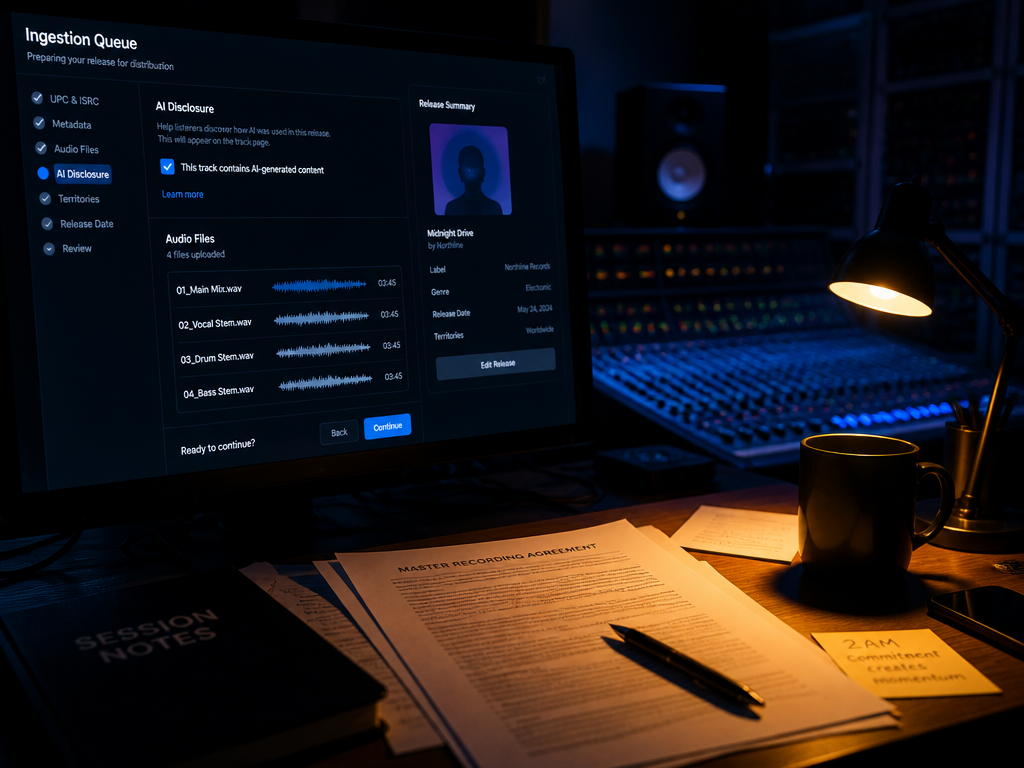
This is where neural tools earn their place rather than just generating filler. If you need original, clearance-free audio to fill a package — an intro sting, an alternate ambient version, a textural bed under spoken liner notes — generating it through something like City of Punk gives you something you own outright, with no sample to clear and no other release it's tied to. That last part matters: the value of package-exclusive audio collapses the second it shows up somewhere else. AI-generated stems make genuine exclusivity cheap to produce, which is exactly the thing the format rewards. (And yes, prompt-roulette is real — you'll render three mushy ambient pieces before one sits right under the liner-note voiceover. Budget the time.)
What this looks like in my own practice
I press my own releases in runs of a few hundred. The thing I do — not advice, just the logic above lived out — is generate one short piece of audio per release that exists only on the record's bandcamp download code, never on streaming, never repressed. Last time it was a 47-second loop in the same key as the closing track, built from a single mangled field recording of my apartment's radiator, run through one of my four broken synths and then through a neural model to smear it into something I couldn't have played by hand.
Twelve people have ever heard it. All twelve bought the record. I have no chart to show you and no 40% data point to wave around — only the quiet, unscalable fact that the object did the one job the doctrine promised it would, on the smallest possible scale, for reasons I can actually name.
The packaging isn't the product. It's the part of the product that remembers who showed up.
Not sure which tool to use?
Compare the top AI music and sound tools side by side — honest reviews, real pricing, no sponsorships.