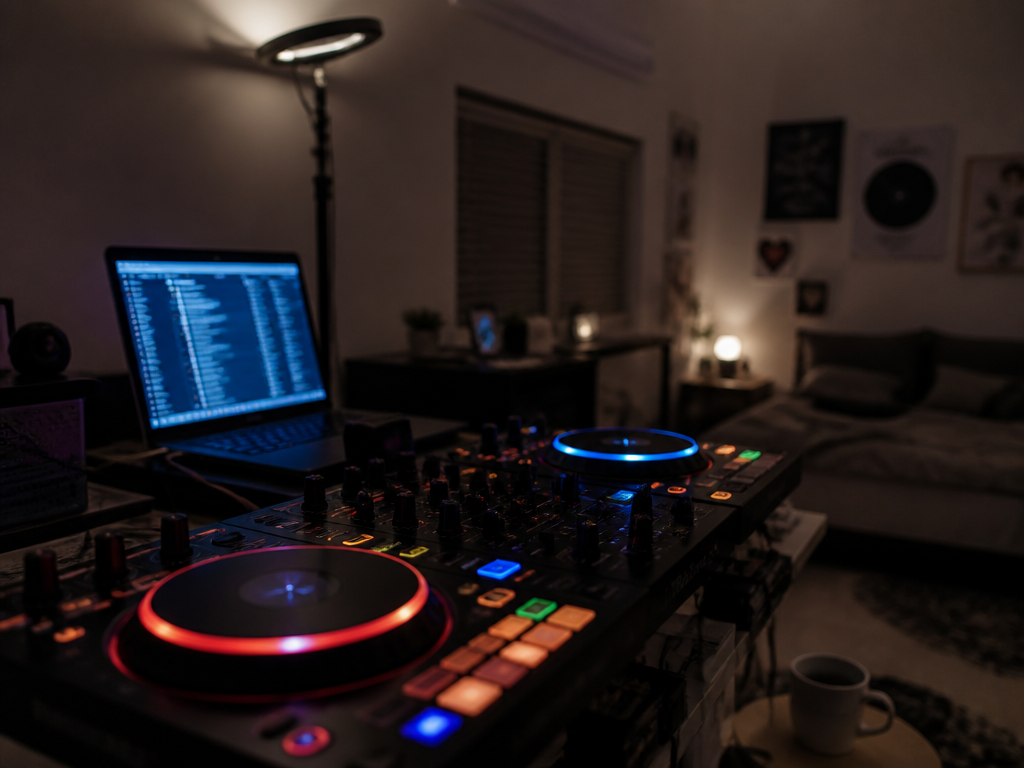
A producer I know went live last month from a spare bedroom in Leeds — two controllers, a ring light pointed at the ceiling because direct light washed her out, and a set of unreleased edits she'd been too nervous to put on a release. Peak concurrent viewers: eleven. By the next morning she had forty new followers and a label A&R in her DMs who'd been lurking. Eleven people. The math only works because the platforms underneath her stream are now built to catch exactly that overflow.
That is the quiet story behind the wave of partnerships pairing SoundCloud-style catalogs with live-streaming homes like Twitch. The headline reads "DJ performance series." The mechanism underneath is a funnel, and it runs in a specific order. If you make electronic music and you're deciding where to point your decks this season, it's worth understanding that order before you give a platform your Friday night.
What's actually happening when two platforms "team up"
The most common question DJs ask about these partnerships is plain: does it mean anything for me, or is it a logo on a press release? The honest answer is that it means something only if you understand it as a pipe, not an event. Step one, a catalog platform — the place your tracks already live and earn — connects to a live-streaming platform where attention is cheap and real-time. The partnership's whole job is to let a moment of live attention flow back into a permanent place where it can become follows, plays, and eventually distribution. Everything else is decoration.
So let's walk the pipe in causal order, because the order is the point.
First: the catalog meets the live audience
A streaming catalog is a slow asset. Your tracks sit there earning fractions of a cent, found mostly by people already looking for you. Live performance is a fast asset — high attention, zero shelf life. The second the stream ends, that energy evaporates unless something captures it.
The first thing a partnership does is bolt those two things together so a live viewer can become a catalog listener without leaving the building. A "go listen to the full track" button under a live mix. A profile link that lands on your releases instead of a dead end. It sounds small. It's the entire reason a platform spends money here: live is the cheapest way to manufacture the discovery moment that catalog platforms otherwise have to buy through playlisting and ads.
Next: the funnel converts attention into a relationship
Once the plumbing exists, the conversion starts, and it follows a predictable path. A viewer drops in mid-set — say a 138 BPM hard-techno roller with a kick that's doing most of the emotional work. They stay because live mixing is genuinely watchable: the hand on the filter, the moment a transition either lands or doesn't. That's the hook the recorded file can't offer.
From there the funnel asks for one cheap action — a follow, a chat message, a click to the track. Each one is a smaller commitment than buying or saving, which is exactly why it converts. The platforms know that a follow during a live moment is worth more than a passive algorithmic impression, because it carries intent. The person chose you while watching you work.
This is where the genre specifics matter. The styles that travel best on live streams are the ones built for endurance and mixing — hard techno, UK garage, drum and bass, the long-form four-to-the-floor stuff that rewards a two-hour session. A three-minute pop song doesn't need a live stream; a DJ set is the live stream. That's not an accident of taste. It's why electronic music keeps showing up at the center of these deals.
After that: the data closes the loop
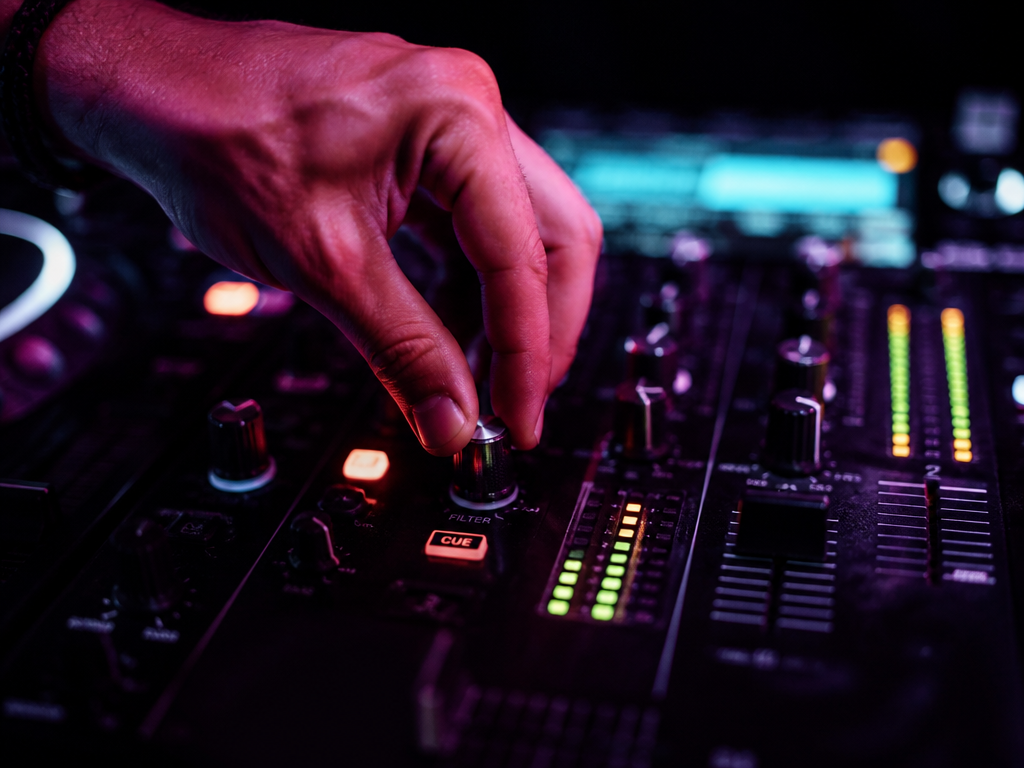
Here's the step most coverage skips. Once viewers convert, the platform learns. Watch time, retention curves, which BPM ranges hold a chat, which genre tags spike on a given night — all of it feeds back into how the platform promotes the next stream and which performers it pushes.
For you, that feedback is the actual prize and the actual trap. The prize: if your numbers are good, the system surfaces you to more people without you spending on ads. The trap: the system rewards what it can measure, which is duration and consistency, not necessarily the weird, brilliant set you'd play in a basement at 2 a.m. The DJs who win these series tend to be the ones who can show up weekly and hold a room, not only the ones with the best record bag. Treat the live slot as a recurring shift, not a gig.
Last: the competitors start bidding
The reason any of this is happening now is the final step in the chain — and it's where the story stops being about one partnership. Live-streaming talent has become contested. Kick has spent its way into the conversation by offering creators terms the incumbents historically wouldn't, and that pressure forces everyone else to make their live offering more attractive to performers. Partnerships are part of that response: a catalog platform that can promise distribution plus a live home is offering a DJ something a pure streaming site can't.
So when you see two music platforms link up around DJ streams, read it as a defensive move as much as an opportunity. They are competing for you because live performers are now the scarce input — the thing that makes a platform feel alive instead of like a vending machine. That's leverage, and most independent artists don't realize they're holding it.
What to check before you give a platform your night
A series invitation or a "go live and get featured" prompt is worth taking. It's also worth reading like a contract, because functionally it is one. Before you commit a recurring slot:
- Rights on the stream and the VOD. What can the platform do with the recording afterward, and for how long? Terms vary and change — read the current version, not the one a forum quoted in 2022.
- The link-out. Does your set actually drive viewers to a profile that converts, or to a dead page? If there's no clean path from live moment to your catalog, the funnel is broken and you're doing free promotion for the platform.
- Sample and track clearance. If you're spinning other people's masters, you carry the same clearance risk live that you would on a release. Content-matching systems run on live audio too. Original or properly licensed material — including AI-generated stems you actually own the rights to — is the only version of this that scales without a takedown.
- Featuring is editorial, not contractual. "We'll feature top performers" is a promise about a decision someone makes later. Build for the retention numbers that earn the feature, not the feature itself.
If you're short on original material to play and you don't want a clearance headache, this is one place a tool like City of Punk earns its keep — generating loops and stems you can mix live and keep, no sample-clearance ghost following the VOD around. But the rule holds with any source: own what comes out of your speakers.
The honest read
These partnerships are not a favor to artists and they're not a scam. They're a land grab for the one input platforms can't synthesize — a person who can hold a room in real time. The mechanism rewards consistency, original material, and a clean path from the live moment back to your catalog. Understand the pipe and you can use it. Ignore it and you're free labor making the pipe look full.
Rule of thumb for tonight: go live with material you own and a link that lands somewhere real, or don't go live at all.
Not sure which tool to use?
Compare the top AI music and sound tools side by side — honest reviews, real pricing, no sponsorships.