Six weeks apart, I rendered the same eleven words through the same synthetic voice — a station ID for a friend's interview podcast — and the second render came back different. Not dramatically. The small breath before the first syllable was gone. The sibilance on "sessions" sat maybe 2 dB hotter around 7 kHz, enough that my de-esser started working harder for the same result. And the whole read ran about 180 ms shorter, which broke the bed music edit underneath it.
Nothing in my prompt had changed. The vendor had shipped a model update. And the reason speech vendors are shipping updates at this pace has close to nothing to do with podcasts. It has to do with voice AI adoption inside large organizations: the system integrators, managed service providers, and consultancies now buying synthetic speech by the seat.
What enterprise voice AI adoption actually means
It means a large company is replacing typed and scripted interactions with spoken ones, at volume. In practice that lands in a short list of places: the internal service desk, where an agent answers "I'm locked out of my laptop" without a ticket; customer-facing IVR, where the goal is deflecting calls before they reach a human; training and compliance narration, where a course gets re-voiced in nine languages without booking a studio; knowledge-base read-back, where a document is spoken rather than displayed; and accessibility, where read-aloud is a procurement requirement rather than a nice extra.
None of that is creative work. All of it is high-volume, low-variance, and measured in cost per contained interaction. That measurement is what shapes the models — and, downstream, the voices you and I get to use.
Why the integrators are buying instead of building
The large service providers figured out something early: training a competitive speech model is not their business. Their business is sitting inside a client's operations, knowing which of the client's twelve ticketing queues actually matters, and running the thing for five years. So rather than staffing a research team, they license the model and sell the integration.
What's changed more recently, as of writing, is the depth of the tie. Several integrators have moved past reselling into taking equity positions in the speech companies themselves — participating in funding rounds alongside the venture firms. That's a different relationship than a reseller agreement. A reseller can swap vendors at renewal. An investor has a balance-sheet reason to standardize on one voice stack across hundreds of client deployments, and a seat close enough to the table to ask for features.
The features they ask for are legible if you read the product changelogs sideways. Lower streaming latency, because a half-second gap in a phone conversation feels like a dropped call. Broader language coverage, because the deployment is in Manila and Kraków and São Paulo. Tighter pronunciation control, because the client's product names are not English words. Audit logging, because someone in legal needs to know which voice said what to a customer in March.
What that lands on your timeline
Here's where it stops being industry news and starts being your Friday.
Models get tuned toward conversation, not performance. A model optimized to start speaking within a few hundred milliseconds is making tradeoffs — usually against the long-range prosody planning that makes a 90-second narration feel like it has an arc. The fast model and the expressive model are frequently not the same checkpoint, and the fast one gets the roadmap attention because that's where the revenue is.
Voices get retired. Enterprise contracts include deprecation notices; your hobby-tier account may get an email or may get nothing. If a client approves a voice for a series and that voice is gone in eight months, the mismatch is yours to explain.
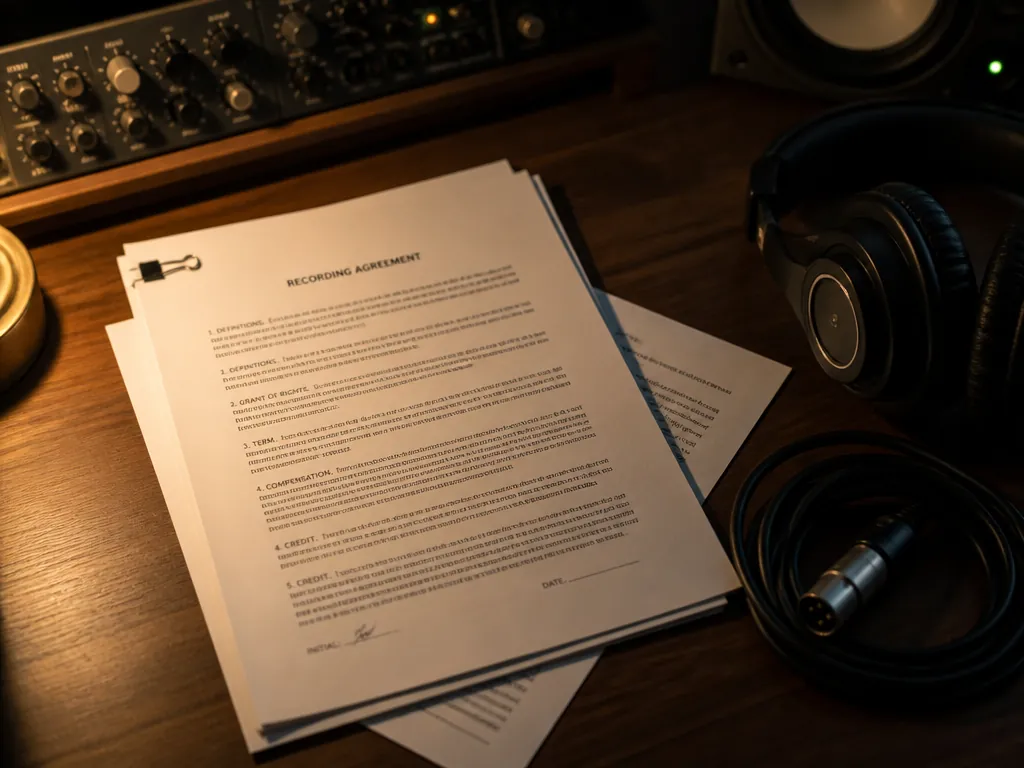
License tiers are written for headcount. Enterprise terms are negotiated per seat, per character, per minute, with indemnification attached. The self-serve tier you're on is a simplified derivative of that, and the simplification is where ambiguity lives — particularly around whether output can appear in a product you sell, versus content you publish.
Renders drift. My 180 ms is a single observation from one session, not a benchmark. But it's the kind of thing that only shows up if you keep the original file and compare.
Before you put a synthetic voice in a deliverable
A short pass, worth doing once and then reusing as a template:
| Question | Why it bites later |
|---|---|
| Which model ID and version, on what date? | "The default voice" is not a reproducible spec when the default changes |
| Does the license cover the product you're shipping into — game, ad, client work, resale? | Publishing rights and product-embedding rights are often different tiers |
| What happens to this voice if the vendor retires it? | Series consistency depends on the answer |
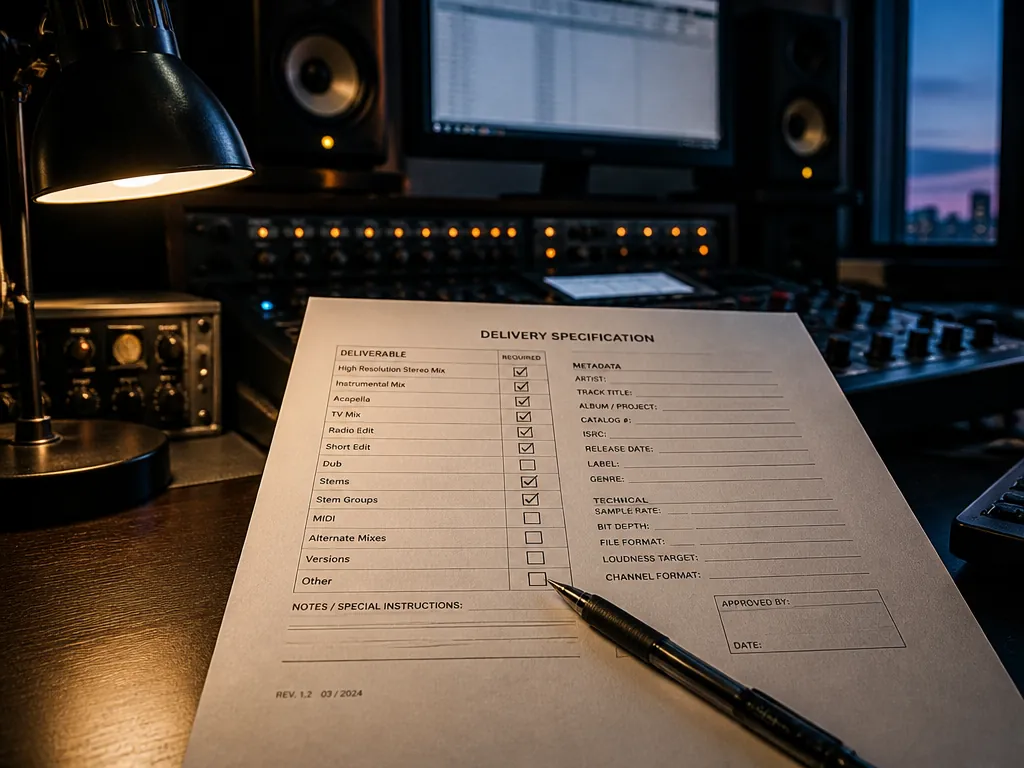
| What's the delivery format — 48 kHz WAV, 24-bit, or a 128 kbps MP3 upsampled? | Compression artifacts stack badly under music beds |
| Is attribution required, and where? | Some tiers require credit that a client's brand team will refuse |
| Have you archived the rendered WAV, not the prompt? | The prompt is not the asset. The file is the asset |
That last row is the one I'd tattoo on something. Prompts are not reproducible across model versions. Files are. When we test voice tools at City of Punk, the model ID and the render date go in the filename before anything else happens.
What the money buys, sonically — and what it doesn't
It buys real things. Prosody on declarative sentences has genuinely improved; the flat, evenly-stressed read that gave away text-to-speech a few years ago is mostly gone from the top tier. Disfluencies — a breath, a slight hesitation before a clause — are modeled now rather than pasted in. Sub-second streaming works. Language coverage is wide enough that re-voicing a training module in nine languages is a Tuesday rather than a project.
It does not buy the things a lot of us actually need. Singing is still hard, and where it works it works narrowly. Character work — a voice that's tired, or lying, or seventeen — is inconsistent enough that you'll roll the render four or five times and pick. Anything that needs to be sonically strange is out of scope entirely, because "strange" is a defect in a call-center deployment and a feature in a game. Every hour of tuning that goes into making a voice sound reassuring to someone locked out of their laptop at 2 a.m. is an hour not spent on making a voice sound like it's about to cry.
That isn't a complaint about the vendors. Service-desk deflection is where the money is, and it's honest work. But if you're waiting for enterprise budgets to drag synthetic speech toward expressive performance, the incentive gradient points the other way. The expressive tools tend to come from smaller shops with narrower distribution and shorter runways — which is its own risk when you need a voice to still exist in a year.
Back to the station ID
I kept the second render. It was cleaner, honestly — the missing breath was one less thing to gate, and the hotter sibilance took a 1.5 dB notch at 7.2 kHz and behaved. I re-cut the bed music to the new length in about four minutes and the episode went out at -16 LUFS integrated like every other one.
What I changed was upstream. Every synthetic render now gets archived as a 48 kHz WAV with the model name and date in the filename, and any voice going into a series gets an A/B against the archive before the next episode. That's not sophisticated. It's the version-control habit that mixing engineers have had for decades, applied to a dependency that updates without asking.
The question I can't answer, and haven't seen anyone measure well, is whether this drifts in a direction. If the dominant training and tuning signal for commercial speech models is enterprise conversation — service desks, IVR, compliance narration, all of it optimized for clarity and reassurance and containment — do the voices slowly converge on that register? Does expressive range narrow as deployment scale widens, or do the two live in separate model families indefinitely? I have one station ID and one delta in one direction. That is an anecdote, not a trend.
Keep your files. The prompt won't tell you what changed.
Not sure which tool to use?
Compare the top AI music and sound tools side by side — honest reviews, real pricing, no sponsorships.