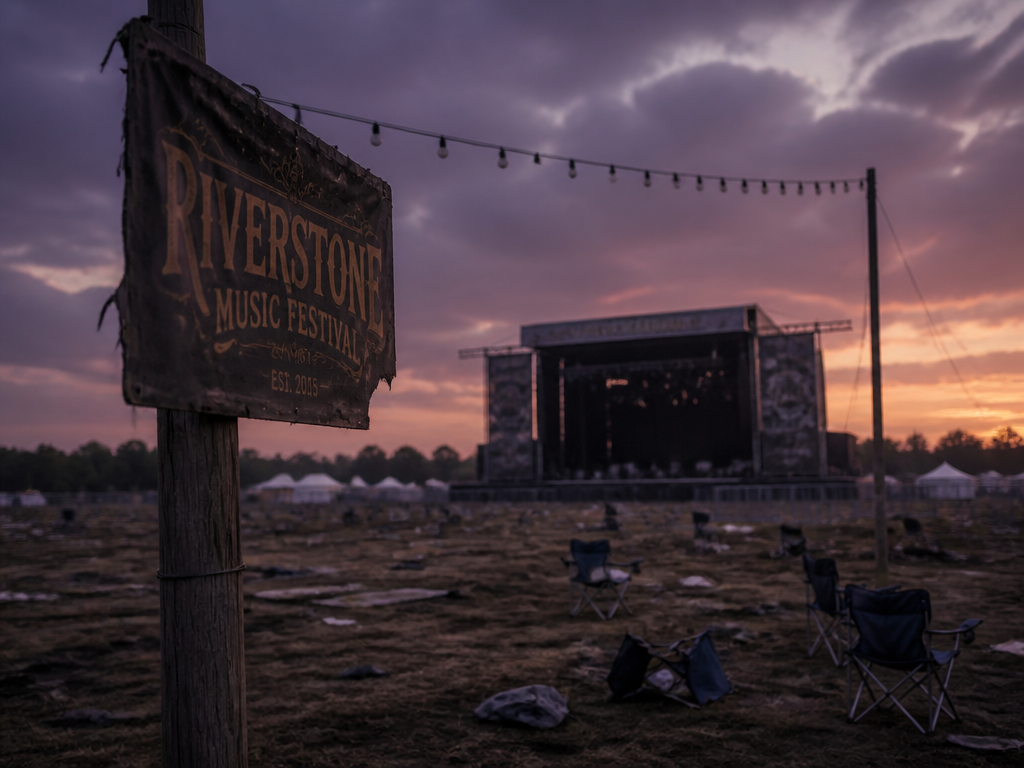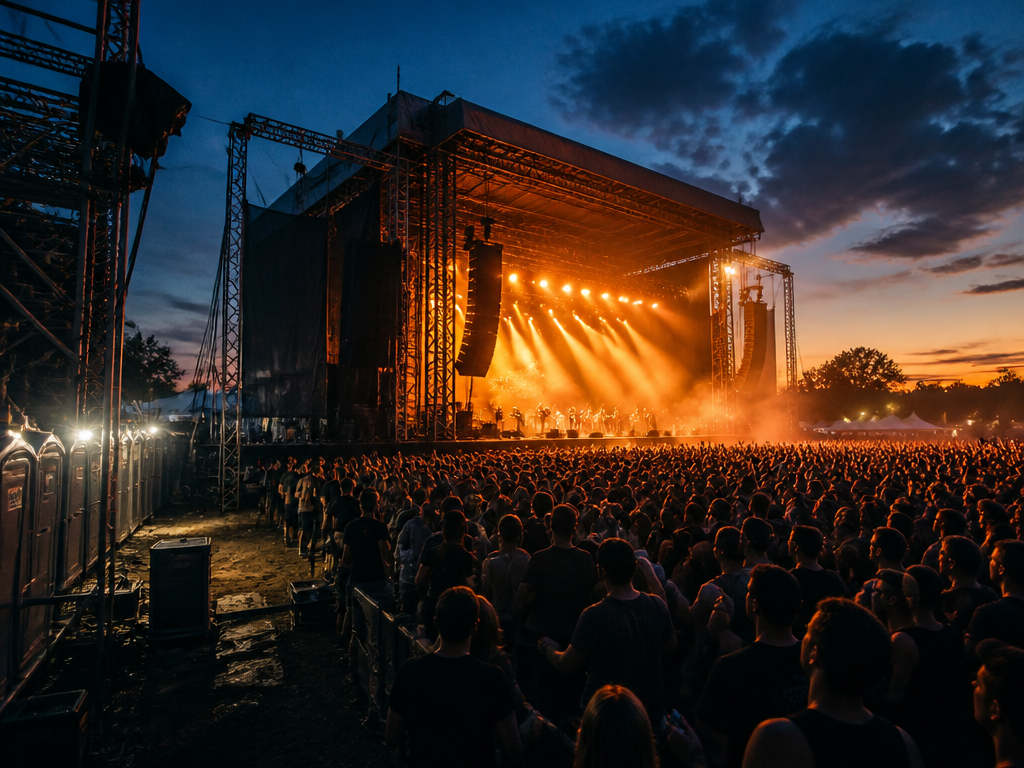
A benefit festival sells a ticket for, say, $150. By the time the cause sees money, the line on the press release reads "net proceeds." Somewhere between that $150 and the check that lands at a non-profit sits the staging, the insurance, the artist guarantees, the security, the porta-johns, the sound rig. Nobody puts that subtraction on the poster. So when a headline tells you a festival's proceeds go to a good cause, the honest first question is the same one a sound designer asks about a render: what's actually in there, and what got cut?
Music festivals built around a cause have become one of the more durable formats in live music, and the cause-driven, often female-led version of it is multiplying. Before you celebrate or dismiss any of them, it's worth sitting with the one number that does the most work in these announcements — "net proceeds" — and being clear about what it measures, what it doesn't, and what these events leave behind long after the last set.
What "net proceeds" actually measures
Net proceeds is gross revenue minus the cost of producing the event. That's the whole definition, and it's both honest and slippery. Honest, because a festival genuinely cannot give away money it spent on the stage that made the festival possible. Slippery, because "cost of producing the event" is a category with soft edges, and the percentage that survives to a non-profit varies enormously from one festival to the next.
The number that reaches a cause depends on choices made months earlier. Did the headliners waive or reduce their fees? Did the venue donate the space or charge market rate? Did a sponsor underwrite the production so that ticket revenue could pass through cleaner? A festival where artists play for scale and a brand covers staging can route a large share to its non-profit partners. A festival paying full guarantees on a commercial site can do real good and still send a modest slice downstream. Both can truthfully say "net proceeds go to non-profits." The phrase tells you the direction of the money, not the size of the flow.
This is not an accusation. It's the structure of the thing. The useful posture is the appreciative one that still reads the footnotes: glad the money moves, curious about how much.
Why the cause-driven, women-led model keeps spreading
There's a recognizable lineage here. Female superstars have spent the last decade attaching their drawing power to specific funds and organizations rather than vague goodwill — Shakira's long-running education work, Billie Eilish folding climate action into her touring, Ariana Grande's mental-health partnerships. When Olivia Rodrigo announces a festival with an all-women lineup and net proceeds directed to non-profits, she's not inventing a category. She's joining a pattern that artists keep choosing because it works on more than one axis at once.
The appeal is straightforward when you lay it out. An all-women or women-forward bill corrects a booking imbalance that festival lineups have been criticized for years for ignoring. The cause attachment gives the event a reason to exist beyond the calendar. And the artist gets to convert attention — the most volatile currency in music — into something with a paper trail. The model spreads because it solves a real problem for everyone in the room: the cause gets funded, the under-booked artists get a marquee, and the fans get a day that feels like it counts for something.
What makes this version more interesting than older benefit-concert formats is the deliberateness. These aren't one-off all-star jams thrown together after a disaster. They're recurring brands with named partners and a curatorial point of view. That's a sturdier structure, and a sturdier structure is what turns a single good night into something that compounds.
What the number can't see
Here's where "net proceeds" stops being the right yardstick. The dollar figure that reaches a non-profit is real, but it's the smallest of the things a festival like this actually moves.
It can't measure the booking precedent. When an artist with leverage insists on a lineup of women and the festival sells out anyway, every promoter who said that bill "wouldn't draw" loses the argument. That shift doesn't show up on a donation check, but it changes who gets the next slot at the next festival that has nothing to do with charity.
It can't measure visibility for the cause itself. A non-profit's name on a mainstage screen in front of tens of thousands of people, plus the press cycle around it, is worth something that no line item captures — and occasionally worth more than the cash. Awareness is a notoriously bad thing to quantify and a real thing to receive.
And it can't measure the audio footprint. This is the part most coverage skips, and it's the part that outlasts everything else.
The thing a festival leaves in the world
Walk the back-of-house at any festival and you'll find more recording rigs than you'd expect. Multitrack captures off the front-of-house console. Ambient mics for the crowd wash. Drone and B-roll audio for the recap film. A festival doesn't just happen and dissolve; it generates assets — and those assets have a second life in trailers, recap reels, sponsor edits, and the social clips that do most of the cause's actual recruiting.
This is where the romance meets the paperwork, and where a lot of well-meaning editors get burned. The fact that a performance was part of a charity event grants you exactly zero rights to its recording. The live capture of a set is a sound recording with its own owner, layered on top of a composition with its own publisher, performed by artists with their own agreements. "It was for a good cause" is not a license. Neither is "I credited them."
If you're a video editor cutting the recap, a podcaster scoring an episode about the event, or a producer who wants the energy of a packed field under your own track, the safe move is to treat festival audio the way you'd treat any commercial sound recording: assume it's cleared by nobody until someone hands you terms in writing.
A short field guide for using festival-adjacent sound
- Crowd ambience you record yourself, in a public area where recording is permitted, is generally yours to use — but read the ticket back; many events claim a recording license over attendees by entry.
- Any audio off the stage or the board belongs to the artists, labels, and publishers involved. You need a sync and master license to use it, even in a non-profit edit.
- The recap film's music should be either original, properly licensed library music, or a track you commissioned. "Inspired by the headliner's set" is a fast way to a takedown.
- For the texture without the liability, generate it. A festival's sonic signature — a four-on-the-floor kick at 124 BPM, a wide synth pad, a roaring crowd layer, an anthemic build — is a recipe, not a copyright. Tools like City of Punk's generator exist precisely so you can render that energy as a 48kHz WAV with stems you actually own, instead of risking a board recording you don't.
That last point matters for exactly the people these festivals are trying to help. A small non-profit cutting its own thank-you video on no budget cannot afford a sync clearance and cannot afford a strike either. Original or properly licensed sound is the unglamorous infrastructure that lets the cause keep telling its story after the stage comes down.
Back to the number
So we return to "net proceeds," the phrase that opened this. It's a true number and a narrow one. It tells you money moved toward something worth funding, which is more than most entertainment can claim and worth being glad about. But it measures the cash and misses the rest — the lineups it makes thinkable, the organizations it makes visible, and the hours of audio it leaves behind to be reused, recut, and, too often, lifted.
The festivals doing this well understand that the donation is the headline and the footprint is the legacy. Judge them by the check if you want a number. Judge them by what they make normal — on the bill and in the edit bay — if you want the truth.
The proceeds are net. The impact, if anyone's doing it right, is gross.
Not sure which tool to use?
Compare the top AI music and sound tools side by side — honest reviews, real pricing, no sponsorships.