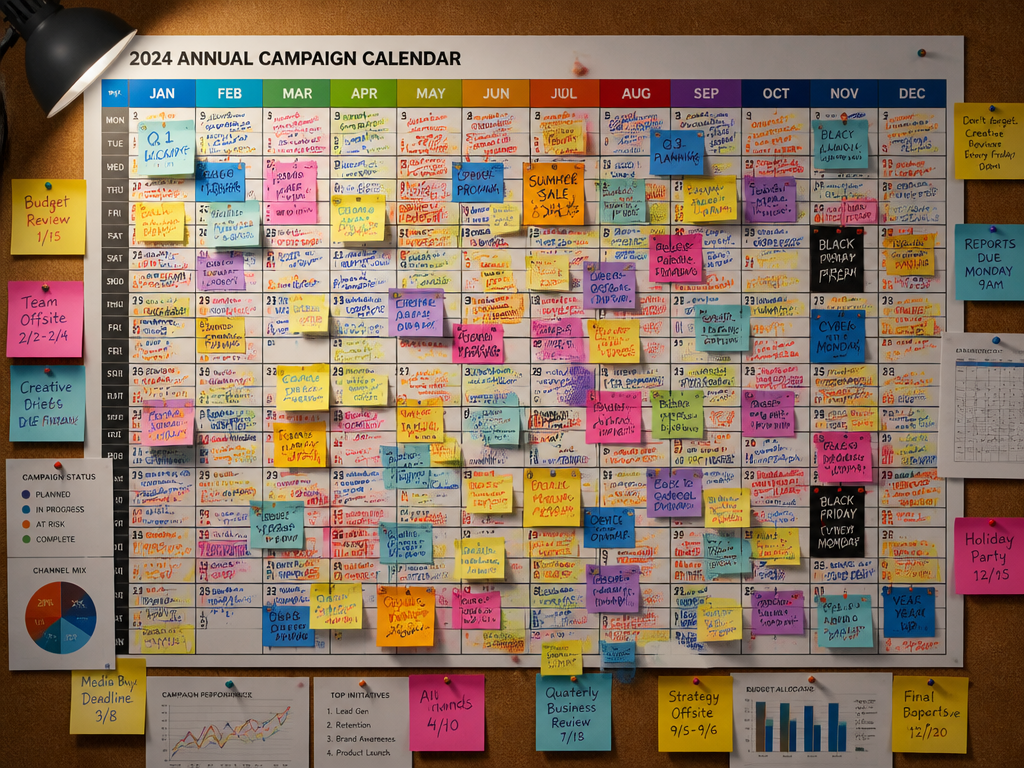
There's a version of the campaign calendar that looks like competence. Twelve months, color-coded, every release window stacked against the next, content shoots slotted in the white space, a press push here, a festival run there. It photographs well in a deck. It also, fairly often, is the document that ends a career — not because the work is bad, but because nobody on the team built a single week into it where the artist stops being a deliverable.
Artist burnout gets talked about as a wellness issue, something HR-adjacent that happens to sensitive people. For label managers and team leads, that framing is a trap. By the time burnout reads as a mental health crisis, you've already lost months of output and possibly the artist. Long before that, it's something more mundane and more fixable: a scheduling decision you made, or didn't make, in a planning meeting.
The myth that runs most aggressive campaigns
Here's the belief, stated plainly because most good managers actually hold some version of it: momentum is rare, so you ride it while you can, then let the artist rest afterward. Push hard during the campaign — the album cycle, the breakout single, the tour announce — because windows close and algorithms forget. Recovery comes later, in the gap.
It's a seductive model. It matches how hype actually behaves. And it's wrong in one specific, expensive way: the gap rarely arrives, and when it does, it's too short to be recovery.
Campaigns don't end cleanly. A single's momentum becomes the argument for the next single. A tour that sells becomes the reason to extend the tour. The "rest after" gets eaten by the opportunity the rest was supposed to enable. The wave model assumes you can pay back a debt of energy later. Most teams never schedule the repayment, and the interest compounds.
What the wreckage looks like before the artist names it
You will rarely get a clean signal. Artists who depend on a team for their income are not reliable narrators of their own exhaustion — admitting it feels like admitting they can't do the job. So you have to read the work instead of waiting for the confession.
The tells are operational, and you can spot them from the same dashboards you already check:
- The creative goes generic. Not worse, exactly — safer. The voice that made them worth signing flattens into competent, on-brand, forgettable. They're conserving energy by defaulting.
- They stop fighting you. An artist who used to argue about a cover, a tracklist, a caption, suddenly agrees to everything. That's not alignment. That's an empty tank deciding the disagreement isn't worth the calories.
- Turnaround slips quietly. The assets come in on the deadline but not before it, then on the day, then a day after. Nobody's blowing up — the slope is gentle. That slope is the data.
- Cancellations cluster. A pulled session here, a "can we move this" there. Individually reasonable. As a pattern, a sign the body is voting before the artist is.
None of these require a diagnosis. They require a manager who treats output texture as a vital sign.
The mechanism: build the off-ramp first, then plan toward it
The fix isn't a meditation app or a vague promise of time off. It's calendar architecture, and it starts with one inversion: design the break before you design the campaign, then build backward to it.
Front-load the content so the run isn't a treadmill
The single most useful change a team lead can make is to stop generating content in real time across the campaign. Real-time shooting means the artist is performing on the same days they're supposed to be living — there's no recovery surface anywhere in the cycle.
Batch it instead. Compress the visual and short-form production into a small number of intense, well-resourced days, then release from that bank across months. Irish artist CMAT has talked openly about doing exactly this — collapsing what would have been a year of scattered content into a tight, deliberate shoot, then drawing down from it. The point isn't the heroics of the long day. It's that the rest of the calendar is suddenly empty of performance demands, which means it can hold actual rest.
A four-month single campaign built this way looks less like a treadmill and more like this:
| Phase | Weeks | What's happening | Artist load |
|---|---|---|---|
| Batch | 1–2 | Two production days: video, 30–40 short-form clips, press photos, alt cuts | High, bounded |
| Tease | 3–6 | Release from the bank; artist does light reactive engagement only | Low |
| Release | 7–9 | Drop week, key interviews, one performance | Medium, scheduled |
| Sustain | 10–14 | Continue drawing from the bank; one real off-week with nothing on it | Protected |
The off-week in the sustain phase is not a reward you grant if numbers are good. It's a load-bearing part of the structure. You plan the rest of the campaign around protecting it.
Protect decision bandwidth, not only hours
Hours are the obvious resource. The hidden one is decisions. Every approval, every caption sign-off, every "which take do you prefer" is a withdrawal. An artist can be physically idle and still be drained by a hundred small choices funneled to them because the team defaults to asking.
During the batch days, settle as much as you can in advance — caption banks, posting cadence, which platforms get what. Then stop sending the artist decisions during the low phases. The whole point of front-loading is that the bank runs itself.
Bolt the commercial work into the plan, not onto it
Brand partnerships and sync opportunities are where the financial instability that fuels a lot of burnout actually eases. The mistake is treating them as surprise additions mid-campaign. Slot them into the same batch days. If a partner needs three pieces of content, you shoot them alongside everything else, while the lights are already up and the artist is already in the headspace — not as an emergency two weeks before a deadline.
A practical note for the gaps: when a release needs connective tissue — a transition bed under a teaser, ambient texture for a vertical clip, a loop to sit behind a behind-the-scenes reel — that's exactly the kind of disposable, commercially-safe sound you don't want to pull your artist back into the studio for. Generating it (City of Punk is built for this, but any clearance-free source works) keeps the bank stocked without spending the artist's actual creative reserves on filler.
The honest part
Batch production buys you slack. It does not buy infinite capacity, and it won't save an artist who's grieving a record that underperformed, or one whose advance ran out three months ago. Scheduling can't fix a financial model that doesn't pay. Anyone selling you a calendar template as a cure for the structural conditions of the music business is selling you the wellness theater this article opened against.
What a well-built campaign can do — and this is not small — is stop the team from manufacturing the crisis. Most burnout you'll see isn't fate. It's the predictable output of a plan that had no rest in it and called that ambition.
So go back to the twelve-month calendar that photographs so well. The version with no gap in it isn't the productive one. It's the one quietly scheduling the collapse, and the only number that calendar reliably produces is the count of months you'll lose when it lands.
Not sure which tool to use?
Compare the top AI music and sound tools side by side — honest reviews, real pricing, no sponsorships.